







New Delhi: If blockbusters like Dhurandhar and Kalki 2898 AD are banking on scale for impact, indie movies are shrinking the frame for maximum effect.
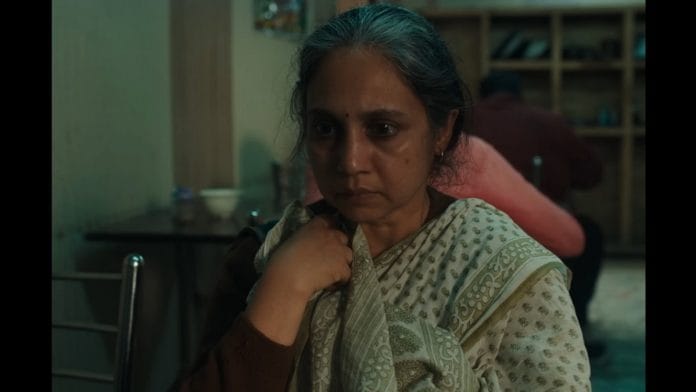
From Achal Mishra’s Dhuin to Arun Karthick’s Nasir and Varun Tandon’s Thursday Special, a growing cluster of Indian independent directors are returning to 4:3 — the boxy, near-square frame that was common in cinema before widescreen took over in the 1950s.
The wide 2.39:1 format of blockbusters captures spectacle best, but the tighter 4:3 frame allows filmmakers to focus on faces, silences and the psychological space of their characters. It’s a storytelling tool in itself.
Here’s a look at some of the films that have used it to powerful effect, often with different goals in mind.
Thursday Special (2026)
In Thursday Special, which has won at least 25 awards at global film festivals, an elderly woman discovers her husband has been giving the lunch she lovingly packs every Thursday to his office guard, while he eats roasted fish at a roadside stall. To bring out the power of this seemingly mundane deception, director Varun Tandon turned to 4:3.
“We wanted to show how lonely and trapped inside their own heads these characters are,” he said. The tight frames mean the outside world almost doesn’t exist for the protagonists, making the ratio ideal for capturing their emotions. Rather than a visual decision, Tandon described it as “an emotional storytelling call”.
The nearly square frame allowed him to stay close to the characters’ headspace, intensifying the sense of isolation and internal chaos.
Also Read: Nawazuddin Siddiqui’s Main Actor Nahin Hoon isn’t a film but an acting masterclass
Dalit Subbaiah: Voice of the Rebels (2025)
One of the reasons the documentary Dalit Subbaiah: Voice of the Rebels works so well in 4:3 is that the boxy frame lends an authentic, of-its-time feel to the archival footage.
Gridaran MKP’s film, which won top honours at the International Documentary & Short Film Festival of Kerala and has entered the 2026 Oscar race, documents the life of Subbaiah, the revolutionary folksinger and poet from Tamil Nadu who wrote songs grounded in the ideas of Ambedkar, Periyar and Marx to make marginalised communities aware of their rights. The film stitches together archival footage of his performances with testimony from his family, fellow musicians and listeners.
Gridaran said the aspect ratio is often decided through the emotional needs of a story, the character it is portraying, and the era it belongs to rather than mere aesthetics.
“On 4:3, the audience can stay close to the characters rather than the location or the place where the story takes place,” he said. “Nowadays, for doing a period setup like the ’90s or 2000s, I can choose 4:3 to give a nostalgic feel and, at the same time, I can avoid showing more details inside the frame.”
Dhuin (2022)
Achal Mishra’s Dhuin is one of the strongest Indian examples of what 4:3 can do. The film follows a young actor who dreams of leaving Bihar for Mumbai, while dealing with financial struggles and emotional uncertainty. The tight, near-square frame keeps the viewer emotionally close to the protagonist, making his world feel intimate. Dhuin’s experiments with the frame make everything from the hustle to the despair feel visceral.
Pokhar Ke Dunu Paar (2022)
Parth Saurabh’s Pokhar Ke Dunu Paar uses warm tones and tight framing to capture the emotional reality and hardships of an eloped couple who have returned to their hometown of Darbhanga in Bihar. Set against the backdrop of the Covid lockdown, the film explores caste discrimination, financial stress and self-doubt. Saurabh’s use of the ratio lends the film the texture of parallel cinema.
Nasir (2020)
Arun Karthick’s Tamil-language Nasir follows a single day in the life of a Muslim textile-shop salesman in Coimbatore as subtle communal tension thickens around him. The frame takes the audience into his small world, where he struggles to take care of his mother as well as a teenager with developmental disabilities he has taken under his wing. The film relies on intimate compositions and natural textures to keep viewers emotionally close to Nasir, making his ordinary life feel deeply personal and haunting.
Also Read: Ashutosh Gowariker’s Temple Raiders turns spotlight on India’s idol theft crisis
All We Imagine as Light (2024)
An honourable mention, since this one is not strictly 4:3 but its near cousin: 1.66:1. While this frame is slightly wider than 4:3, it imparts a similar effect of intimacy in Payal Kapadia’s Cannes Grand Prix-winning film, which follows three women navigating friendship, desire and isolation in Mumbai. Unlike mainstream films like Gully Boy (2019) and Once Upon a Time in Mumbaai (2010), which frame Mumbai through glossy widescreen spectacle, Kapadia’s narrower frame keeps the characters emotionally centred, while the city around them often feels distant and dreamlike.
(Edited by Asavari Singh)