





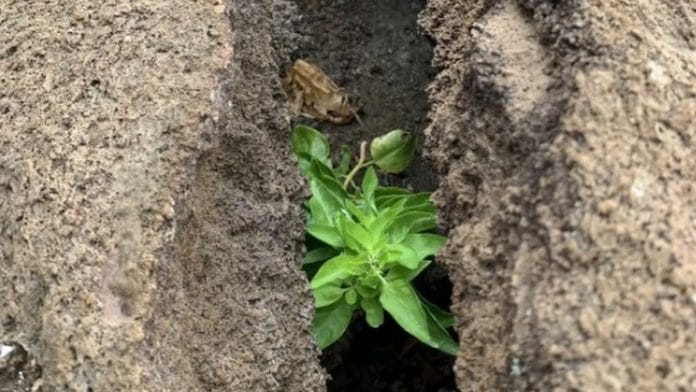

New Delhi: A Galapagos snapdragon’s time on Earth seemed to have all but run out. Now, it is making an improbable comeback. A new study published in Nature Conservation says 28 plants now survive in the wild. Getting to this point took decades of effort.
For a long time, botanists only knew Galvezia leucantha subsp. leucantha from a pressed herbarium specimen collected in the 1960s. Then two decades later came an investigation and a remarkable conservation effort.
Collected in 1962 near Caleta Tagus on Isabela Island, the specimen sat unmatched for 36 years. But one Ecuadorian ecologist, Patricia Jaramillo Díaz, now lead author of the study, found herself returning to the same question: did this plant still exist in the wild?
In 1998, that question took researchers from the Charles Darwin Research Station, a Galapagos conservation centre, into the remote lava fields of northern Isabela in search of answers. They found the snapdragon barely hanging on, its population ravaged by grazing animals. By 2007, only six of its kind remained, wedged into the cracks in the young volcanic rock of the Darwin Volacano.
“Standing beside those plants, it became clear that we were looking at much more than a rare shrub. Losing them would mean losing an irreplaceable part of the Galápagos’ botanical heritage,” wrote Díaz, a senior researcher at the Charles Darwin Foundation, in her blog.
Also Read: Indian scientists crack key hurdle in gene-editing peas. Paves way for better crops
Making the Galapagos snapdragon bloom again
The last six plants became the foundation of a rigorous conservation mission. Scientists collected their seeds and took them to the Charles Darwin Research Station’s propagation facilities, where they were cleaned, tested and manually scarified (which means scratching the outer surface) to help them germinate.
Scientists then controlled light, temperature and moisture as they raised the young plants for an eventual return to the volcanic terrain where they had originally been found.
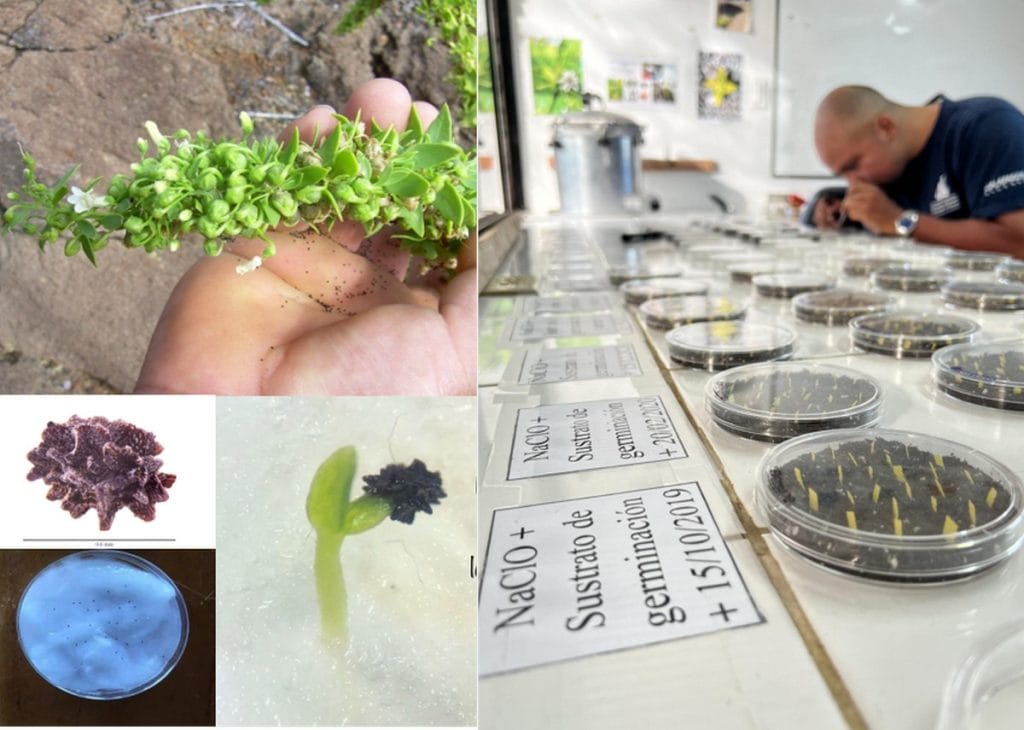
Through the Galápagos Verde 2050 programme, 94 nursery-raised snapdragons were planted in the wild between 2017 and 2024 in two restoration sites. One of the biggest problems was water. But the researchers found a solution with the Groasis Waterboxx, which delivers water slowly to the roots and helps young plants survive dry conditions. They also discovered that the snapdragons spent their first few months building elaborate root systems underground before showing any visible growth on the surface. This detail reshaped how scientists viewed the plant’s growth and progression.
The real test came in 2021, when researchers monitoring the reintroduced population at Playa Tortuga Negra spotted four seedlings they had not planted. The plants had reproduced on their own. The seedlings later died in a drought, but their appearance showed that the plant could grow without human intervention.
The full-circle moment arrived in 2024 when researchers reintroduced the species to Caleta Tagus, the exact site where the lone 1962 specimen had been collected. Eight plants now grow there. Today, there are 28 adult plants in the two restoration sites.
Water scarcity still poses a threat, but the shrub has been pulled back from the brink.
“True restoration begins when nature no longer depends on us,” Jaramillo Díaz wrote.
(Edited by Asavari Singh)