





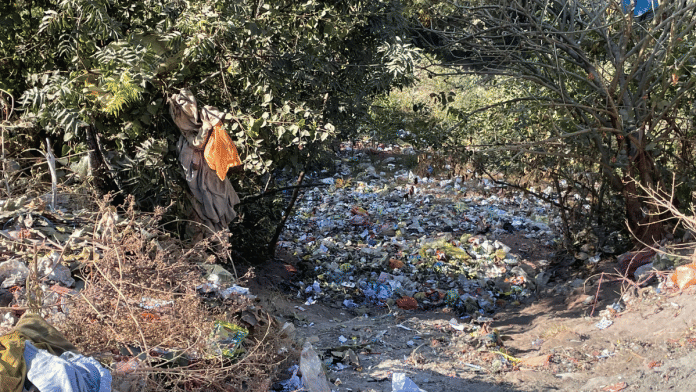



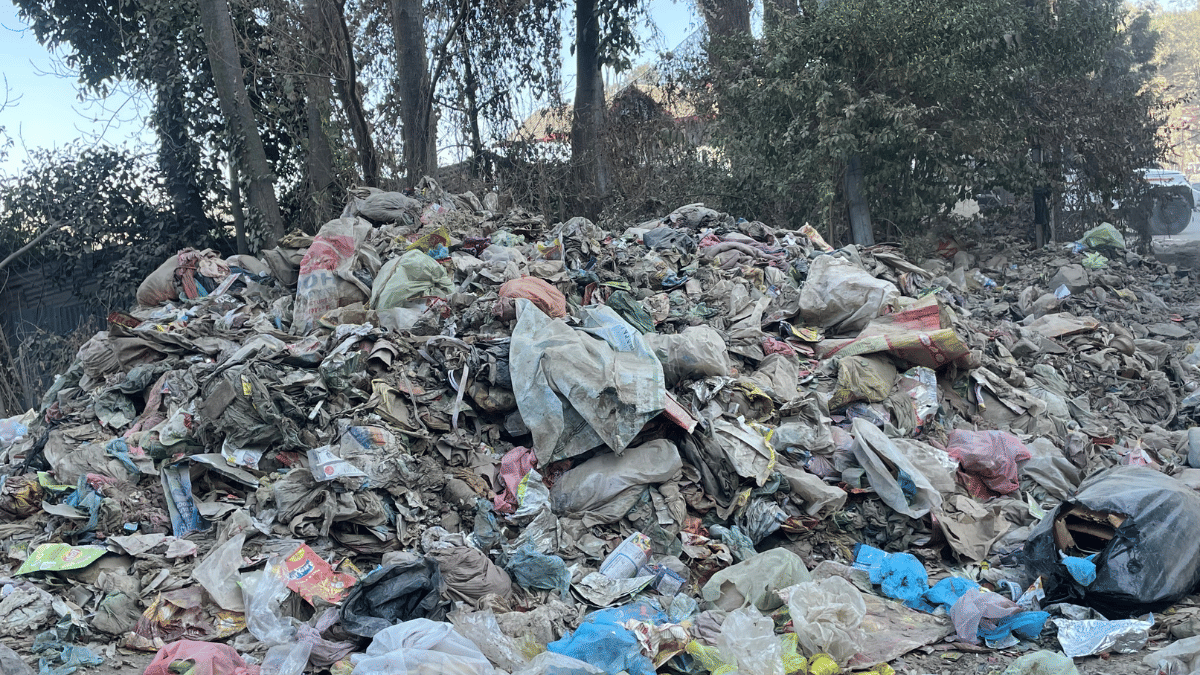
Kullu: Plastic bottles, torn bags, and empty chip packets lie scattered in massive piles across the landscape. But this isn’t a landfill or a dumping ground. This is the view of a Himachal Pradesh valley as one travels from Kullu to Solan, where garbage has quietly become part of the scenery.
Himachal Pradesh has been struggling with a growing waste crisis due to an influx of tourists and inadequate disposal systems. The towns are increasingly littered with items left behind by visitors. Limited landfill space, fragile mountain terrain, and poor waste segregation have made management even more challenging.
In April 2025, the government implemented a potential fine of Rs 10,000 for commercial vehicles (taxis and buses) not carrying a mandatory dustbin, in addition to a Rs 1,500 fine for littering to curb plastic waste, especially from tourists and public transport vehicles, though private vehicles are exempt.
“We started with a bang, but the policy’s effective implementation lasted two months,” former Regional Transport Office Shimla officer Anil Kumar Sharma told ThePrint.
It was during Sharma’s tenure that the policy was introduced. He revealed that the objective was to create a psychological impact, and so the number of vehicles charged was always doubled and tripled.
“We were told that even if you have fined 10 vehicles in a day for no dustbin or waste disposal within the car, we should put 100 cars. Similarly, if we have shown that 50 buses were fined in three days, it means only five were fined,” Sharma explained how they projected their numbers.
Also Read: Himachal farmers are ditching apples for persimmons. ‘Earnings on par with JEE packages’
Impact on the ground
Local independent journalist Ramesh Singta recalls boarding a Himachal Road Transport Corporation (HRTC) bus in Shimla on 27 December and being struck by how much his city had changed.
“That small dustbin made me feel incredibly proud. It sends a clear message that people are doing their part to keep the city clean,” Singta said.
From April onwards, HRTC installed 5–6 litre dustbins in all of its 32–33 buses. According to HRTC head Maan Singh Thakur, most passengers have been following the rule.
Thakur recalled his early days as an HRTC driver in 2007, when passengers wouldn’t hesitate to throw waste out of the window and often littered inside the buses as well, adding that things have improved significantly over time.
“Ever since we installed dustbins, people have started using them. Occasionally, passengers from Delhi and nearby areas, especially those under the influence of alcohol, refuse to cooperate. We usually avoid confronting them, as it can lead to arguments or fights,” Thakur said.
However, among taxi drivers, the fear is largely driven by warnings from locals, as there is no proper enforcement or checking mechanism in place to ensure effective implementation.
Delhi-based taxi driver, Gaurav, stopped at a petrol pump near Kullu and was immediately warned about not having a dustbin in his car. A few kilometres later, he received the same caution again, this time at a hotel. Getting the message, he pulled over at the first shop he spotted and bought a dustbin for Rs 150.
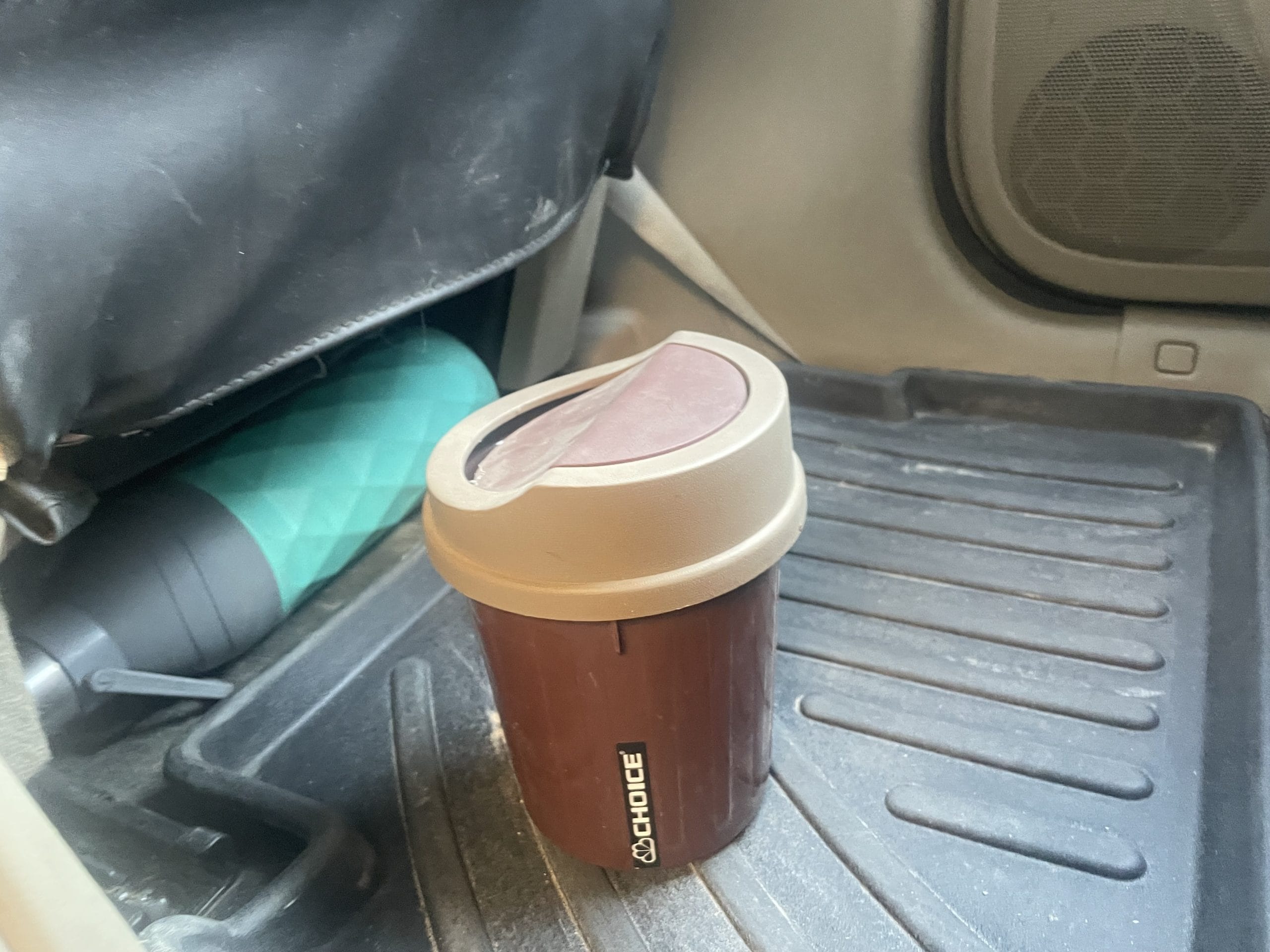
“It’s better to be careful than risk a Rs 10,000 fine,” he said. To his surprise, however, there were no vehicle checks during the next four days of his journey.
This, Sharma explained, was because the RTO office had been recently instructed to relax enforcement and not impose fines. Within two months of the policy’s implementation, taxi unions approached the government, arguing that tourism was being affected and that keeping dustbins inside vehicles was impractical.
“Perhaps our communication wasn’t clear, but the idea was not necessarily to install a dustbin; any carry bag that could hold garbage would have sufficed,” Sharma clarified.
Many travellers, Sharma added, felt the authorities were being unnecessarily strict and harassing them, which was never the intention, but over time, in an attempt to prioritise the comfort of travellers, the valley had become a dumping ground.
“Even if one car generates just 100 grams of waste a day, with 10,000 vehicles passing through Manali and 5,000 through Shimla daily, one can only imagine the sheer volume of garbage being dumped,” he said.
Also Read: Tourists keep their cars clean, use hills as dustbins. Can anyone say atithi devo bhava?
Poor waste management
In 2019, the Himachal Pradesh government, under the plastic waste buyback policy, directed Urban Local Bodies (ULBs) to purchase non-recyclable and single-use plastic waste at a minimum support price of Rs 75 per kg.
Lalit Kumar, Chief Secretary of the Jibhi Valley Tourism Development Association, says that the ULBs lacked both the funds and the technology to implement it. A similar fate befell the proposed Rs 10,000 fine policy.
“Policies are framed, but there is no implementation, no awareness, no mechanism, and no monitoring,” Kumar said.
The surge in tourism, especially after Covid-19, has further aggravated the problem. Local bodies, Kumar noted, often struggle to collect and transport waste from remote regions, resulting in open dumping and pollution of rivers and forests. He stressed that indiscriminate dumping of garbage is worsening the crisis in a state already burdened with weak waste management systems.
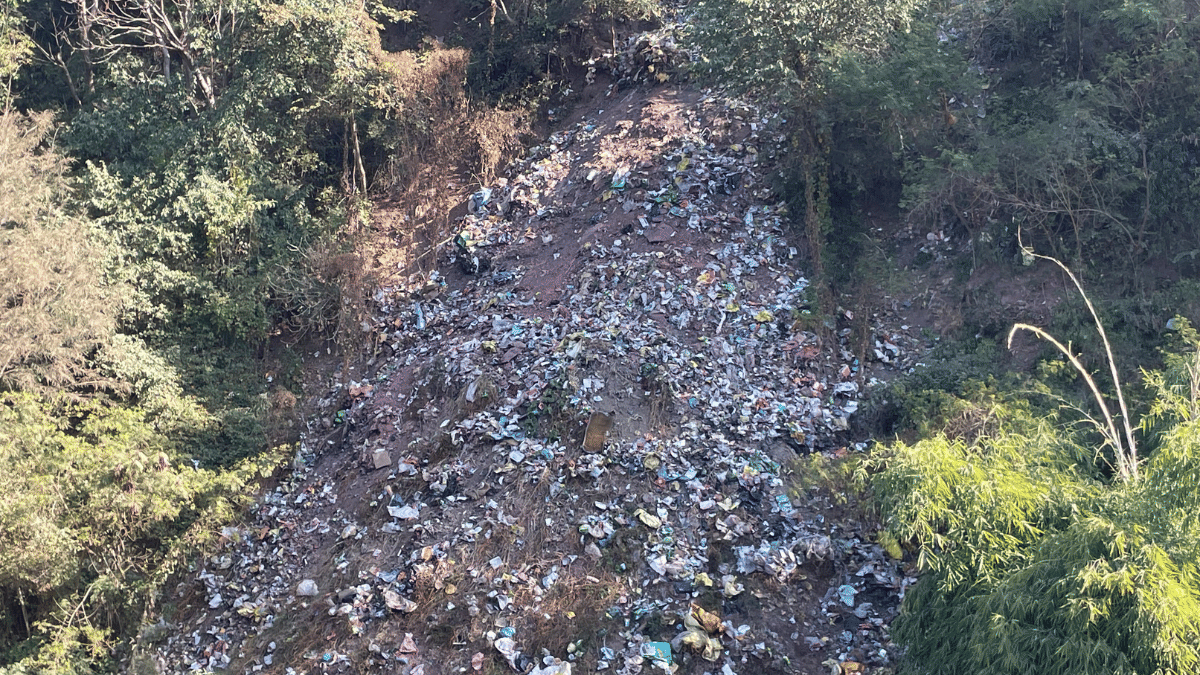
Himachal Pradesh has 68 ULBs and about 3,708 Panchayati Raj institutions (PRIs), with nearly 50 material recovery facilities (MRFs) serving them. While the state has put in place all the required policies and strategies under the Solid Waste Management (SWM) rules, Plastic Waste Management (PWM) rules, and Extended Producer Responsibility (EPR) guidelines, it lacks the on-ground infrastructure needed to implement them. Moreover, there appears to be little discussion or planning focused on addressing this gap.
“In the absence of a structured garbage management system across the valley, the situation is slipping beyond easy repair. What was once a poetic harmony of forests, streams, and villages now risks being overwhelmed by unmanaged waste and systemic neglect,” Kumar said.
For the association, this is not just an environmental issue but a serious reputational and sustainability threat to the valley’s future. He added that without timely intervention, strategic planning, and accountability, the very identity of Jibhi Valley and the state at large stands at risk.
“The cost of inaction today will be far greater tomorrow — ecologically, socially, and economically,” Kumar warned.
(Edited by Insha Jalil Waziri)