



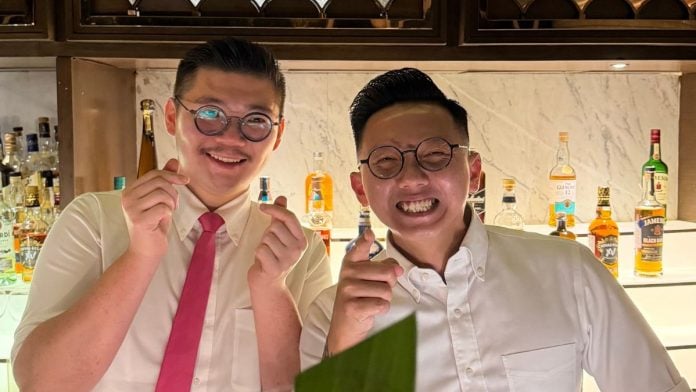
New Delhi: Two Malaysian bartenders from Penang’s Good Friends Club were busy shaking-up creme brulee cocktails at Kolkata’s JW Marriott. The drinks were selling like hotcakes. Visiting bartenders from abroad or other cities stirring up and serving fusion cocktails has become quite the norm in India’s bar scene. This concept is called a bar takeover.
On a busy evening, a bar takeover can look much like any other night out. There may be a bartender from Singapore explaining a cocktail inspired by Southeast Asian flavours, a mixologist from Barcelona demonstrating a technique rarely seen in the host city, or a team from Delhi introducing its interpretation of Indian ingredients to drinkers in Kolkata.
India’s growing appetite for cocktails has turned bar takeovers from a relatively niche industry practice into a recognisable concept of the country’s cocktail scene. Such guest shifts are increasingly connecting Indian bars with international establishments, while helping homegrown bartenders find audiences beyond their own cities. It has also benefitted the country’s bar economy. According to a 2025 Mordor Intelligence report, the Indian cafes and bars market is projected to grow from $ 20.51 billion in 2026 to $ 31.47 billion by 2031. Against that backdrop, the bar takeover has become both a cultural event and a commercial calculation.
“This is a new chapter and a rather interesting one. We couldn’t have even imagined it 10 years ago,” Sourish Bhattacharya, Co-Editor, The Bloomsbury Handbook of Indian Cuisine.
“We have seen a time when cocktails weren’t the norm. Straight drinks and beer. When cocktails entered the scene, it took a while for them to become mainstream. I remember we wrote stories about Espresso Martini being a novelty.”
However, he added, the inter-city cross-pollination has left him wanting for more, as it’s usually between Delhi, Mumbai, Bengaluru, Kolkata and Goa.
“I want to see a bar takeover from Shillong or from Kashmir. It will be interesting to see how their ingredients can be incorporated into drinks. That will draw more footfalls,” Bhattacharya said.
The format of a bar takeover is pretty straightforward. A visiting bartender, bar team or sometimes an entire drinks programme temporarily takes over another venue, bringing a specially designed menu and its own approach to hospitality.
The implications extend well beyond the drinks being served. For the host bar, it is a marketing opportunity. For the visiting team, it is a platform for discovery. For bartenders, it can function as an informal classroom. And for customers, it offers a chance to travel through a glass without leaving their city.
“Library Bar has aced the game for bar takeovers. They got Shingo (Gokan) in Delhi; I got to try his drinks without going to Japan. It was a memorable night,” said Kanav Kapoor. The 31-year-old is a tech consultant and finds himself at Library Bar every second weekend.
Who pays for the party?
There is no single financial model for a takeover. For an inter-city takeover, a bar approximately earns Rs 50,000–Rs 60,000 in revenue on a successful takeover night, while hotel bars could see beverage revenue rise by 20–30 per cent.
These figures are useful indicators of the format’s commercial potential, although they should not be treated as universal benchmarks. The outcome depends on the venue, the guest bartender’s reputation, and average spending and the cost of staging the event.
Behind the apparent simplicity of a takeover is a negotiation over money, resources and risk. The guest team may need flights, accommodation, local transport, staff time, ingredients, specialised equipment and promotional support. Someone has to pay for these, and the arrangement can vary from one collaboration to another.
“Approximately Rs 2 lakh is the budget to hold a bar-takeover from an international bar, but for an Indian brand, it’s significantly cheaper. It’s all about the price of flight tickets from South America to Delhi vs Goa to Delhi,” said Atul Tiwari, Director of Operations, The Leela Palace.
However, Tiwari added that there is a premium category which features bars like The Connaught Bar, London and Sips from Barcelona. They come once in a blue moon as the expenditure skyrockets from Rs 2 to Rs 10-15 lakh.
In some cases, the host bar covers travel and accommodation for visiting bartenders and absorbs the cost of ingredients, staffing and event production. In most cases, a beverage brand, usually Diageo, Bacardi, or Suntory, may sponsor part of the experience, particularly when the cocktails feature its products.
For instance, if Patron is sponsoring the event, the cocktails on the day’s menu must feature the brand as the base spirit. In order to get significant visibility for the brand, a bottle of the liquor is even put on display for better publicity.
A takeover provides a more immersive environment than conventional advertising. It’s also a cheaper alternative for alcohol brands, which have to resort to expensive surrogate advertising.
A hotel bar, like Library Bar or Loya at Taj Palace, may approach the economics differently. Its wider infrastructure, existing staff and in-house accommodation can make certain expenses easier to absorb.
“Even for our international bar takeovers, we focus on South-East Asia because it’s easy and efficient to get them as compared to a bar from London or Spain that frequently,” Tiwari said.
“But there is another big reason — the 50 Best Bars.”
The award-winners
Much like actors aspiring to win Filmfare and National Awards, bars in India look at two key rankings for recognition each year — 30 Best Bars and Asia’s 50 Best Bars. While 30 Best Bars focuses exclusively on India’s bar scene, Asia’s 50 Best Bars places establishments in the country alongside some of the region’s most celebrated drinking destinations.
For bars aspiring to make a mark on Asia’s cocktail map, a great drinks programme is no longer the only draw. Visibility, industry recognition and access to a wider network of bartenders have become equally important.
As the influence of Asia’s 50 Best Bars grows, bar takeovers are emerging as a way for establishments to stay visible, build credibility and position themselves within the region’s increasingly competitive drinking scene.
“You have to engage in the right market,” Tiwari said. “Once you make it to Asia 50 Best, then you grab eyeballs from people around the world.”
Only one Indian bar made it to Asia’s 50 Best Bars 2026—Goa’s Boilermaker. It occupies the number 8th spot on the list.
With rankings drawing attention to bars across cities and countries, being associated with recognised names can help an establishment strengthen its profile. Hosting a bar from the list, or sending its own team to a prominent venue overseas, can generate industry buzz and social media visibility.
Even without a ranking of its own, a bar can benefit from the association, particularly when its guest shift features a well-known name or a bartender with a strong following.
This has also made the regional bar circuit more interconnected. A bartender travelling from Singapore to Mumbai, or from Bangkok to Delhi, is not just bringing a menu of cocktails but also introducing a different drinking culture, technique and philosophy.
“Takeovers have really taken off in India post-Covid, and they have grown into much more than a guest menu. At their best, they’re a whole atmosphere beyond just the drinks, from the playlist and vibe to the glassware,” said Vikram Achanta, co-founder, 30Best Bars.
That is what Achanta and his team wanted Kolkata to experience at Kolkata Cocktail Weekend, their first city-wide cocktail experience. In Kolkata, they brought Frankie Solarik of BarChef from Canada, Good Friends Club from Penang and Pony from Singapore to pour alongside some of the country’s best.
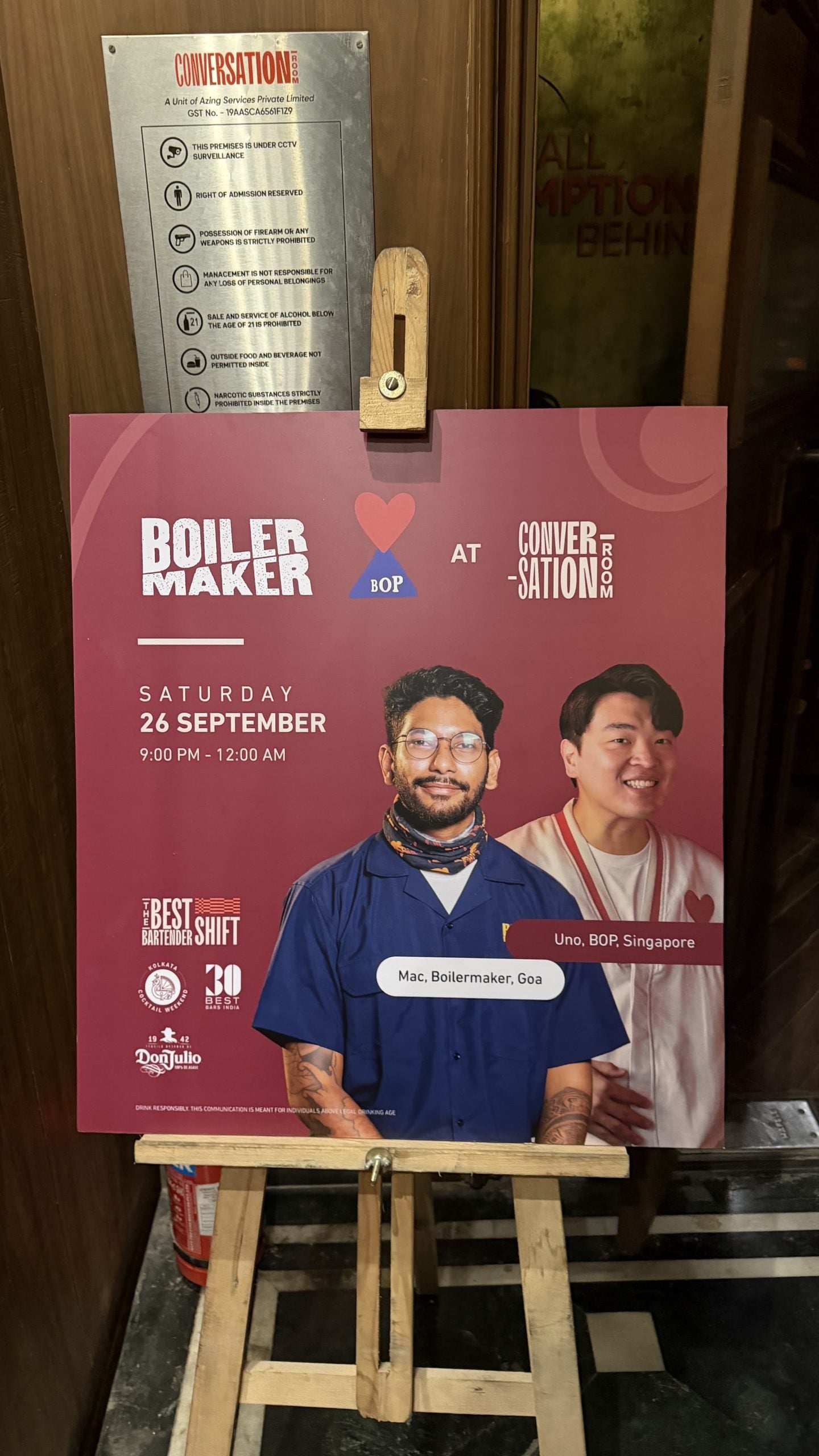
BarChef from Canada, for instance, was behind the bar at Little Bit Sober (LBS) on 26 September. The 56-cover restaurant was packed, with barely room to move.
After all, bartenders Gianluca Passuello and Kurt Tissera showcased their signature modern approach to mixology. The crowd favourite was Chasing the Sun, made with Dewar’s 15 Scotch whisky, infused with Himalayan chhurpi (a traditional hardened cheese), wild honey, and a rich truffle ferment. They also served a bold and delicate pairing of gin, freshly shaved black truffle, elderflower, coconut, and fresh dill.
“The idea was to give our bartenders first-hand exposure to new styles, and to let a fast-evolving drinking city taste what is happening beyond India,” Achanta said.
“When international talent stands next to the best of the home market, it raises the conversation for both.”
The evolving cocktail scene
The most visible part of a bar takeover is often the cocktail, but its more lasting value may be found behind the counter.
Bartending is a profession built on practical knowledge. Recipes can be written down, techniques can be demonstrated in videos and ingredients can be ordered from suppliers. Yet the finer details of the craft are often learned through observation: how a bartender manages a crowded service, balances flavours under pressure, communicates with a guest or keeps a team coordinated when orders arrive simultaneously.
A takeover brings these lessons into the workplace. They are shaping bartenders’ thinking and working methods. The emphasis was not simply on copying a visiting bartender’s signature drink, but on understanding the thought process behind it.
“We get the confidence to experiment and explore deeper flavour profiles. The goal is to learn and create something different rather than just copy it,” said Amit Rana, bartender, Barbet & Pals.
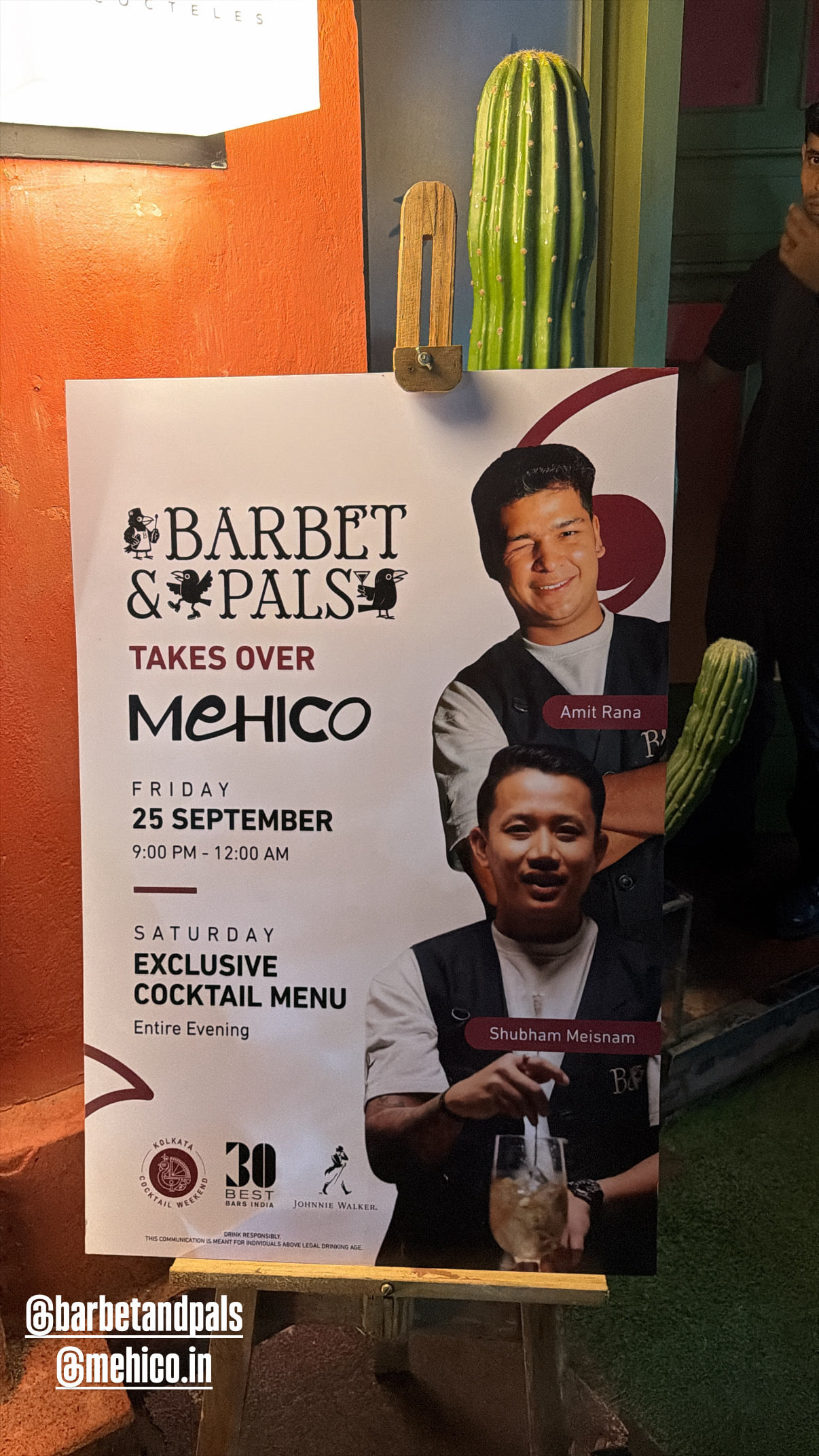
Rana was in his usual fun element at Mehico in Kolkata. He was dancing, engaging with customers, and while doing so, not missing the main part: cocktails. From Barbet & Pals’ launch in November last year to now, Rana has evolved significantly. From a shy and quiet bartender who resorted to just PJs in order to break the ice with customers, Rana has grown. There is confidence in his body language and the drinks he serves. And his Kolkata stint was a perfect example.
Bar takeovers in India are also changing access to global drinking culture. In cities where the cocktail scene is still developing, these collaborations are less about novelty and more about exposure and education.
Atelier V, which opened in Indore in 2024, is one such example. Despite operating in a city without the established cocktail community of larger metros, the bar continues to host takeovers. The events offer visibility, but they also introduce local drinkers to new techniques, ingredients and approaches to cocktails.
Almaty’s Domashniy Dive Bar, Japan’s Yakoboku, Taiwan’s Vender Bar and Bangkok’s Opium Bar have all done takeovers at Atelier V so far.
This exchange is also influencing how bars define themselves. Greater exposure to international concepts is encouraging operators to focus on sharper identities, more considered menus and distinctive ideas rather than scale alone.
“Mumbai, Delhi and Bangalore still host the most takeovers, but Tier 2 cities are picking up,” Achanta said
“The sheer volume of takeovers has gone up, and that’s why moderation and the right partner matter. But the excitement hasn’t faded, because with social media, guests already know these bars from a distance, and a takeover is their chance to finally experience them in person.”
Also read: Kriti Sanon’s choli became a ‘six-person panel discussion’ on TV, actor mocks trolls
Risk of crowding business
There was a time, two years ago in 2024, when a takeover was an occasion worth planning a night around. Today, with bars across Indian metros regularly hosting visiting teams, these events are becoming harder to differentiate from one another.
The format that once promised an unusual drinking experience risks becoming another fixture on an already crowded social calendar. Because when every bar wants a piece of the same circuit, visibility becomes a crowded business.
Moreover, only selective bars are able to bring in international talent, so most of them fill their calendar with inter-city takeovers.
“If a Boilermaker comes to Delhi, I would go but again not regularly. Maybe once in a while. I don’t quite understand bringing bars from Goa or Mumbai to Delhi that frequently,” said Kapoor.
The first few takeovers might feel exciting. Repeated invitations, however, can turn the experience into an obligation, particularly for an audience that is already familiar with the format.
The pressure to keep hosting can also come at the cost of a bar’s everyday appeal.
As India’s cocktail scene matures, the measure of a successful bar takeover may need to shift from how many people attend to what they take away from the experience.
“A carefully chosen collaboration can introduce a new audience, strengthen professional relationships and give drinkers a reason to explore unfamiliar styles. A packed calendar cannot guarantee any of these outcomes,” Achanta said.
For an industry increasingly concerned with recognition, the temptation is to remain constantly visible. Yet, being seen everywhere is not the same as being memorable.
(Edited by Ratan Priya)