





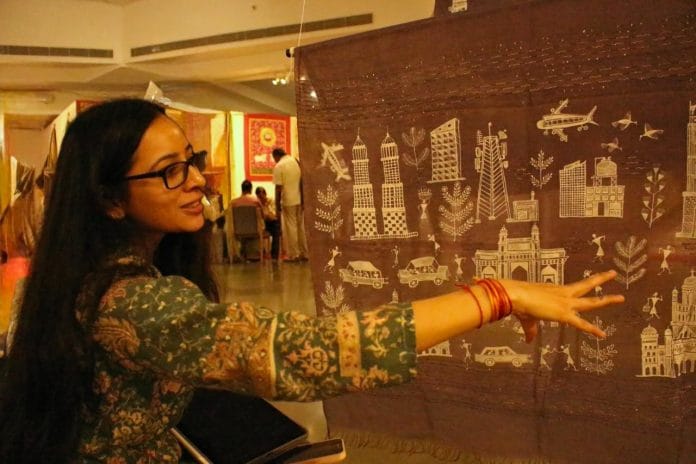


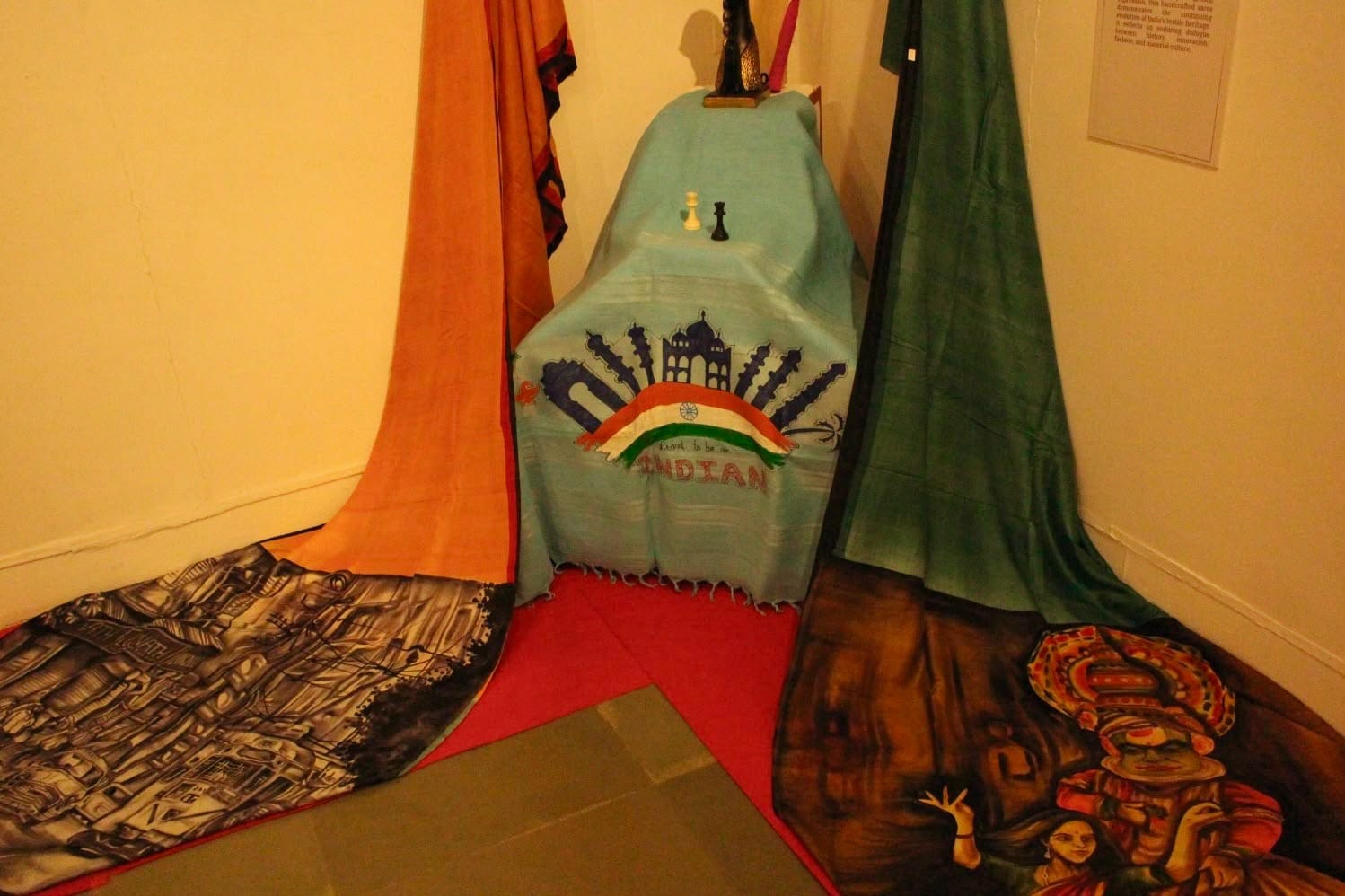
New Delhi: At Saree Shastra, the saree was everywhere. It hung on the walls, moved with the models, was draped by visitors and, in one corner of the gallery, was even being painted on by artists as people watched with awe.
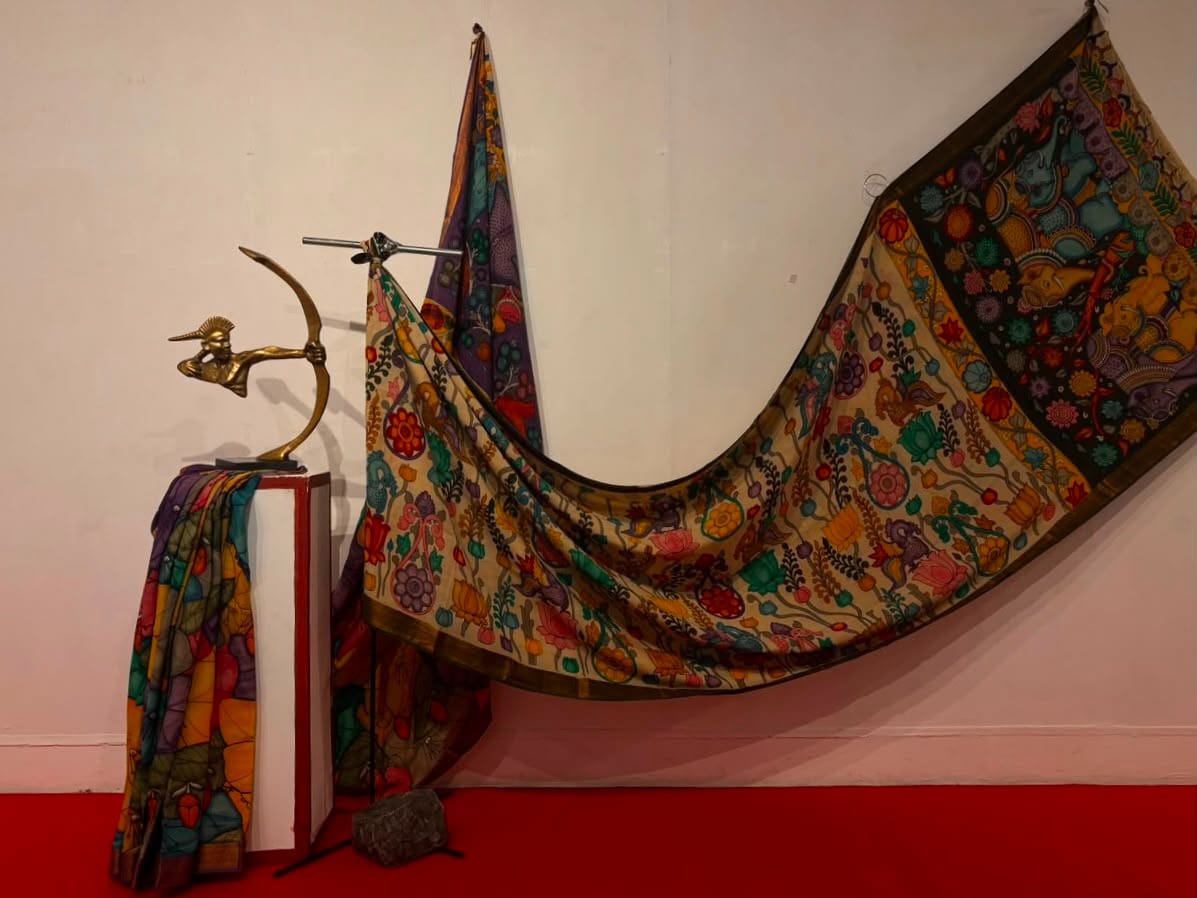
At the India International Centre’s Art Gallery, a three-day-long exhibition brought together sarees in different fabrics, including cotton, silk, Chanderi silk, raw silk, and khadi. The sarees had more than 13 art forms — Pichhwai, Pattachitra, Gond, Warli, Aipan and Sohrai, as well as modern art — painted on or weaved into them.
“We mix handlooms from different states with artists from different states,” said Shikha Ajmera, a chartered accountant-turned- fashion designer and founder of Shikha’s Karigarii. Her enterprise focuses on preserving and promoting India’s handlooms, handicrafts and cultural heritage. Ajmera has curated similar expos across India, including at Hyderbad’s Salar Jung Museum, IFFI Goa and the Surajkund International Crafts Mela, as well as internationally at the Maldives Expo 2025.
She hosted this event to honour handloom weavers and spotlight the traditions and craftsmanship behind India’s handloom heritage, on National Handloom Day.
Raksha Nikhil Khadse, Minister of State for Youth Affairs and Sports, inaugurated the exhibition on 7 August. “Saree Shastra was something new, and it was such a lovely idea to bring weavers and painters together,” she said.
That newness was visible in the way traditional art forms were carried onto an unstitched garment.
When the saree was a canvas
Pichhwai, Sohrai and Aipan were being given a new surface and a different audience.
A Pichhwai saree carried white cows and lotus flowers against an orange background, drawing on the devotional tradition from Rajasthan and fondness for Lord Krishna.
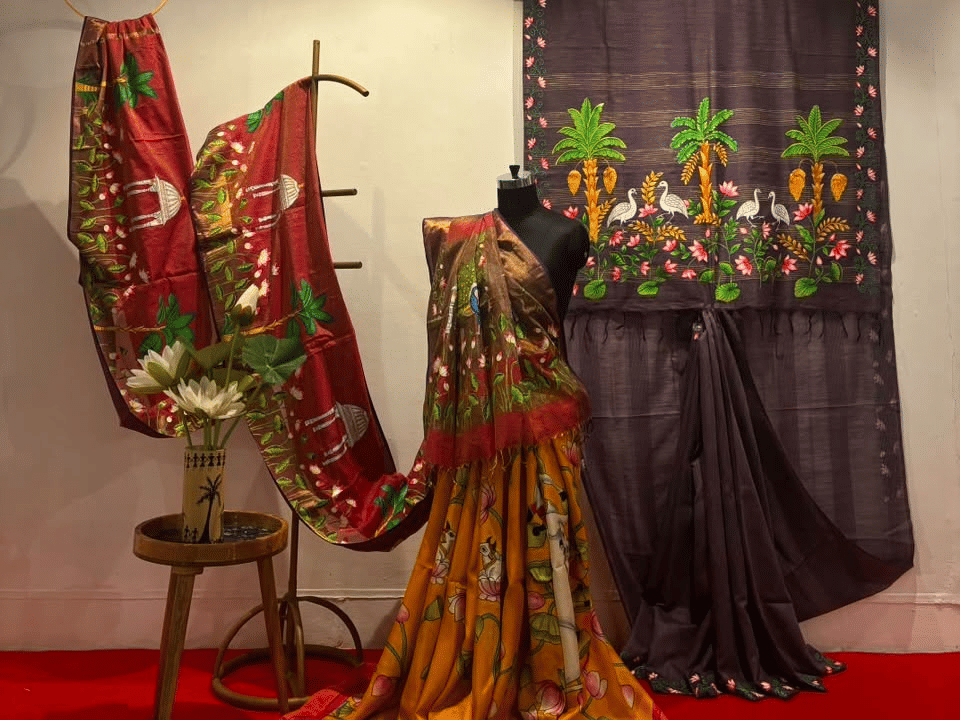
A Sohrai saree from Jharkhand carried flowers, leaves and animal motifs, typical of the indigenous mural art of the eastern state. Similarly, an Aipan saree from Uttarakhand used the geometric and floral motifs associated with the ritualistic art form. A cotton saree carried Warli art, native to Maharashtra, depicting Radha and Krishna.
The artists were part of the exhibition too. Two Pichhwai artists sat beside their work, painting in front of visitors and explaining the form as they worked.
42-year-old Pushpendar Sahu, a Pichhwai artist from Kishangarh, Rajasthan, said he first met Ajmera over five years ago during an expo at Delhi’s Pragati Maidan (now Bharat Mandapam).
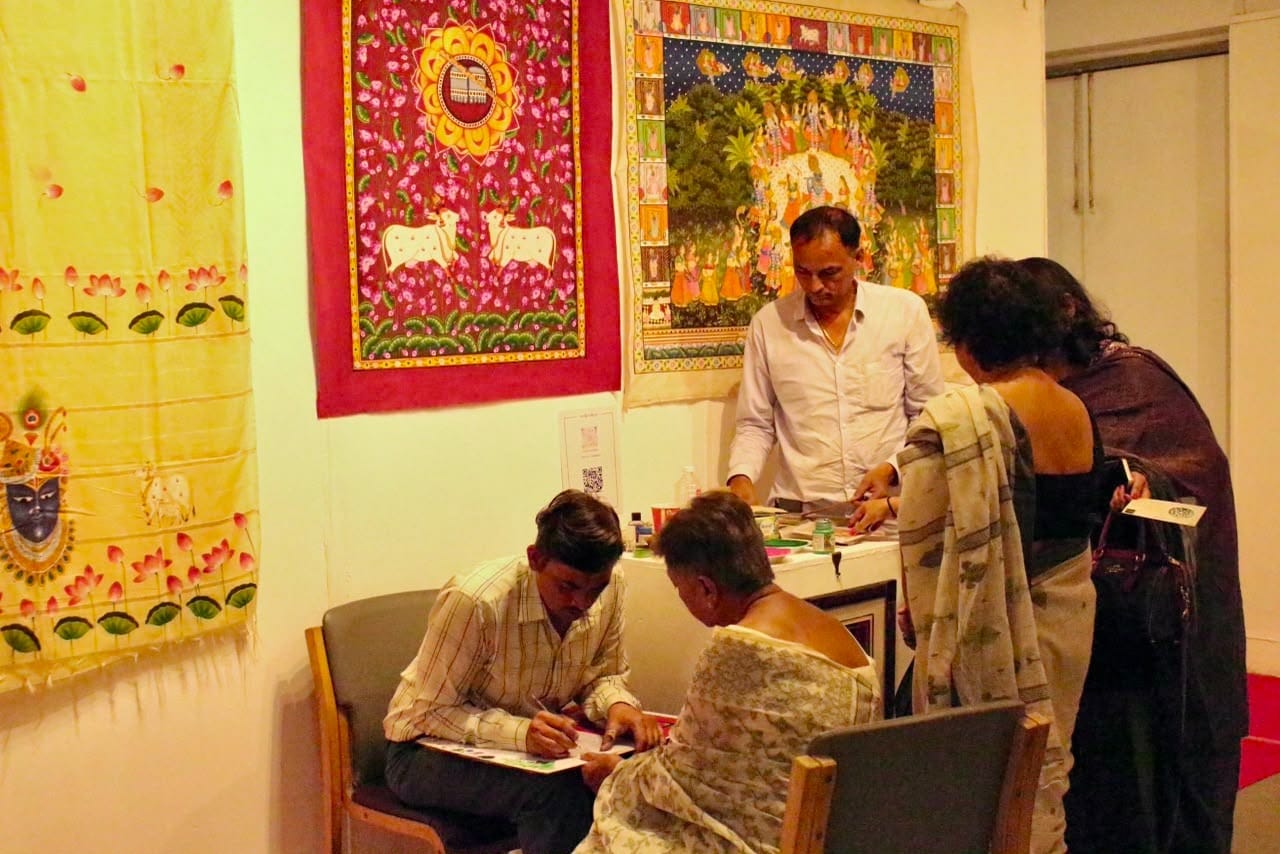
Sahu said Ajmera taught artists to use the saree as a canvas and encouraged them to experiment with different reusable materials. “During difficult financial periods, she also supplied me with handloom sarees to work on. I am grateful for the opportunity to showcase my talent,” said Sahu.
For Sahu, the saree was not simply another surface for Pichhwai. It gave an established practice a new medium while offering the artists a lifeline to take their art forward.
The paintings on the sarees were not limited to traditional and folk art forms. It also found representation of modern art.
Saista, who hails from Chandigarh and works in modern art, also contributed to the exhibits showcased at the gallery. She said, “Shikha Ajmera has created a new space for modern art and sarees to interact, and to support artists like us.”
Saree as a living object
For Ajmera, bringing artists and artisans together is part of a larger effort. Shikha’s Karigarii works with more than 100 artists and artisans across India. The saree, in this context, is not only something to preserve or admire. It is also part of a livelihood.
Ratan Deep Laal, founder and chairman of the International Institute of Fashion Technology, saw that possibility in the exhibition. He described the room as a representation of India and noted that sarees were increasingly finding a place in foreign markets.
For Aditya K. Jha, curator of Saree Shastra, the saree’s story also belongs to the women who have worn it and carried traditions through it. Jha drew inspiration from P. Sainath’s A Lifetime Bending, particularly its depiction of working-class women and their sarees. Another inspiration was Abanindranath Tagore’s Bharat Mata, painted in 1905. Originally titled Banga Mata (Mother Bengal), the work was later renamed Bharat Mata, with its central figure draped in a saffron cotton sari.
Through these examples, Jha spoke of women as “custodians of culture”, while also questioning the idea that women should carry the entire burden of preserving tradition.
Across two panel discussions on 8-9 August — which brought together voices from the government, tourism, textiles and academia — the saree emerged not simply as a garment or an object of cultural heritage, but as a living part of India’s social and economic fabric.
Bandana Preyashi, an IAS officer on the panel, argued that women should not be seen only as the custodians and wearers of the saree, but also as conscious contributors to local economic networks and the livelihoods built around it.
Rita Menon, former textile secretary, described the saree as a “living civilisational legacy”, one in which identity, memory and interaction continually meet. Together, their observations shifted the saree from an object of display to a living practice, shaped by the people who make it, wear it, preserve it and continually find new ways of carrying it forward.
At Saree Shastra, preservation did not mean keeping the saree still. It meant letting it move between art forms, fabrics, regions, artists, bodies and markets. It was being painted, worn, reinterpreted, discussed and given new reasons to matter.
(Edited by Aakriti Handa)