





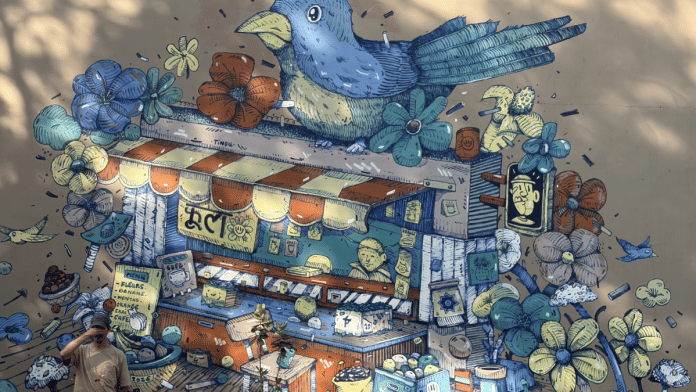



New Delhi: A new mural at Delhi’s Lady Shri Ram College brings together two writers separated by continents and generations. The poetry of Sarojini Naidu, also known as the “Nightingale of India,” meets the everyday world of Annie Ernaux, the French Nobel laureate, on the wall of LSR.
The mural, titled ‘The Nightingale and the Grocery Shop’, is part of Wall Art India, an urban art initiative led by the Alliance Française network in India in collaboration with the Embassy of France and the Institut Français. The fifth edition focuses on women’s voices and emerging urban artists with the theme, ‘Women, Horizons & New Voices in Urban Art’.
Spanning 15 cities between 10 February and 9 March, the initiative brings together four artists – India’s Khatra and French artists Kashink, Kesadi, and Dey MKO – to create murals rooted in community engagement. The project has been transforming public walls across the country into open-air galleries since 2021.
A wall that grows
Kesadi, a 32-year-old artist from Lyon, France, who has spent a decade painting across cities and countries, has been tasked with bringing the two great literary voices together at LSR.
The idea behind the mural is deceptively simple. The nightingale, long associated with Naidu’s poetry, is placed above the façade of a modest grocery shop, a setting often found in Ernaux’s autobiographical writing. Kesadi uses traditional painting methods and doodling to give the mural a 3D effect.
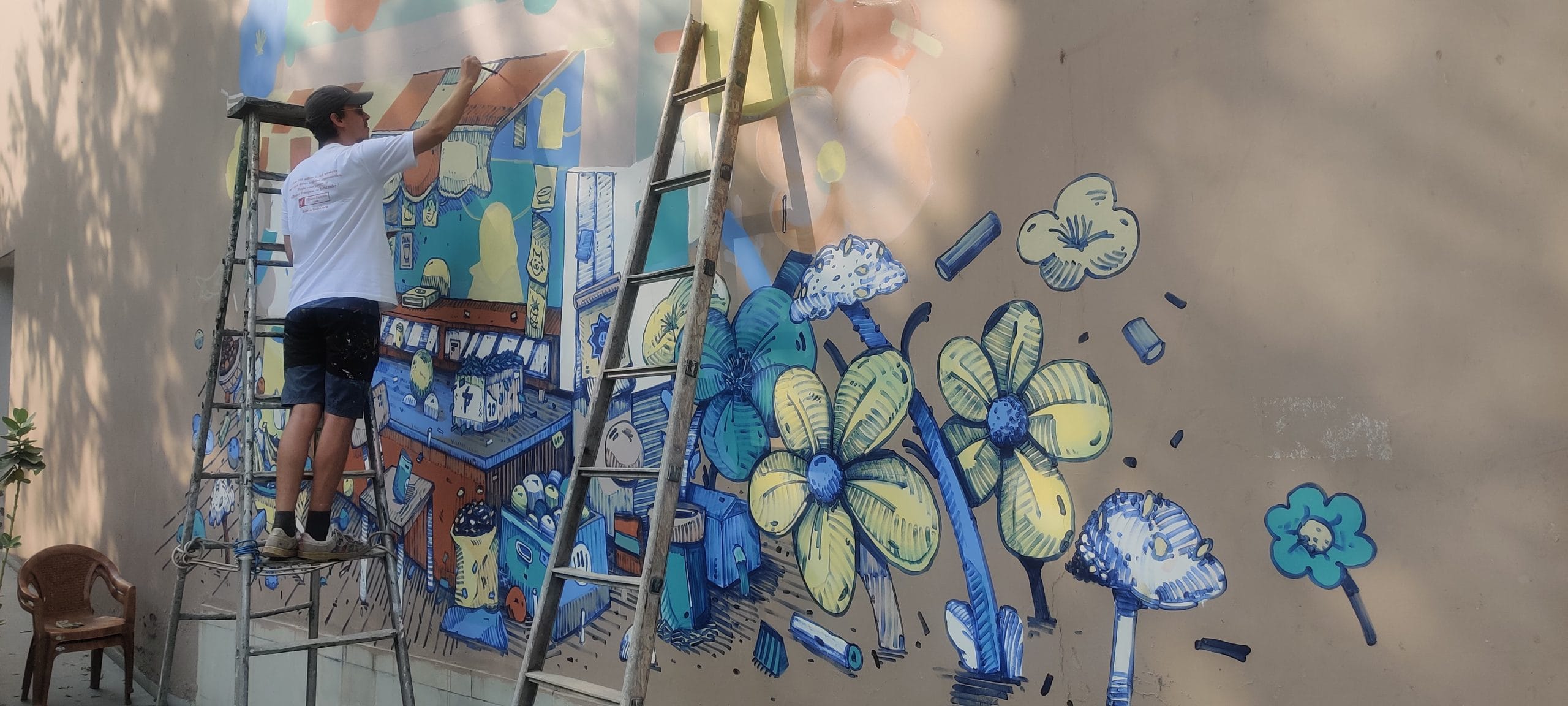
The mural’s two symbols suggest that poetry and literature emerge from the rhythms of everyday life, and not from distant, rarefied spaces.
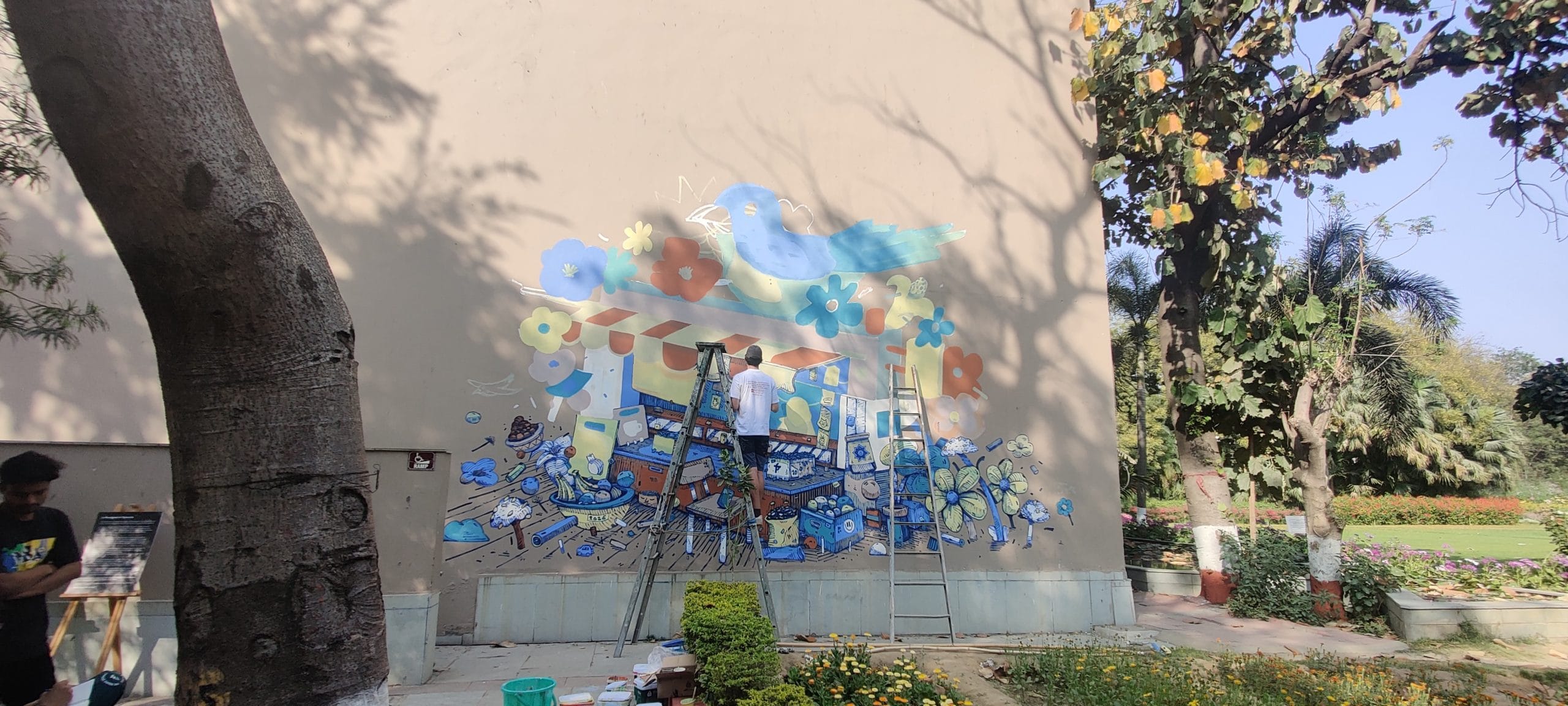
Kesadi has been working on the mural for the last four days – from 8:30 am to 6:30 pm – with only food and short nap breaks. For him, the gradual transformation of the wall is key to the experience of painting in public. Unlike gallery art, murals unfold in real time, often under the curious gaze of strangers.
“I arrived during the right season to paint murals,” he told ThePrint. “The temperature doesn’t bother me much, I’m used to it. I actually prefer the heat to the cold. And here, painting in a (college) park, you really feel the pollution less.”
The mural sits within LSR’s leafy campus, where students passing between classes have watched its shapes and colours take form.
Kesadi’s work often assembles fragments of everyday life, such as street scenes, modest architecture, shopfronts, or landscapes encountered during his travels. These elements are rearranged into an image that feels familiar yet slightly unexpected, hovering somewhere between the real and the imagined.
“I’ve been lucky enough to travel a lot thanks to my passion. An encounter, a shop, food, a moment of everyday life — I find inspiration in everything around me,” he said.
Kesadi’s mural will be completed and unveiled on 4 March.
Also Read: Graffiti meets diplomacy on walls of Lodhi Art District. India-Spain in Garden of Encounters
Art in public spaces
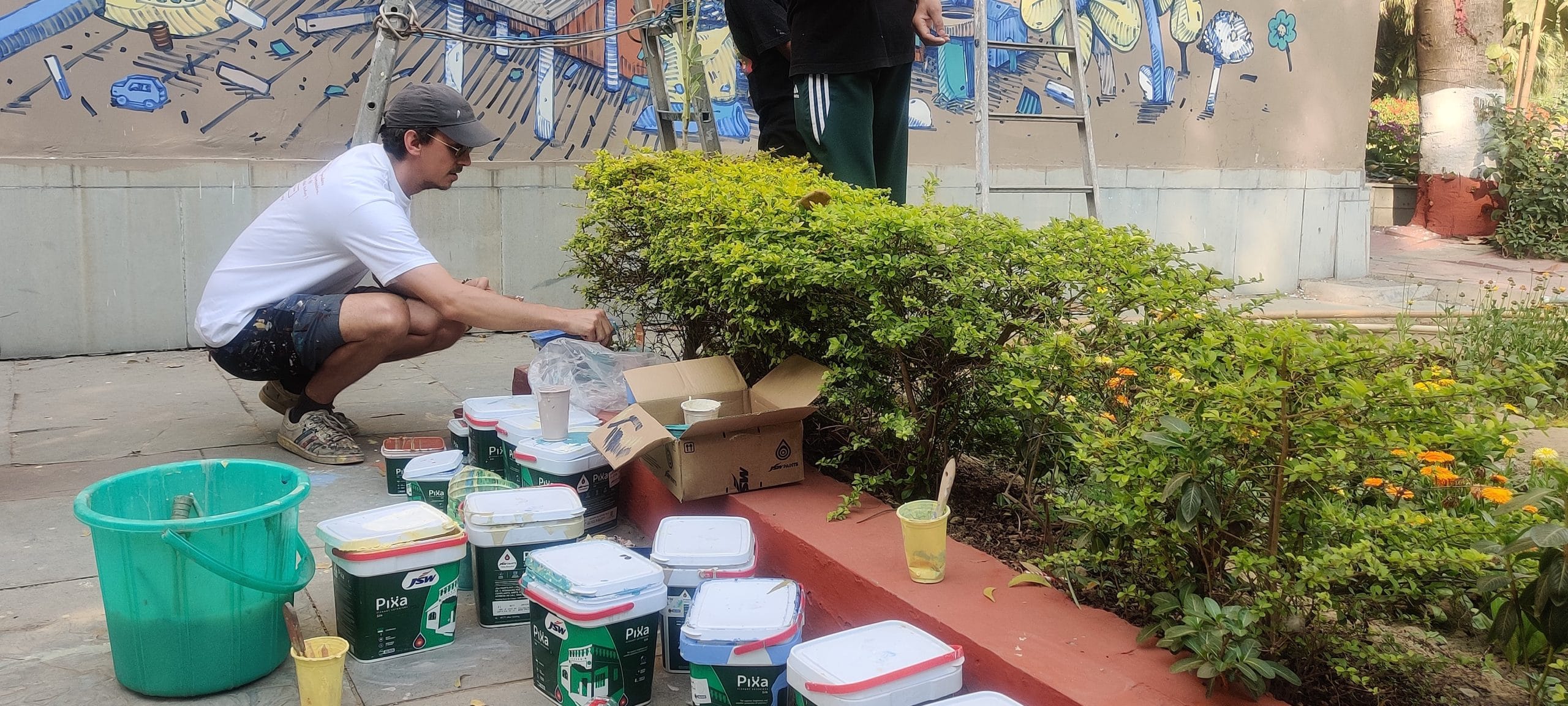
The organisers of the festival have partnered with Jindal South West Group and Apollo Tyres and are working with students, local communities, and neighbourhood groups to take contemporary art beyond galleries and museums.
Since its launch in 2021, Wall Art India has produced more than 40 murals across India and Sri Lanka.
“The most important thing is to create artworks in public spaces,” Kesadi said. “It makes this art more appealing and positive.”
Street art, once seen as fringe or rebellious, has steadily gained recognition as a legitimate artistic form. Cities across India, from New Delhi’s Lodhi Art District to Bengaluru’s public walls, have increasingly embraced murals as part of their urban identity.
Yet for Kesadi, the appeal remains simple: the ability to reach people who might never step inside a gallery.
“Painting, music, or any form of art allows us to escape everyday life and routine,” he said. “This is an art form that is rapidly growing and has been widely recognised for several years now.”
On working in India as compared to Europe, Kesadi says that he has felt less like a cultural shift and more like an extension of the global street-art community.
“There isn’t necessarily much difference between working in India and working in Europe,” he said. “I adapt easily to all kinds of places and truly appreciate the help from the people around me.”
(Edited by Insha Jalil Waziri)