







New Delhi: “Madam, shall I take you to the hospital?” Asha Bhosle’s driver once asked her.
He had been listening to her practise the breathy passages from ‘Aaja Aaja Main Hoon Pyar Tera’ in the back seat of the car. She had been working on the sound for days. To him, it appeared that she could no longer breathe.
The story brought a nearly full room at the India International Centre (IIC) to laughter Friday evening. But to cinema studies scholar Shikha Jhingan, it also showed the work behind Bhosle’s apparent spontaneity. Even a breath had to be practised until it could carry character, mood, and movement.
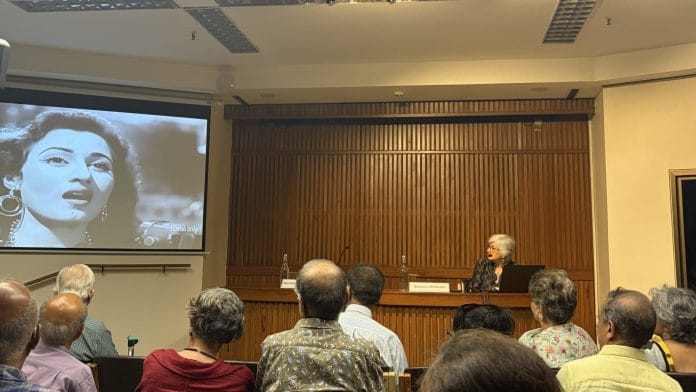
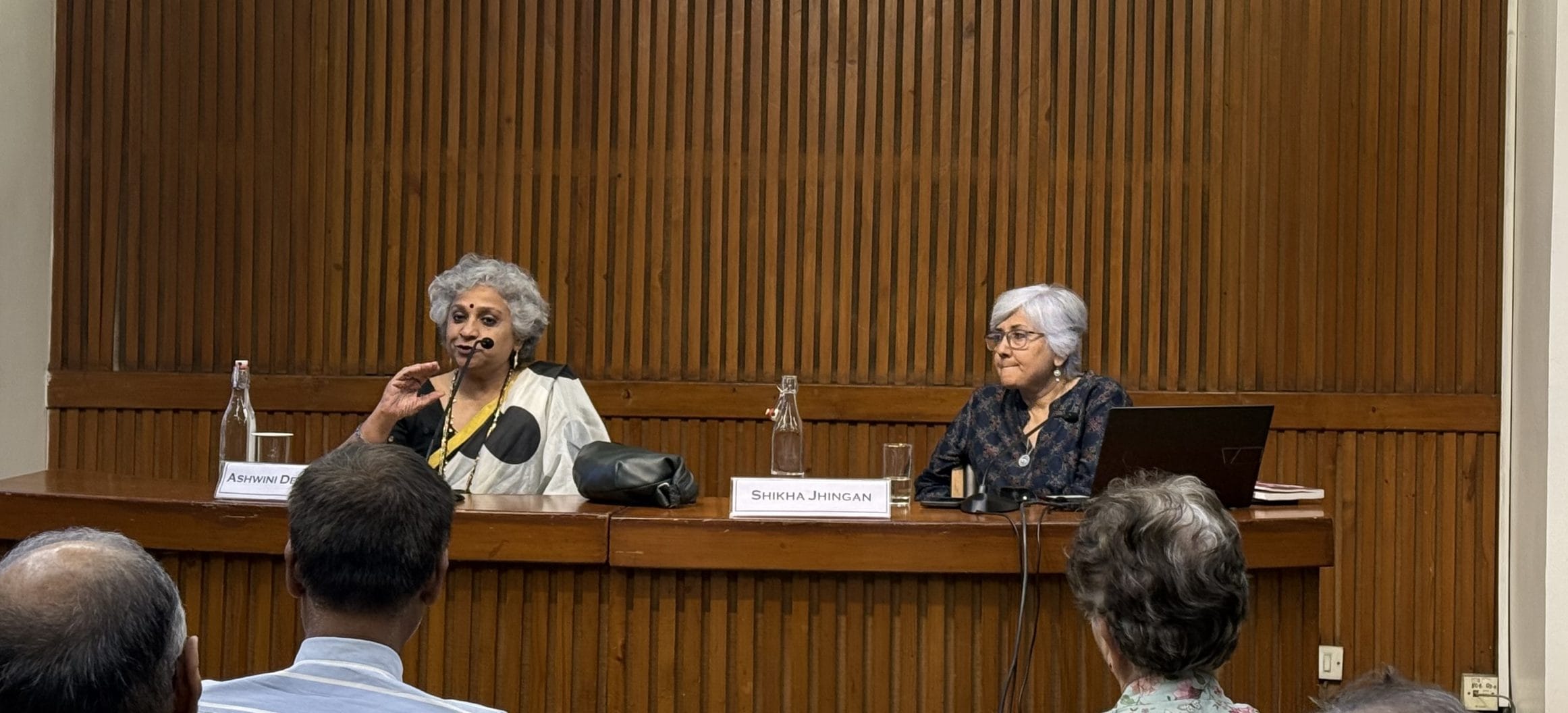
Jhingan was speaking at a talk titled ‘Asha Bhosle: Voice, Performance and Musical Legacy’, part of the IIC’s Music Appreciation series. Economist Ashwini Deshpande was the moderator for the event.
Seated next to a screen in the small Lecture Room, Jhingan played clips and stopped to point out what Bhosle was doing in each song. The 20 to 30 people gathered in the room knew the music well.
Jhingan’s point was not simply that Bhosle could sing in many styles. It was that she performed through the voice.
In ‘Aaiye Meherban’, Jhingan asked the audience to listen to the hum at the beginning and the way Bhosle stretched “aaiye”. Then she asked them to watch Madhubala.
“There is a certain kind of porosity between the two bodies,” Jhingan said. “There is, I feel, so much of Asha there. It’s Asha’s physicality.”
Bhosle had already placed the tease, the pause, and the invitation in the sound. Madhubala picked up those cues and turned them into looks and movement. The performance on screen began in the recording booth.
Jhingan made a similar point with ‘Jhumka Gira Re’. A male voice keeps asking “Phir kya hua (What happened next)” as Bhosle tells the story of what happened in the market of Bareilly. Each answer is different. She speaks, sings, and finally titters, pulling the story along.
Jhingan called it “a continuum between singing, listening, and performing”. Bhosle could put a laugh, a whisper, a grunt, or a spoken response into a song without making it feel separate from the music.
The voice of diverse bodies
It didn’t take long for the room joined in. People called out observations, interrupted with questions, and supplied details. At one point, a man who had already spoken raised his hand again. Everyone expected another question. He only wanted the air conditioner turned off. The room laughed, and a few people agreed.
Jhingan then moved away from the familiar Asha Bhosle of cabarets, mujras, and seductive songs.
“Most composers preferred Lata to any other singer,” she quoted Bhosle as saying about her early career. “I was especially marked out for children’s numbers and sultry style of songs.”
Deshpande pushed back against the neat story that Lata Mangeshkar always sang for the heroine while Bhosle was left with marginal characters.
“It’s a little bit of a caricature,” she said. Bhosle also sang major songs for leading women. “I think Asha’s repertoire is much more complex. In some sense, it’s even richer than Lata.”
According to Jhingan, Bhosle gave voice to diverse characters in Bombay cinema.
“She sang a lot of songs for children,” Jhingan said, including “children who were begging for money, but also adult beggars, alms-seekers”. They were “different kinds of bodies, very diverse kinds of bodies”.
After playing a song from Boot Polish (1954), Jhingan asked the room to listen to how simple Bhosle kept it.
“Listen to the tone that she’s creating,” she said.
Bhosle had made herself sound like a child without using the elaborate vocal ornamentation she was capable of.
Bhosle sang for children, beggars, courtesans, and characters away from the centre of the film. She also sang across gender. In ‘Kajra Mohabbat Wala’, she voiced Babita dressed as a man. In another comic number, she used an exaggerated falsetto for OP Ralhan in drag. When his wig slipped, Mahendra Kapoor’s voice entered briefly before Bhosle returned.
“These songs show how Asha Bhosle’s voice was available for all kinds of gendered bodies, eschewing the anchoring of the female voice exclusively to a normative female body,” Jhingan said.
Also read: How Asha Bhosle became the chosen voice for cross-dressing Bollywood heroes
How youth should remember Asha Bhosle
Beyond the characters she voiced, Bhosle’s range was in her voice, too. OP Nayyar understood what Bhosle could do in a lower register.
“When people sing at a lower pitch, they tend to become flat or lose power. But Asha Bhosle had this amazing quality where, when she sang at the lower octave, she could express so beautifully,” Jhingan added.
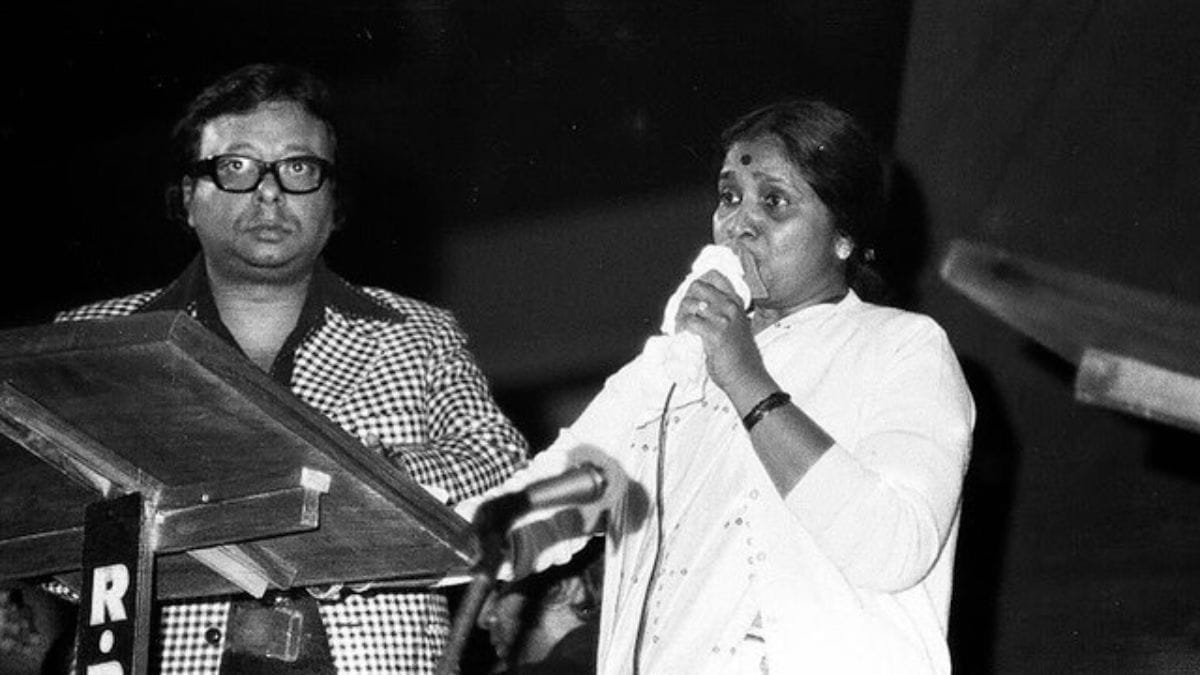
RD Burman pushed it further. Jhingan replayed the antara of ‘Dum Maro Dum’ to show Bhosle dropping into the lower register and then moving quickly across pitches. The voice, she said, “becomes an unruly force”, carrying the edginess of the late 1960s and 1970s.
Asked after the session what younger listeners ought to understand about Bhosle, Jhingan pointed to her willingness to keep changing. The legend sang for AR Rahman, experimented with Boy George, and adapted to new technologies.
“She was a true artist. She never stopped growing,” Jhingan said. “She was also a rebel—a sonic rebel.”
Tarini Unnikrishnan is an intern at ThePrint. She is an alumna of ThePrint School of Journalism.
(Edited by Prasanna Bachchhav)