



New Delhi: A room of about 90 people burst into applause on hearing British-Somali creator Abdi Omar’s inspiring words.
“People made assumptions, but they never really knew me. Now they hear my voice, hear the passion in every word, hear the confidence, hear a man who wants to be heard,” the British rapper in his 20s boomed on screen.
Omar had not always had such a charismatic voice. As a cerebral palsy patient, he is unable to speak clearly. That changed when he started using ElevenLabs’ AI-powered voice-cloning technology to design a voice for himself — one he now uses to tell his story through rap music.
This is what the co-authors of a new report call “incidental accessibility”: mainstream consumer technology, never designed purely as assistive tech, and yet filling that role anyway.
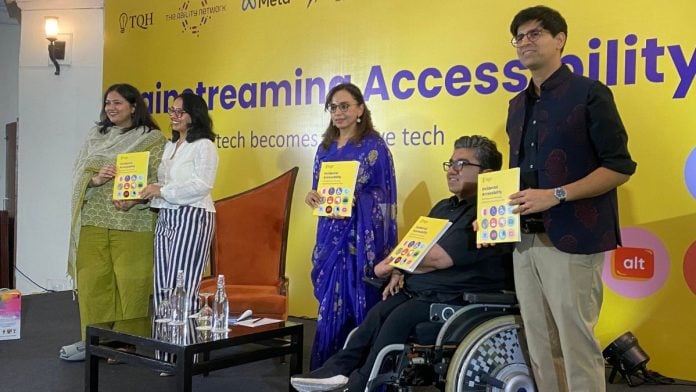
Titled Incidental Accessibility: How Mainstream Technology Is Expanding Accessibility in India, the report was launched on Wednesday at an event organised by The Quantum Hub at the Ambassador New Delhi, IHCL SeleQtions.
A Delhi-based consulting firm, TQH was founded in 2017 by public policy professionals, Aparajita Bharti, and Rohit Kumar. It works at the intersection of public policy research and communications.
The report was co-authored by TQH director Nipun Malhotra and TQH analysts on public policy, Sanskriti Bhatia and Aishani Jaiswal. It was funded by Meta.
The event brought together people with disabilities, bureaucrats, representatives from Meta’s India and global teams, an ElevenLabs Impact team representative, and organisations working in the disability space.
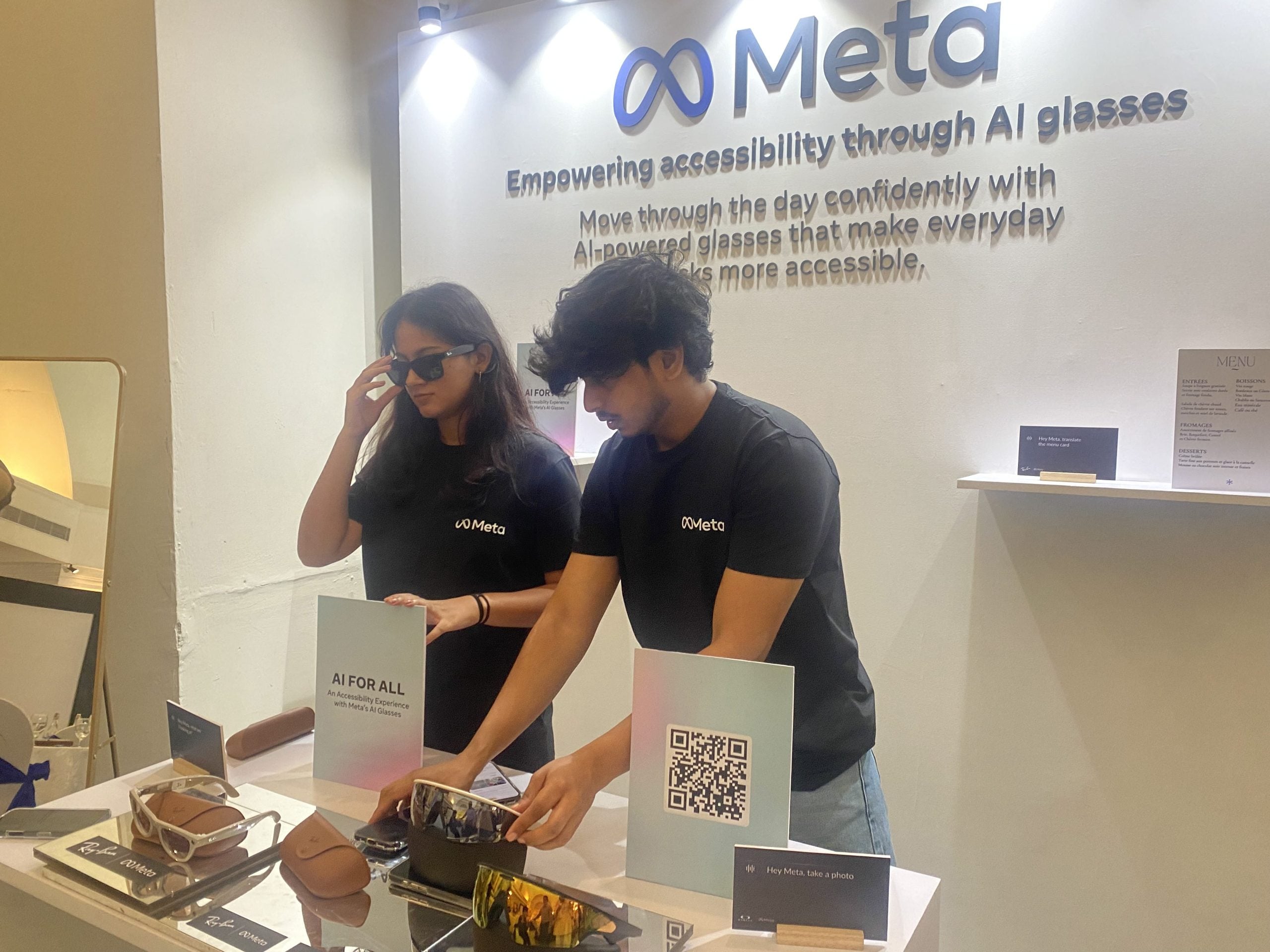
People clustered around an interactive Meta booth, trying live demonstrations of its AI smart glasses, asking them to play music or describe the scene in front of them. For a room discussing how technology can expand independence, the demonstrations offered a glimpse of what that could look like.
‘Incidental’ accessibility and consumer tech
The report’s genesis came when the co-authors saw Nipun use voice dictation software to send them his notes and ideas, instead of typing. Nipun, who was born with arthrogryposis, a condition that limits joint movement, is wheelchair-bound and has limited mobility in his fingers.
In later conversations with Malhotra’s mother, the team also found that a big reason she was comfortable with him living alone was his Apple Watch.
It reassured her that she could reach him at any time, and he could reach out for help at any point in time,” recalled TQH founding partner Rohit Kumar.
That was when they realised that “there’s something in mainstream technology that we’re not thinking about,” added co-author Sanskriti Bhatia — a phenomenon they go on to label “incidental accessibility.”
As the team spoke to more people with disabilities during their research, they found a similar pattern: each person identifying a different mainstream device doing assistive work almost by accident.
Captain Shishir Bhatnagar, wheelchair-bound since a spinal injury in 2011, described how his smart-home device, Alexa, along with automated tools such as smart plugs, assists him.
“It helps operate a lot of appliances independently, operate switches in the house, and operate the television,” Bhatnagar said.
Rahul Gambhir, who is blind, uses smart glasses to navigate and interpret his surroundings. Kushagra Sahu, who is hearing-impaired, uses haptic feedback from his smartwatch to know when his phone is alerting him. Sakshi, who has ADHD, uses noise-cancelling headphones to help her focus at work. Bhatia cited these cases in her presentation.
Beyond their immediate functional use, these technologies carry the added benefit of “not having the look of a medical device,” and cost less than dedicated assistive technology, Bhatia noted — a gap that shows up starkly in the numbers.
Dedicated assistive vision devices from OrCam can cost anywhere between Rs 3.6 lakh and Rs 8.1 lakh; the cheapest Meta AI glasses cost Rs 22,400.
Such consumer tech is “not necessarily a replacement for dedicated assistive tech,” Bhatia added, but it helps plug gaps existing in the ecosystem — people rely on it in addition to their existing assistive aids.
“It is about the independence, the autonomy and the confidence” that these devices provide their users,” Bhatnagar said.
The policy rigmarole
Such consumer devices lie in the grey area of having significant assistive use while also falling outside the regulatory frameworks that govern dedicated disability aids — and that comes with its own set of inconsistencies.
“Unlike dedicated assistive technology that often has subsidies, tax concessions in terms of GST, and also reimbursements through various disability schemes within the RPwD [Rights of Persons with Disability] Act,” observed Malhotra, “these particular products are not really recognised under those schemes,” and thus remain out of reach for many.
Manmeet Kaur Nanda, additional secretary at the Department of Empowerment of Persons with Disability (DEPwD), pointed to the other side of that same coin: staying outside bureaucratic processes can be precisely what gives users faster access to consumer technology.
“The moment that we say this is a device and it has assistive use, its percolation will become faster, because we won’t get into the policy rigmarole of having standards for it, quality benchmarking for it,” she said — a benefit that disappears “when we specifically call the product as an assistive, accessible, disability-helping kind of product.”
That gap has concrete costs. Products such as the AirPods Pro 2, legally recognised as hearing aids in the US, do not offer the same feature in India.
“In India there is no mechanism for a mainstream consumer product to even get that stamp of authorisation,” Malhotra added.
Price and infrastructure
The promise of these technologies also came with questions about who can afford them and how reliably they can be used.
“For it to work seamlessly, we would require a cloud space that is super strong,” observed Nanda.
“These devices cannot run without WiFi, a major challenge in a country where even when we are on a crowded road our WiFi stops working because there are so many of us trying to use and access it,” she added.
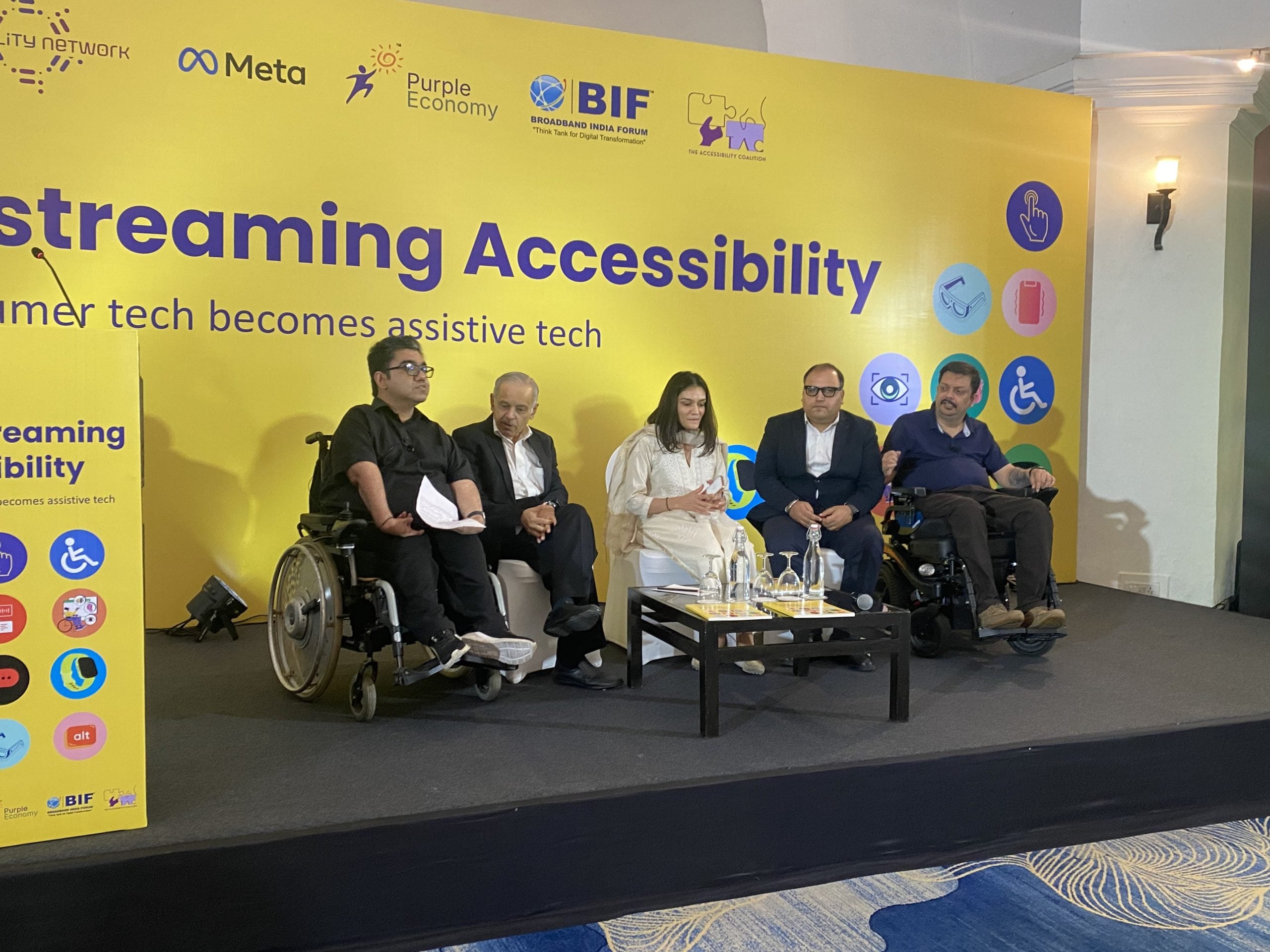
Pointing to how expensive these products can be, Nanda told co-panelist Natasha Jog, Director of Public Policy for India, Meta, that “assistive technology will only be mainstream when it is affordable and scalable.”
Similar concerns about price surfaced among many present in the audience. Rajeev Ranjan, founder and CEO of Anhad, an arts organisation for people with disabilities, said, “I was reading a report which said that in many cases disability is related to poverty. So how are those people going to afford the Meta Ray-Ban glasses?”
The researchers acknowledged these concerns but argued that companies increasing their market share in this space would push prices down over time.
“With economies of scale,” said Kumar, “your cost of production will go down.”
Yet as the discussion returned repeatedly to the promise of better technology, an ironic remark by Bhatnagar served as a collective reality check.
“We are discussing accessibility at a venue where the main entrance remains inaccessible to wheelchair users,” he said. Organisers acknowledged this limitation and arranged for volunteers to assist members with disabilities among the audience.
Edited by Maryam Hassan