





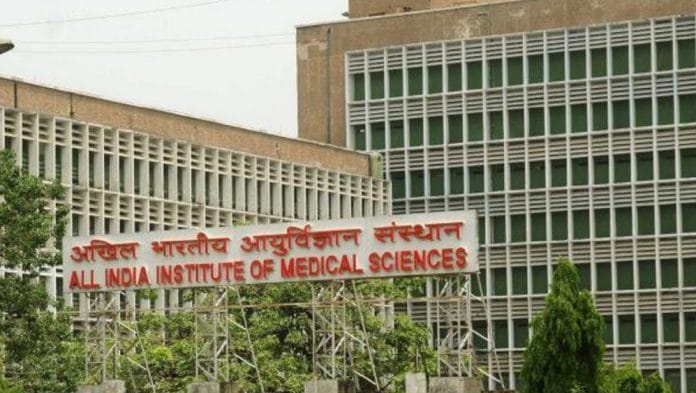


Bengaluru: The All India Institute of Medical Sciences, New Delhi, has issued a comprehensive social media policy that bans students, residents, and employees from using the institute’s name, logo, or branding in any digital or print form without prior written approval.
The office memorandum, dated 22 June 2022, takes effect immediately and covers everyone from undergraduate students to third-party collaborators granted temporary access to the institute.
The policy’s most sweeping provision concerns institutional branding. No individual or affiliated entity—including the AIIMS Student Association, Resident Doctors’ Association, and Society of Young Scientists—may use the name “AIIMS, New Delhi,” its emblem, or logo on event posters, banners, social media posts, or handles without prior written approval. Promotional videos, reels, and blogs using AIIMS branding are similarly prohibited without clearance.
Student bodies managing official content are required to register social media accounts with the concerned department, appoint a Media Coordinator as the point of contact for content approval, and disclose in their bios that content is student- or department-generated and not officially endorsed unless stated otherwise. Sponsored content and brand collaborations require special clearance.
The AIIMS circular lands at a moment when the phenomenon of doctor-influencers has reshaped healthcare communication in India.
Across the country, thousands of doctors, from dermatologists to endocrinologists, have built substantial followings on Instagram and YouTube. The regulatory apparatus has struggled to keep pace.
The Advertising Standards Council of India issued guidelines in 2023 requiring influencers sharing health and nutrition information to display their medical qualifications prominently, while the National Medical Commission, the same year, prohibited doctors from soliciting patients or posting personal patient photos and scans online—but adherence remains inconsistent.
For institutions like AIIMS, the risk cuts both ways—doctor-influencers affiliated with the institute lend it visibility, but if their content doesn’t align with institutional values, it is difficult to distance themselves from.
Also read: India’s health influencers are the new WhatsApp University. Fact-checkers just can’t keep up
Patient privacy
On patient privacy, the circular invokes both the Indian Medical Council Regulations 2002 and the Digital Personal Data Protection Act 2023, prohibiting any sharing of patient information, images, or case details on social media—even where the patient cannot be identified.
Disciplinary consequences escalate from written warnings to suspension of access or association privileges, and ultimately to derecognition of a student body or a ban on participation in institutional events. Legal action under “applicable laws” is also flagged as a possibility for misuse of AIIMS identity.
The policy also covers academic integrity—prohibiting the sharing of exam questions or answer keys—and anti-ragging compliance under UGC’s 2009 regulations.
The monitoring and takedown provisions are notably stringent: the concerned department reserves the right to actively surveil social media for compliance, and any content flagged under a takedown notice must be removed within 12 hours.
AIIMS Delhi’s move mirrors a broader trend of Indian universities and public institutions tightening their grip on social media use by affiliates.