





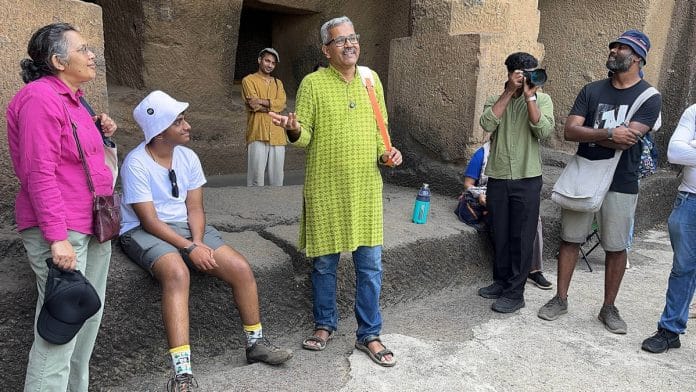



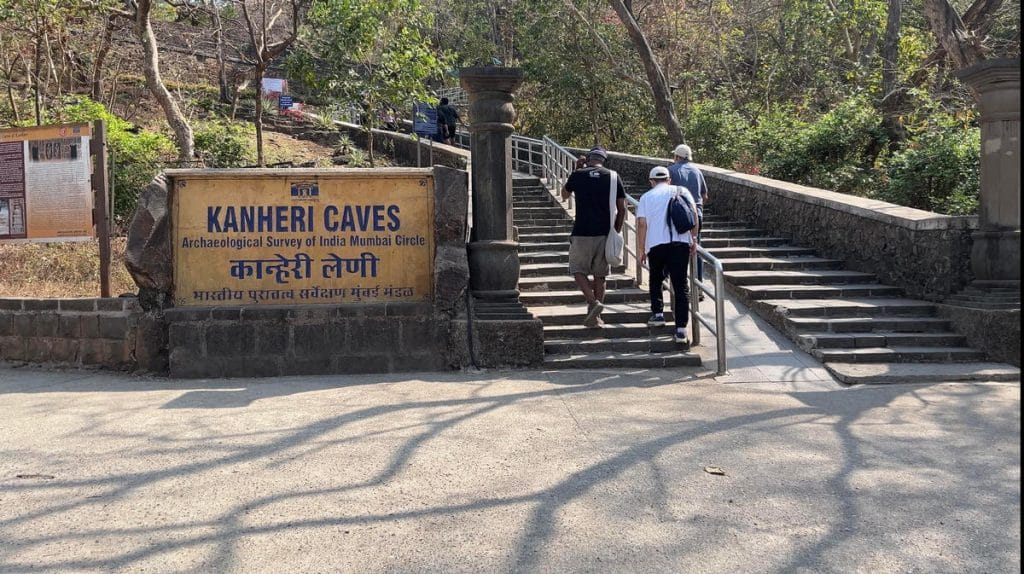
Mumbai: Most Mumbaikars associate the Sanjay Gandhi National Park with leopard sightings and morning runs, but it was also once a global Buddhist centre that endured for 1,400 years. On a warm Sunday morning, archaeologist Dr Suraj Pandit led a heritage walk through three of the 109 caves at Kanheri — a monastic complex once connected to Nalanda, Tibet and Japan.
“This is not just a site of caves, it is a living archive of Buddhism’s entire journey in western India,” Pandit told a group of 35 history buffs—students, young adults, and seniors—before starting the walk, titled ‘Tracing Stone & Shadow’, organised by DAG, formerly known as Delhi Art Gallery. “All settlements here are Buddhist in nature. There are no Hindu or Jain caves — Kanheri is unique in that sense.”
Over the course of the next four hours, the walk peeled back centuries of Buddhist history through the lives that once animated these spaces. Kanheri, which was established as early as the 1st century BCE, continued in use until as late as the 16th century CE.
The site, he explained, preserves a continuous evolution of Buddhist practice, from early monastic traditions to Mahayana and later Tantric forms.
“What we see today in Tibetan Buddhism has its origins in India, but the Konkan region, including Mumbai, was one of the important centres where Tantra allowed Buddhism to survive longer than expected,” Pandit said. “It sounds unusual that Buddhism survived in Mumbai till the 16th century.”
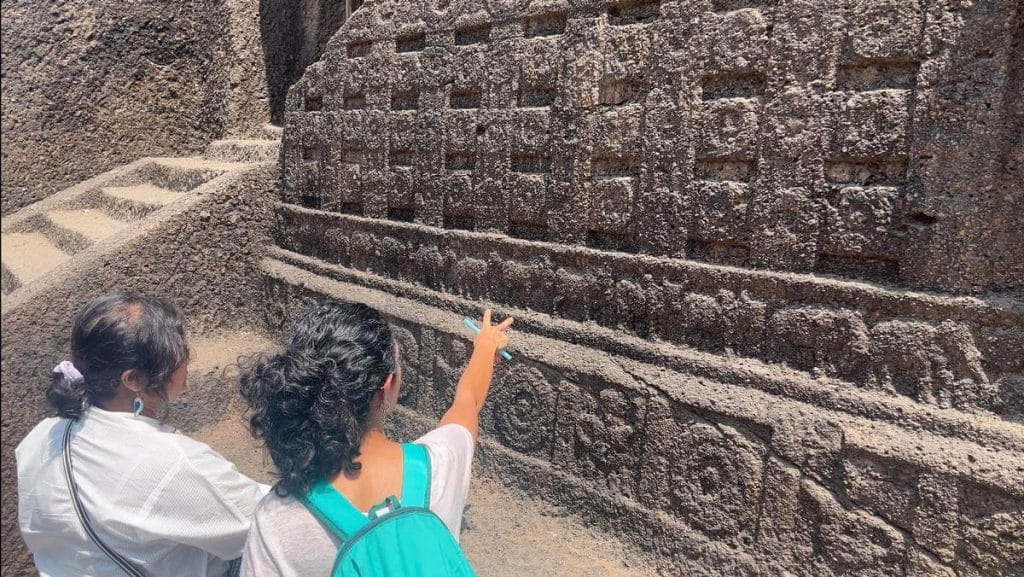
Kanheri began as a satellite settlement of Sopara — now known as Nala Sopara, then a major trading hub with a shipping port — before emerging as an independent monastery around the 2nd century CE. The caves primarily functioned as residential and meditation spaces for monks.
Pandit pointed to numismatic evidence such as Bahamani coins and textual records suggesting that monks eventually evacuated the site. Pandit told ThePrint that when the Portuguese arrived in Salsette, conversions took place at monastic sites like Mandapeshwar and Kanheri in Borivali.
“The Kanheri site was confiscated, given to the church and the monks were shooed off. With no source of revenue, the site at Kanheri was abandoned for the next 400 years,” he said.
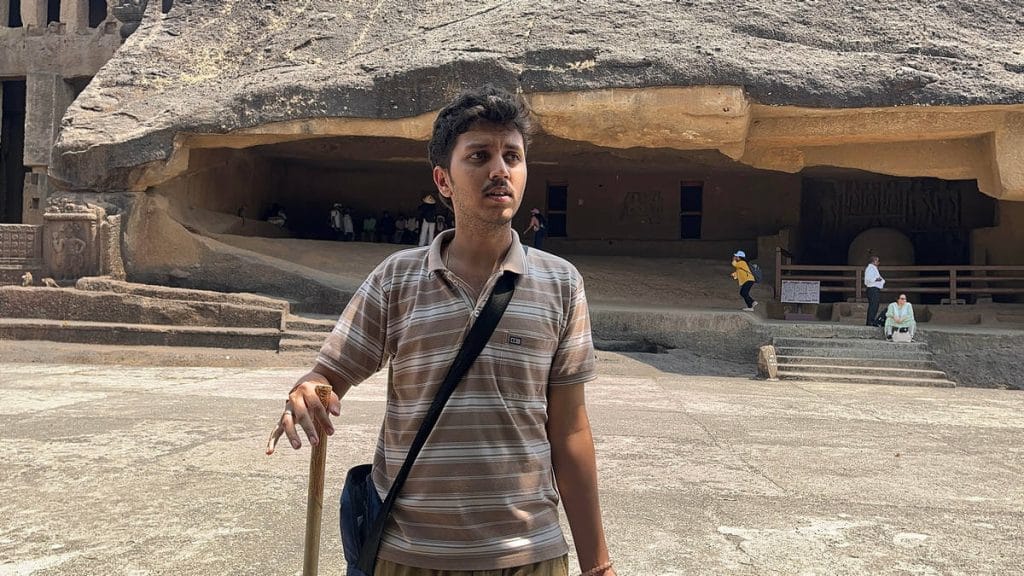
Pandit’s student Michael Keer, a third-year student of Ancient Indian Culture and Archaeology at Sathaye College in Mumbai, also led an interactive session during the walk. He attributed the site’s rediscovery in the modern period to colonial archaeology and global curiosity.
“There are signs throughout the caves that show how travellers from all over the continent interacted with people living here at the time,” Keer said. “Kanheri started as a small monastery, but at one point, it was connected to the wider world in ways we are still trying to fully understand.”
Also Read: Mysore Sandal Soap, cigarettes & sambar—Bengaluru artist maps the city through its smells
A global monastery
Far from being isolated, Kanheri was embedded in a wider world of movement and exchange. Excavations in the mid-20th century revealed seals from Nalanda, suggesting monks and scholars moved between eastern and western India.
“This indicates formal connections, perhaps even admission systems or scholarly exchange,” Pandit said.
He used the example of Dipankar Atish, a key figure in the spread of Buddhism to Tibet. Tibetan biographies place Atish at Kanheri for training in Tantra before he entered Nalanda. He stayed here for about a year, Pandit said, which shows the site’s reach beyond the region.
References to Kanheri also appear in texts by figures such as Xuanzang and in Sri Lankan chronicles like the Deepavamsa and Mahavamsa.
“At one point, this was not a peripheral site. It had a global influence,” Pandit noted.
That influence resurfaced in later centuries as well.
Pandit recounted the journey of a Japanese monk from Nara in the early 20th century, who travelled to Mumbai in search of an ancient monastic site tied to his tradition. Arriving at what was then a forested and remote location, accessible only by bullock carts, the monk identified Kanheri as the origin point of his sect, associated with the Lotus Sutra tradition founded by Nichiren.
“When he entered Cave 90, he wrote in his diary that he had found the place where his cult originated,” Pandit said. The monk left behind inscriptions in Japanese, which later sparked scholarly interest and further exploration.
Subsequent research also uncovered some of the earliest references to Parsi presence in India, with 11th-century inscriptions and graffiti found at the site.
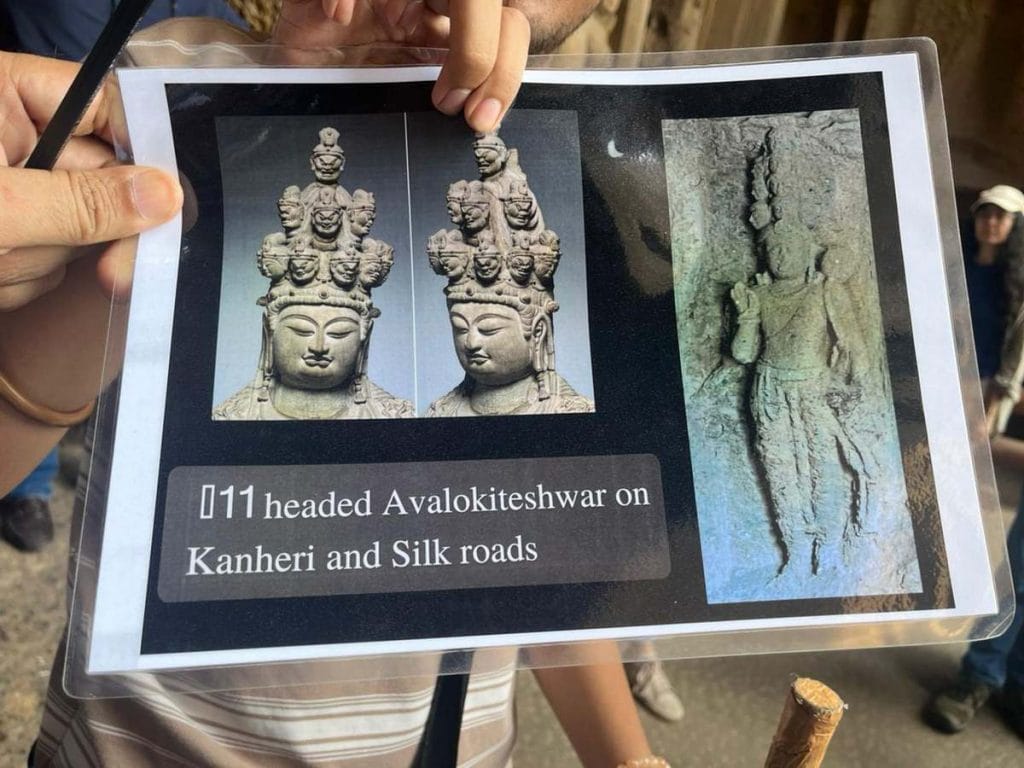
A sculpture of the 11-headed deity known as Ekadashamukha, found in Cave 41, is the only such image in India. An interpretation of the deity is also worshipped in Chinese Buddhism as Avalokitesvara — the 11 heads representing its ability to see and hear suffering in six realms of existence.
Also Read: A Tamil Buddhist yogi went to Zanzibar, Macau in 1500s. Changes what we know about Buddhism
‘Messages from the past’
Moving through the early caves, Pandit shifted focus to the social organisation of the monastery. Contrary to popular imagination, monks were not the ones carving the caves.
“They specialised in meditation, not in such labour. They organised the work, seeking donations, gathering funds, and hiring skilled workers,” he said.
Only monks were allowed to stay in the caves and other visitors were restricted to chaitya halls where collective rituals took place.
At Cave 3, one of the site’s most prominent chaitya halls, he pointed out how architecture structured social interaction.
“This was a public ritual space. Beyond this point, entry was restricted. It is evident from the inscriptions on the pillars that depict common men. There would have been gates and visiting hours, and access was carefully regulated,” he said.
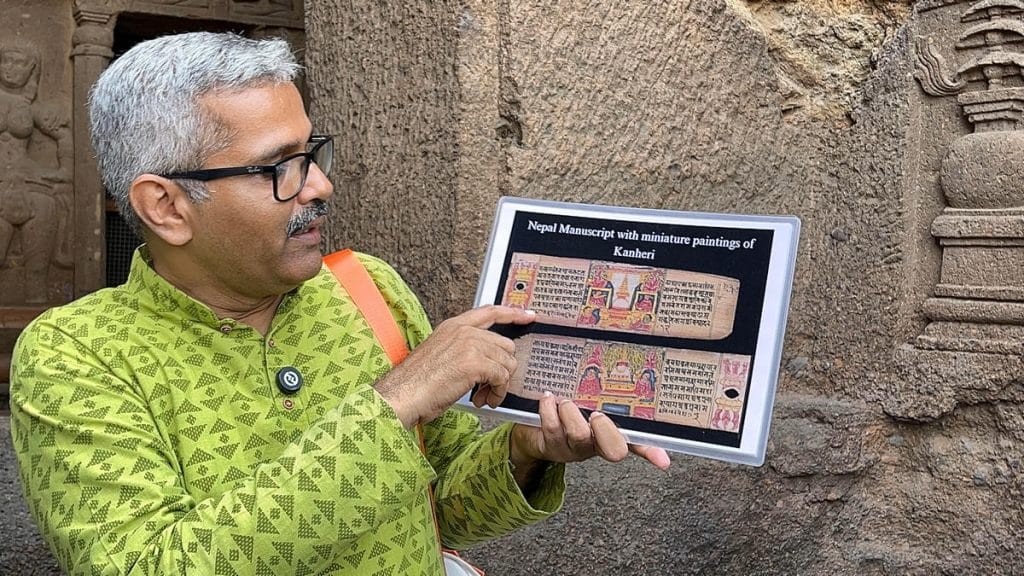
Quoting 19th-century architectural historian James Fergusson, he described the caves as “messages from the past, with stories engraved in stone.” But not all of these messages are complete.
The caves have several unfinished carvings, such as a faint outline of a Buddha figure in Cave 2. Pandit said this was due to a flaw in the rock.
“This tells us how artisans worked, how they planned, and how they responded to natural limitations,” he added.
In the case of Cave 4, Pandit said it remained unfinished for several possible reasons: lack of funds, the decline of Buddhism and the Portuguese invasion.
Ajit Vakole, a participant from Ulhasnagar in the Thane district who often attends heritage walks, said this one particularly stoked his curiosity.
“While they only covered three caves, they instilled interest in wanting to know more about the remaining 100 caves” he said.
Pandit, for his part, invited participants to start looking for answers themselves. In one instance, he demonstrated how the protrusion of one cave wall into another’s courtyard revealed the sequence of construction.
“There is always a simple clue, if you observe carefully,” he said.
(Edited by Asavari Singh)