





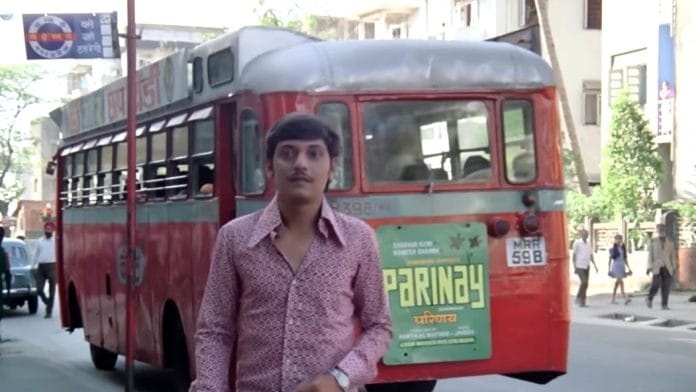



While the larger-than-life leading men of 1970s Hindi cinema such as Dharmendra, Amitabh Bachchan, and Vinod Khanna flaunted their bravado, the hero of Basu Chatterjee’s Chhoti Si Baat was a man whose biggest battle was with his own insecurity and diffidence.
In the 1976 film, Arun Pradeep (played by Amol Palekar) is an ordinary man who hesitates to utter even two lines in front of the woman he likes, Prabha Narayan (Vidya Sinha). He is shy, awkward, and painfully self-conscious.
This simple premise — a man trying to express his feelings to a woman he loves — becomes the foundation for the story as well as the title. After all, it was just ‘Chhoti Si Baat’, a small matter. Rather than lavish sets and dramatic twists, the love story unfolds with an understated middle-class relatability.
Chatterjee’s directorial sense deserves credit here. The bus stops, crowded offices, and cafes of Mumbai are woven into the story instead of serving as mere backdrops. Whether it’s his fantasies of a date at a fancy coffee shop or the BEST bus he takes to work, each setting says something about Pradeep’s internal life and social realities. The mundane becomes meaningful.
Also Read: In Angry Young Man era, Khel Khel Mein stood out for its wisecracking rogue — Rakesh Roshan
Slouchy Arun vs confident Shastri
Chhoti Si Baat takes its own sweet time settling the audience into Arun’s world. His routine is predictable. He follows Prabha, boards a bus, silently admires her, and reaches late to the office, where no one respects him. Arun’s slouched posture, nervous movements, and hesitance in speaking convey his inner life without a word.
But the situation gets competitive with the entry of Nagesh Shastri (Asrani), a rival who represents everything Arun wants to become. Shastri is bold, socially adept, and knows exactly what to say. Yet he is not villainised — he is simply someone who’s had a different kind of social conditioning. The contrast between the two men, and their attempts to outshine each other, is where the comedy shines. Arun’s efforts to keep up only make things worse, whether it’s the second-hand motorcycle he purchases (a lemon), or the babas he visits (all frauds).
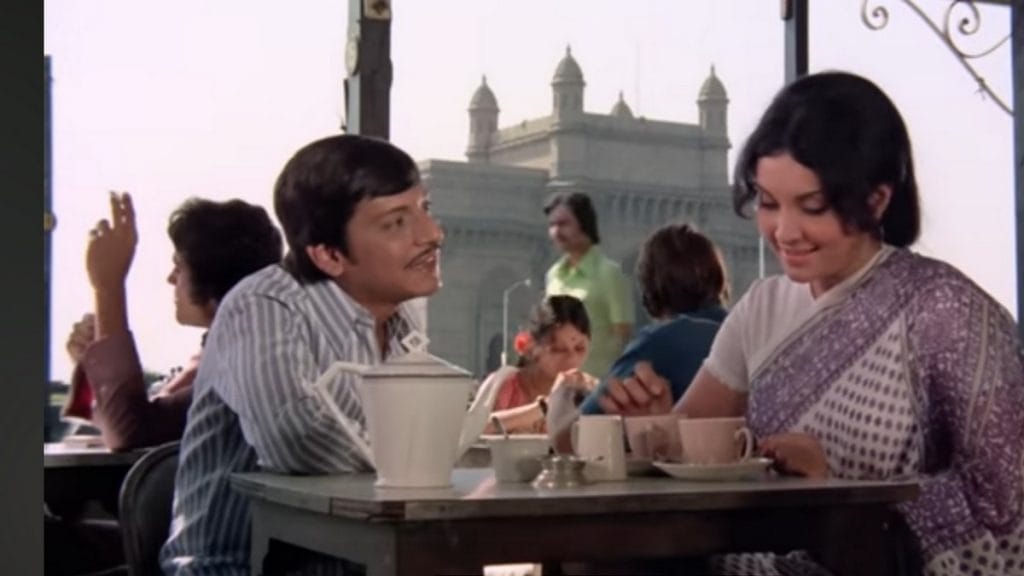
But the actual turning point comes with Col Julius (Ashok Kumar), a self-appointed confidence coach who takes Arun under his wing and trains him in the art of self-assurance. This portion of the film is its funniest, and almost satirical, as Arun stumbles through a transformation he isn’t quite convinced is possible. And eventually, it works.
Beneath all the humour lies a meaningful message. That confidence is not an inherent trait. It is something that is cultivated. The film suggests that personal growth often requires stepping outside the comfort zone, even if it feels unnatural or forced at first.
One of the film’s, and the filmmaker’s, greatest strengths is restraint. There are no dramatic confrontations or grand declarations of love. Emotions are conveyed instead through small gestures, pauses, eye contact, and expressions.
Also Read: Saath Saath begins where most Bollywood love stories end—after the wedding
Treatment of masculinity
The film challenges the conventional notion that a man must be dominant, aggressive, and fearless to be worthy of love.
Arun’s journey is not about becoming someone else but about finding confidence within himself. Even as he learns new behaviours, the essence of his character remains intact. So when the moment comes to deploy Julius’s final tactic to win Prabha’s love, he backs out. At his core, he isn’t that person.
This nuanced portrayal makes the film feel progressive even today. The heroes we see in films such as Animal and Kabir Singh are alpha males who want to acquire their love by hook or crook. Forget working on themselves, they don’t even recognise how problematic they are. These films have normalised toxic masculinity to the point where Arun’s gentleness is almost disorientating.
Chhoti Si Baat proves that a film does not need high stakes or alpha males to be compelling. Sometimes, focusing on the ‘small things’ can uncover the beauty and complexity of ordinary life and show that a hero’s journey can be as simple as overcoming self-doubt.
(Edited by Asavari Singh)
Progressive? Dude was a freaking stalker.I am sure no girl in her right mind would wand a ‘progressive,positive masculine ‘amol parikar following her everywhere