





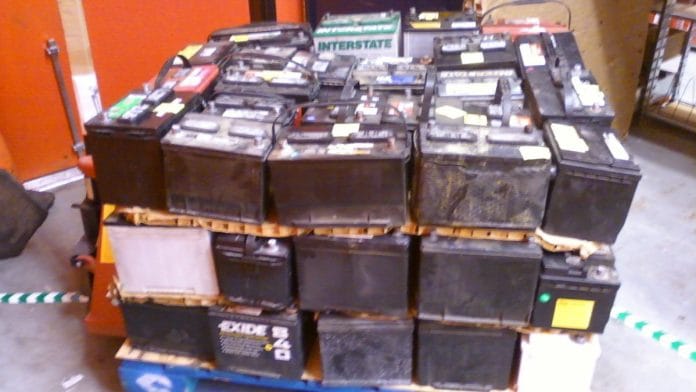



New Delhi: A new study by the environmental research group Toxics Link has found high levels of lead contamination in soil samples from lead battery recycling sites in Delhi-NCR. Released on 8 April, the study, titled ‘Soiled with Lead: from Battery Recycling’, analysed soil samples from 23 different battery recycling sites across the Delhi-NCR region and found lead concentrations as high as 48,000 parts per million (ppm) in some areas.
The samples were collected from lead-acid battery recycling facilities that were located near schools, residential areas, and local communities, to assess whether the soil in the vicinity of human habitation was safe or not.
About 52 per cent of all soil samples collected had lead concentrations higher than 5,000 ppm, which would classify the site as a Hazardous Contaminated Site under India’s Environmental Protection (Management of Contaminated Sites) Rules, 2025. Moreover, 31 per cent of all sites exceeded standards for industrial areas, meaning the lead contamination levels were higher than what is permissible for industrial land use.
“While battery recycling is intended to reduce environmental harm, improper handling and poor practices result in the uncontrolled release of lead into the air, soil, and water,” said the study.
Also read: How will Delhi conduct its first city-wide tree census
Lead and the risks it poses
Lead, a naturally occurring element, is a toxic metal that can cause poisoning and contamination of both the environment and human beings. It is used heavily across mining and manufacturing industries, especially in lead-acid batteries that are used in cars. Exposure to lead can lead to severe health problems, including brain damage, intellectual disabilities, anaemia, hypertension, and even death in some cases.
Batteries are currently the highest consumers of lead in the world, with 86 per cent of global lead consumption in 2022 coming from lead-acid batteries. India and China also dominate the lead demand in the world, with World Bank data showing that India imported over 4 million kgs of lead ore in 2023.
India also has a bustling lead-acid battery recycling ecosystem, with over 670 formal units that have the capacity to recycle over 3 million tonnes of batteries every year. However, as the Toxics Link report pointed out, there are also unauthorised recycling plants that operate without formal permission, and can run the risk of unsafe recycling practices.
The samples were collected by the team between May and June 2025. The sampling protocol used by Toxics Link included collecting soil from the top 1-2cm of the surface, from within a 100-metre range around the battery recycling facility. They collected samples from four formal recycling plants and 19 informal recycling sites, and found that there was lead in every single sample.
“There is no safe level of lead exposure in the blood,” said the report. “According to the World Health Organisation (WHO), lead exposure is among the top ten environmental health threats globally.”
(Edited by Aamaan Alam Khan)