





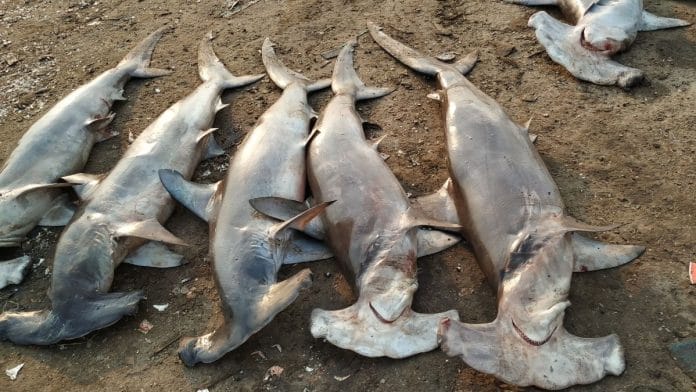



Hyderabad: Five researchers studied a decade’s worth of digital content from fishing influencers, traders at harbours, tourist vloggers, and coastal economies across India’s seas and coastline. This gave them rare access to remote shark landing sites, insights into country-wide species diversity, and an understanding of Indian perceptions of sharks.
Across India’s 11098.81 km long coastline, scientists have long struggled with patchy, species-specific data on sharks, rays, and skates that comprise the ancient group of carnivorous fish, Elasmobranchs. India is also one of the top shark–fishing nations globally.
Indian waters have 114 shark species and 116 species of ray. In the past 50 years, these species have struggled to survive. Increased fishing pressures globally have led to a 71 per cent decline in shark and ray population since the 1970s. Overfishing, habitat destruction, and international trade have sharply reduced their numbers. This has pushed these predators, which evolved long before dinosaurs walked the Earth, toward extinction within our lifetimes.
“A national-level picture is not available for sharks and rays in India. Meanwhile, individual research is focused on a local scale. A holistic picture is often missing, which is possible through digital conservation,” said Sudha Kottillil, one of the authors of the paper and a researcher at InSeason Fish, a sustainable seafood initiative.
The data from the study, published in the journal Aquatic Conservation: Marine and Freshwater Ecosystems, spanned 96 locations across India, covering 33 harbours, 34 coastal villages, and six markets on the east and the west coast. The scientists were able to analyse 1,293 elasmobranch-related posts and recorded 83 species from six social media and citizen science platforms.
“We identified two rare species of shark which were last seen in 2014!” said Kottillil, excitedly.
Of the species identified, 62.2 per cent belonged to the IUCN Red List of Threatened Species. Some were also found to be protected by law in India, listed under Schedule I and II of the Wildlife (Protection) Act, 1972, which offer highest protection to the species.
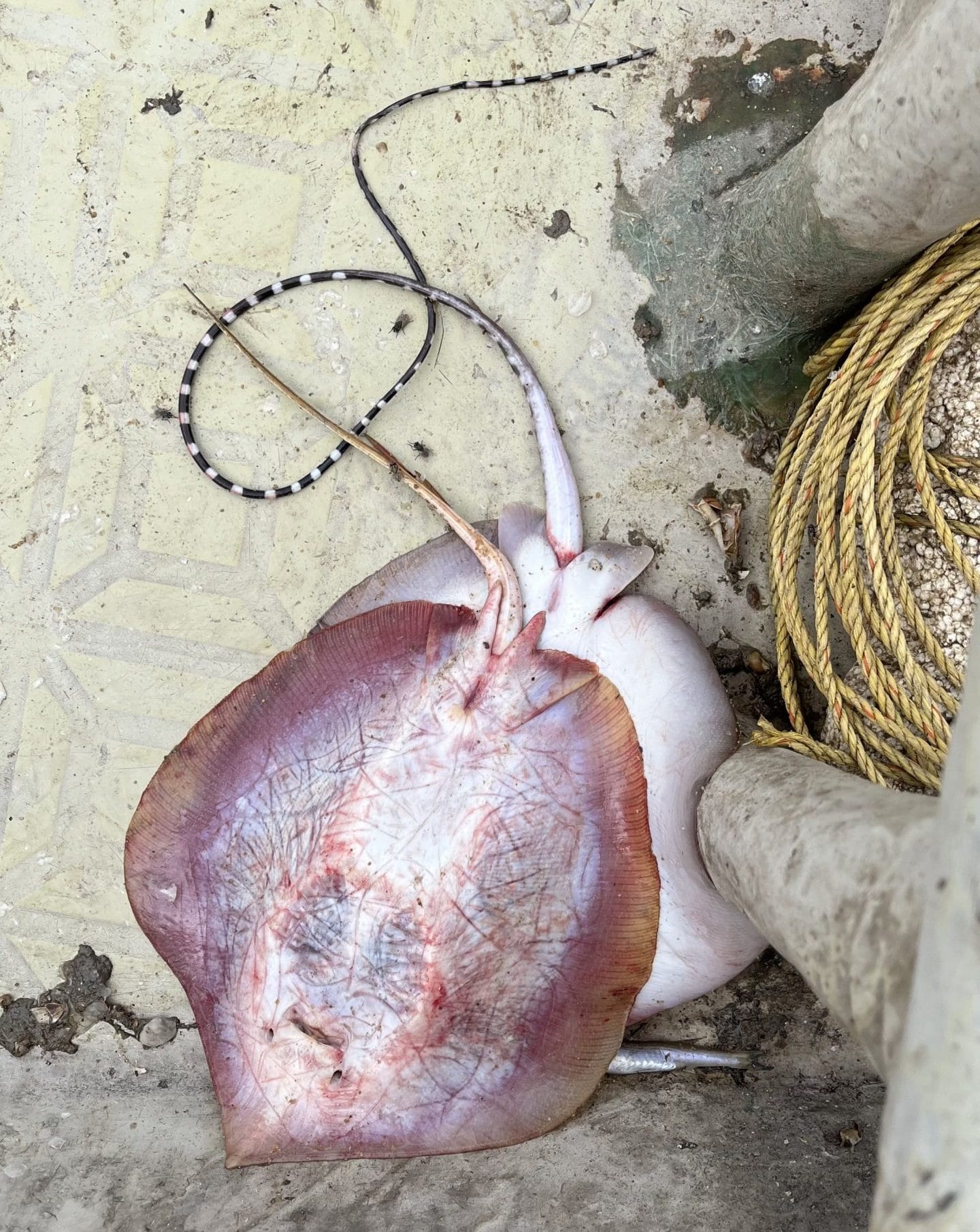
The researchers did more than just identify rare species — they gained crucial access to shark hotspots and remote landing sites where fishers offload their catch on shore. Internet connectivity has spread to far corners of India faster than formal scientific research. And scientists are utilising this penetration to its full potential by offering a new window into how we see shark conservation in India.
“Analysis showed that Kerala has a high internet penetration rate which automatically translates to people taking more photos and posting about them. It gave us data on many smaller landing sites and hotspots,” said Kottillil.
“On the contrary, island states such as Andaman & Nicobar and Lakshadweep were not well represented. This again relates back to accessibility to phones and the internet,” she added.
The paper argues that advances in technology and wider internet access are reshaping how people communicate with lesser-known marine species in India. Given the country’s predominantly young population, the use and relevance of social media are set to grow further.
Internet use and data availability
Figures show that there were 491 million active social media user identities in India as of January 2025. For perspective, this figure is equivalent to 33.7 per cent of India’s total population.
Social media posts were heavily concentrated in two harbours: the Kasimedu harbour in Tamil Nadu on the east coast and Sassoon Docks in Maharashtra on the west coast. Posts from major landing centres such as Kochi harbour and Gujarat’s harbours were largely absent.
The results of this study have to be understood in the context of a digital divide, where users’ economic, social, and cultural backgrounds could bias the available data.
As internet use surged, young fishers began sharing videos and posts that documented their seafaring lifestyle. They showed their catch, fishing gear, and everyday routines at sea and on shore. Most of the content was created in local languages, allowing them to speak directly to their communities while also building visibility beyond traditional fishing networks.
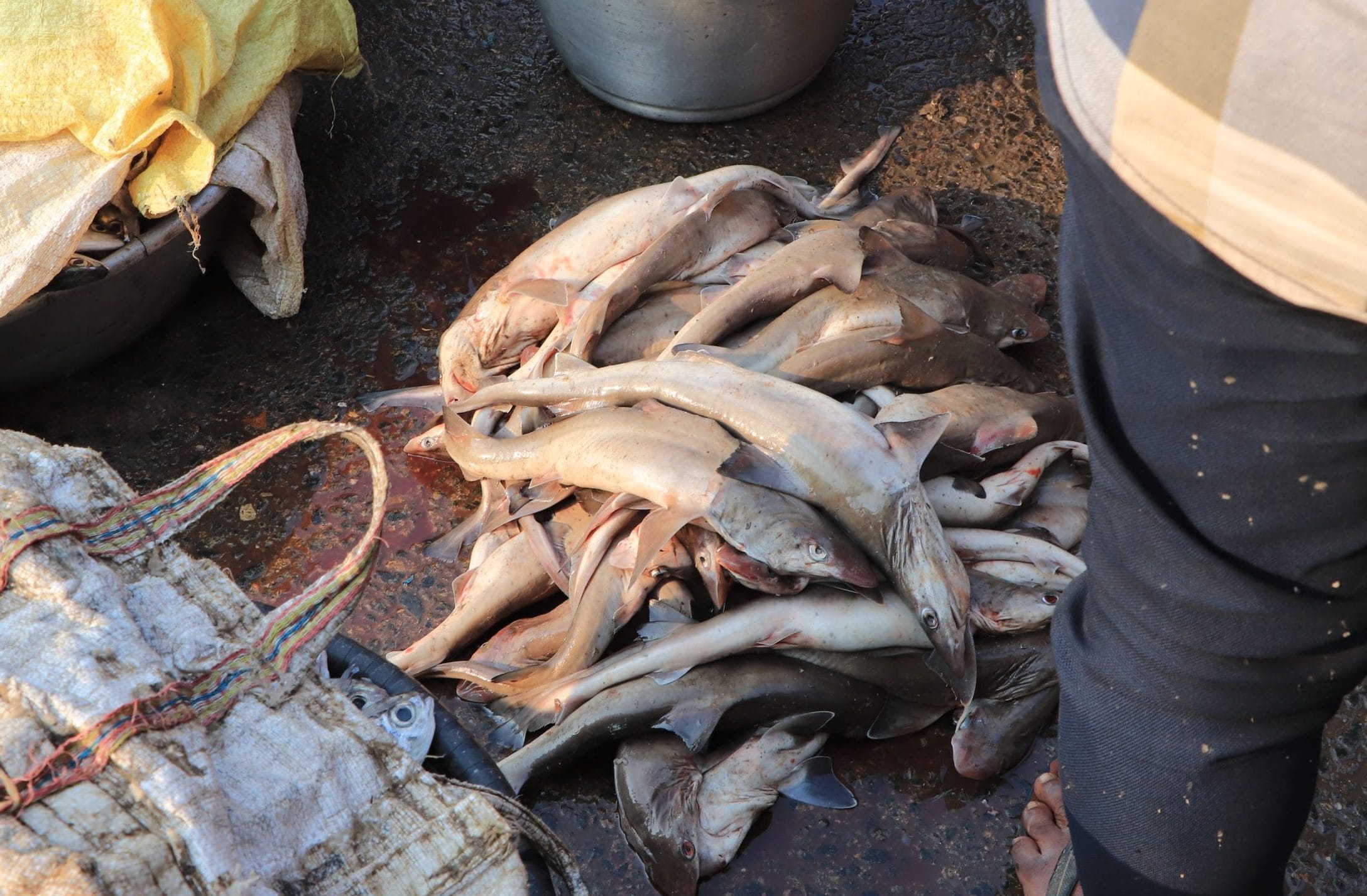
Alongside fishers, tourist bloggers and market-goers also posted images and videos from harbours and fish markets, often framing fishing activity as spectacle or local flavour. “There was a fascination towards sharks in particular,” said Kottillil.
Most posts (91.89 per cent) were made by individuals — which included both Indian and foreign tourists, fishermen, traders, and food bloggers — followed by organisations (3.01 per cent); others (5.09 per cent), including conservation organisations, networks, news channels, hotels, and video creators; and those working in the tourism industry (0.23 per cent). A majority of the posts were on general landings with a focus on conservation, while a few were on price lists, menus, and recipes, indicating a value-use focus.
Their content focused on fresh catch, auctions, and coastal routines that helped amplify the visibility of these spaces. “People who use social media are accidental citizen scientists because they are helping document so much data that is useful for conservation and research!” said Kottillil.
Addressing scientific blind spots
Traditional research is usually time–intensive. It involves scientists carrying out painstaking data collection with limited resources, usually over a year for the data to be useful. With digital data, researchers can now get consistent data from across the country over a period of time to understand trends and patterns.
The study also broke language barriers that scientists normally encounter on the field. “We were even able to tap into regional markets and local language content by searching for shark names in local languages,” said Kottillil.
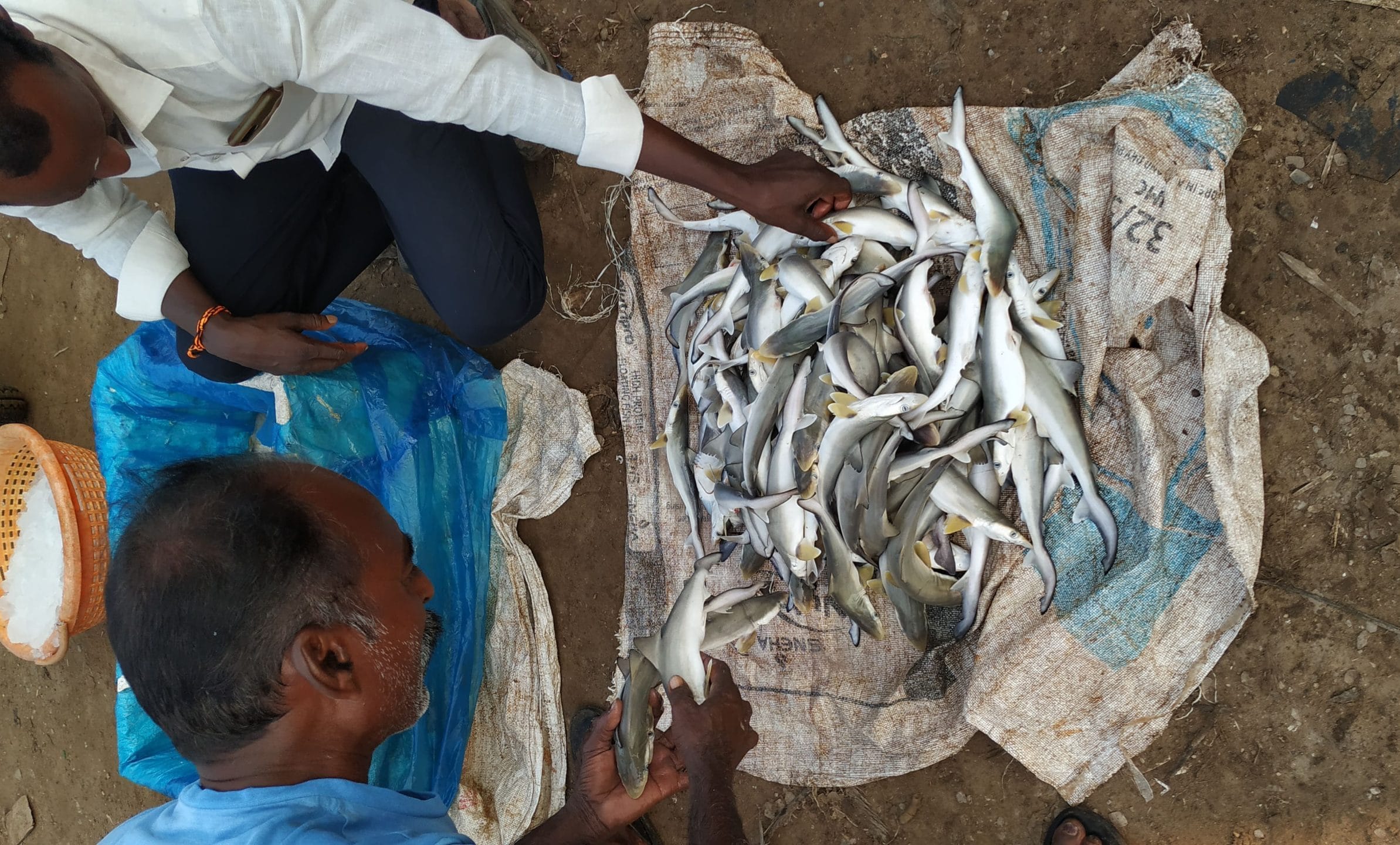
The researchers used specific hashtags to find regional content on shark, such as #sura #sorrah in Tamil and #mori in Marathi.
The paper also focused on how users engaged with shark- and ray-related social media content. It helped them understand the attitude of people toward sharks and rays through captions and comments on posts. Usually, research in India has focused on the attitudes of fishing communities but not that of the public.
“The way Indians view sharks and rays from a utilitarian perspective rather than from fear was something surprising,” said Kottillil.
This is largely because sharks and rays in India are more often encountered in fish markets than at sea. Shark meat is traditionally consumed in many regions. In contrast, narratives around shark bites and attacks are more common abroad, driven largely by water sports and coastal tourism. As a result, the ‘Jaws Effect’ has little presence in the Indian context.
One Instagram post showing fishermen pushing and releasing pups from the belly of a spadenose shark garnered 50,740 likes, 417,290 views, and 389 comments.
The study recognises fishermen and tourists as not just extractors, but as inadvertent data contributors, reshaping how conservation knowledge is produced.
Also read: We need an economic pivot on Aravallis. Stop mining, invest in eco-tourism
Shifting perceptions
Conservation efforts have largely focused on more charismatic and less commercially valuable species such as dolphins and turtles, while sharks and rays remain marginal in policy discourse. “There’s so little information on sharks and rays,” said Trisha Gupta, Conservation Scientist at the Zoological Society of London. “Methods like this are becoming more and more popular in scientific research. It answers questions such as which species should be protected, understanding what is found where, which species may have been declining or disappeared. The paper has filled in a lot of scientific gaps”.
In emerging economies, development often outpaces conservation, and India’s marine sector is no exception. As India accelerates toward a blue economy by expanding fisheries, ports, coastal tourism, and maritime trade, marine governance faces mounting pressures. It calls for a balance between economic growth and ecological limits.
Sharks and rays, long overlooked and commercially exploited, sit at the fault line of this transition. “A lot of the government’s work is going into expanding our fisheries rather than managing them sustainably,” said Gupta.
As India’s marine footprint grows, such hybrid approaches can generate information on stock assessments, species diversity, and public perception. This, in turn, can aid policymaking decisions, shape targeted conservation interventions, and enhance public engagement.
(Edited by Aamaan Alam Khan)