







By Bruno Kelly
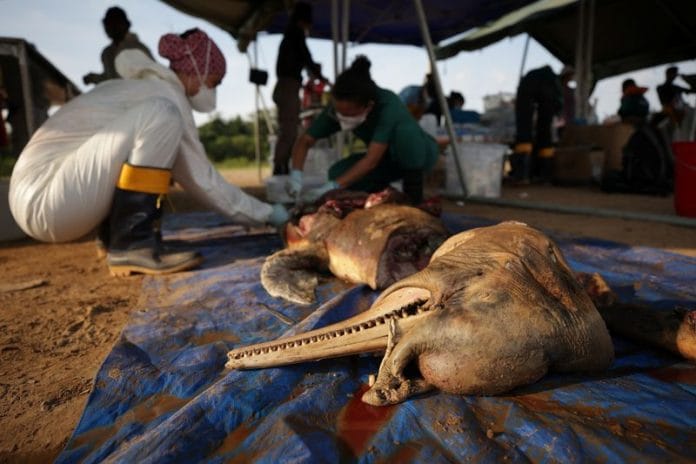
MANAUS (Reuters) – The carcasses of 120 river dolphins have been found floating on a tributary of the Amazon River since last week in circumstances that experts suspect were caused by severe drought and heat.
Low river levels during a severe drought have heated water in stretches to temperatures that are intolerable for the dolphins, researchers believe. Thousands of fish have died recently on Amazon rivers due to a lack of oxygen in the water.
The Amazon river dolphins, many of a striking pink color, are unique freshwater species found only in the rivers of South America and are one of a handful of freshwater dolphin species left in the world. Slow reproductive cycles make their populations especially vulnerable to threats.
Amid the stench of decomposing dolphins, biologists and other experts in white personal protective clothing and masks worked on Monday to conduct autopsies on each carcass to determine the cause of death.
The scientists do not know with total certainty that drought and heat are to blame for the spike in dolphin mortality. They are working to rule out other causes, such as a bacterial infection that could have killed the dolphins on a lake formed by the River Tefé before it runs into the Amazon.
At least 70 of the carcasses surfaced on Thursday when the temperature of Lake Tefé’s water reached 39 degrees Celsius (102 degrees Fahrenheit), more than 10 degrees higher than the average for this time of the year.
The water temperature fell off for a few days but rose again on Sunday to 37 C (99 F), worried experts said.
Environmental activists have blamed the unusual conditions on climate change, which makes droughts and heat waves more likely. Global warming’s role in the current Amazon drought is unclear, with other factors such as El Nino at play.
“We have documented 120 carcasses in the last week,” said Miriam Marmontel, a researcher at the Mamirauá environmental institute that focuses on the mid-Solimões river basin.
She said roughly eight of every 10 carcasses are pink dolphins, called “botos” in Brazil, which could represent 10% of their estimated population in Lake Tefé.
The boto and the gray river dolphin called the “tucuxi” are on the International Union for Conservation of Nature’s red list of threatened species
“10% is a very high percentage of loss, and the possibility that it will increase could threaten the survival of the species in Lake Tefé,” Marmontel said.
Brazil’s Chico Mendes Institute for Biodiversity Conservation (ICMBio) has rushed veterinarians and aquatic mammal experts to rescue dolphins that are still alive in the lake, but they cannot be moved to cooler river waters until researchers rule out a bacteriological cause of the deaths.
(Reporting by Bruno Kelly; Writing by Anthony Boadle; Editing by Brad Haynes and Jonathan Oatis)
Disclaimer: This report is auto generated from the Reuters news service. ThePrint holds no responsibilty for its content.