








New Delhi: The Himachal Pradesh government on 24 February released a report titled “Tackling Non-CO2 Emissions: Pathways for Himachal Pradesh” in Shimla. It is the state’s first assessment to measure and act upon short-lived pollutants like black carbon, methane and nitrogen oxides.
Compiled by the state’s Department of Environment, Science, Technology & Climate Change, along with the Institute for Governance and Sustainable Development (IGSD) and The Energy and Resources Institute (TERI), the report identified the common sources of non-carbon dioxide emissions in the state. It found that vehicles, industrial expansion, diesel generator sets and livestock emissions are the biggest contributors to methane and black carbon, and will continue to rise till 2047.
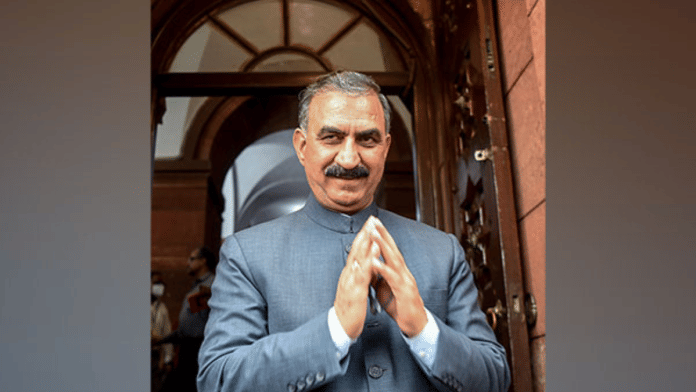
“For Himachal Pradesh, addressing non-CO2 emissions is not just about reducing pollution; it is about protecting our identity,” said Chief Minister Sukhvinder Singh Sikhu in a press release. “Our glaciers, rivers and forests define who we are. This report gives us a roadmap to act now and secure our future.”
Short-lived climate pollutants (SLCP) are gases, chemicals and aerosols which stay in the atmosphere for a small time but have a huge impact on both climate and air pollution. According to the IPCC Sixth Assessment Report, these pollutants, which include aerosols like sulphate and chemically reactive gases such as methane and ozone, disturb precipitation, have cooling and warming effects on the climate, and change the Earth’s “energy balance”.
Sushil Kumar Singla, secretary of the state’s Department of Environment, Science, Technology & Climate Change, detailed how Himachal Pradesh is uniquely impacted by these SLCPs.
“Our state’s unique terrain, high-elevation, and rapidly-expanding urban spaces make us more vulnerable… These (pollutants) degrade air quality and contribute to glacier melt, which, in turn, threatens water security, agriculture, hydropower, and disaster resilience,” Singla said in a press release.
The report also explained the dangers of black carbon deposits on snow, which speed up melting, leading to increased flooding and warming of the overall climate of the region. In a fragile ecosystem such as that of Himachal Pradesh, this has a heightened impact on local livelihoods and disaster management systems.
The report’s proposed solutions targeted the main emission factors: increasing electric vehicle (EV) deployment and scrapping old vehicles, introducing balanced feeding practices and breeding indigenous livestock to reduce methane emissions, and mandatorily installing pollution control devices in industries to reduce industrial pollutants.
Targeting these sources would also result in a reduction of PM2.5 and carbon emissions, since most of the sources are similar. According to Vibha Dhawan, director-general of TERI, the report is a first step to targeting the right pathways to reduce emissions.
“We need to formulate targeted policies to save fragile ecosystems, and we need precise data to work with. To this end, the report offers a range of data-led insights and policy actions that can support the important work the state government is already doing,” said Dhawan.
(Edited by Insha Jalil Waziri)