







PRAGUE (Reuters) -Transport ministers from the Czech Republic, Germany, Italy, Poland, Portugal, Romania, Hungary and Slovakia will meet on Monday to discuss potential changes to proposed EU vehicle emissions limits.
The aim is to make the EU’s planned Euro 7 standard “acceptable for the EU automotive industry and its customers,” Czech Minister Martin Kupka said on Twitter, ahead of the meeting due later in Strasbourg.
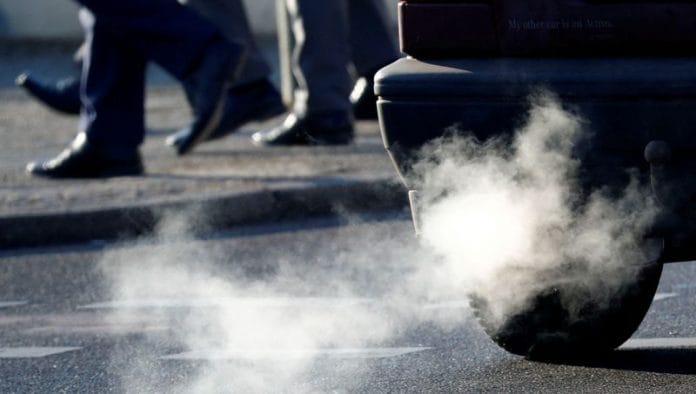
The proposed Euro 7 law, which European Union countries and lawmakers will start negotiating later this year, would tighten limits of health-harming pollutants, including nitrogen oxides.
EU officials say ministers are likely to also coordinate their positions on a separate row over the bloc’s 2035 deadline to phase out carbon dioxide emitting cars.
“We will also discuss recent legislative acts that strongly influence the automotive sector and the future affordability of individual mobility in the EU,” Kupka said.
The CO2 law, the EU’s main tool to speed up Europe’s shift to electric vehicles, was put on hold earlier this month after last-minute opposition from Germany. That surprised policymakers in Brussels and other member states, since EU countries and the European Parliament had already agreed a deal on the law last year.
Germany, backed by countries including Italy and the Czech Republic, wants clearer assurances that new cars with internal combustion engines can still be sold after 2035, if they run on CO2-neutral fuels.
Those countries say the law is a threat to Europe’s car industry, parts of which are also lobbying to weaken the EU law, which in its current form, would effectively make it impossible to sell new combustion engine cars after 2035.
Porsche CEO Oliver Blume said on Monday in his view Berlin was “taking the appropriate steps” to ensure e-fuels can be used in new combustion engine cars after 2035.
“There is no conflict between electromobility and e-fuels. I know no other possibility to decarbonise combustion engine cars,” Blume said.
(Reporting by Jason Hovet, Robert Muller, Kate Abnett, Victoria Waldersee; Editing by John Stonestreet, Jason Neely and Alexander Smith)
Disclaimer: This report is auto generated from the Reuters news service. ThePrint holds no responsibilty for its content.