







By Ricardo Moraes
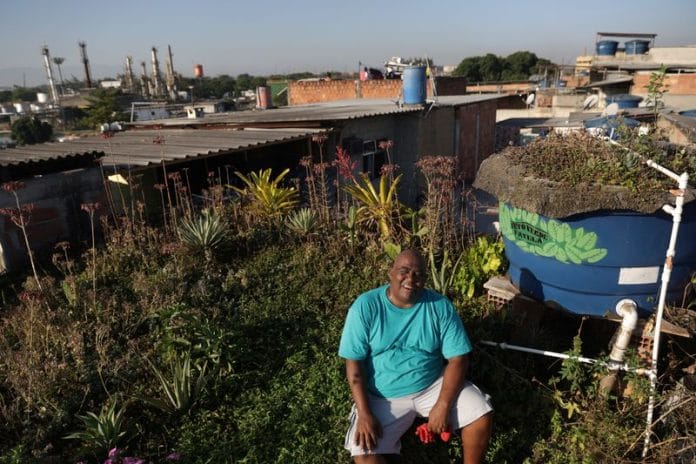
RIO DE JANEIRO (Reuters) – Luis Cassiano climbs a ladder and gently places small bundles of plants on a tin rooftop in a poor Rio de Janeiro neighborhood.
The 53-year-old Brazilian environmental activist is planting “green roofs” to grow atop the Rio homes in an effort to lower the sweltering temperatures inside.
An unusual late winter heat wave in central Brazil may push temperatures to a seasonal record that forecasters say could reach as high as 40-45 Celsius (104-113 F) in major cities in coming days.
“The project started out of a necessity. Because I sweat a lot, I needed to find a solution,” said Cassiano, who coordinates the project.
Houses in Brazil’s informal working-class communities known as favelas are often built closely together, using scrap metal for roofs.
Green roofs absorb heat and act as insulators for buildings, reducing the energy needed to provide cooling and heating, according to the U.S. Environmental Protection Agency.
“The biggest benefit is that the temperature goes down, but it also leaves the houses looking nicer and attracts birds and butterflies,” Cassiano said.
He has selected species of plants like the creeping tradescantia zebrina and water retaining succulents to avoid weighing down or damaging the buildings. The plants need to be rupicolous, or rock dwelling, to stand the heat.
Cassiano hopes more people will adopt the idea of green roofs in Brazilian communities, a concept he says is not only for high-end homes or fancy shopping malls.
“People who live here (the favela) usually go for the fastest options like fans or air conditioning, but we can create plants in our habitat,” he said.
“We can’t put trees in the favela because there’s no more space, but we have a lot of space on top of houses that can be used to plant on.”
(Reporting by Ricardo Moraes; Writing by Steven Grattan; Editing by Rosalba O’Brien)
Disclaimer: This report is auto generated from the Reuters news service. ThePrint holds no responsibilty for its content.