








By Cordelia Hsu
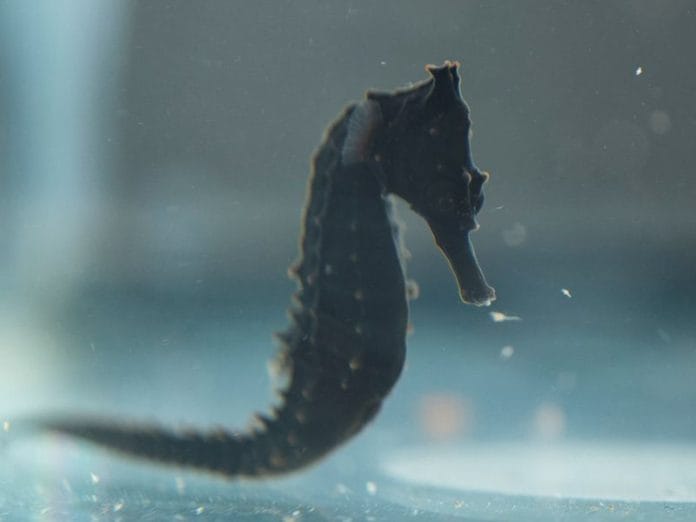
SYDNEY (Reuters) – Nestled beneath the surface of Sydney’s harbour, over 350 newly released White’s Seahorses make themselves at home in their seahorse hotels.
Made from biodegradable metal, the eight new hotels installed will provide much needed homes for the endangered seahorses.
“It was really fantastic,” said marine biologist Mitchell Brennan, the project manager of the Sydney Seahorse Project.
“These are endangered White’s Seahorses that are going out to restock the wild population here.”
The Sydney Seahorse Project is a collaboration between the Sydney Institute of Marine Science, the University of Technology Sydney and the New South Wales (NSW) Department of Primary Industries, which focuses on the conservation of the species.
White’s Seahorses are endemic to the waters surrounding Australia’s east coast and were classified as endangered on the IUCN Red List in 2017 due to loss of habitat. Population monitoring by Australian scientists reveal that the population in Sydney Harbour nearly halved between 2008 and 2015, while the population on NSW’s north coast fell by around 95%.
“Seahorses are often considered a flagship species for conservation,” Brennan said.
“We’ve seen dramatic population losses which means that we need to act now in order to help these guys persist into the future.”
Designed to mimic discarded crab traps, a common home for seahorses, the hotels are installed at least a month before the release, to allow the accumulation of algae, sponges and other marine fouling.
Over the years, the metal breaks down and disappears, leaving behind a semi-natural reef, benefiting not only the seahorses but the broader ecosystem of the harbour.
Results from earlier releases look promising for the future of the species. A year after the 2020 release in Chowder Bay, 20% of the released population remained on the hotels and 10% were pregnant in the wild.
“It’s a really positive first sign,” Brennan said.
(Reporting by Cordelia Hsu in Sydney; Editing by Alasdair Pal and Stephen Coates)
Disclaimer: This report is auto generated from the Reuters news service. ThePrint holds no responsibilty for its content.