


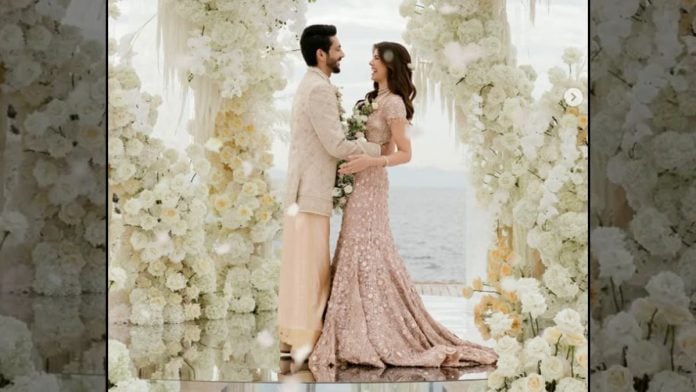
New Delhi: Music composer Anirudh Ravichander and Sunrisers Hyderabad co-owner Kavya Maran got married in Greece on Wednesday, but not in a traditional Hindu wedding. The couple opted for a self-respect marriage, which doesn’t require priests or elaborate religious rituals.
After wedding photographs appeared online, an X user asked whether the couple had opted for a non-Vedic, self-respect marriage. DMK leader T R B Rajaa confirmed that they had, explaining how the ceremony took place.
“Yes. Kavya and Anirudh garlanded each other. Thalaivar handed over a chain to Kavya and the superstar handed over a chain to Anirudh. The bride and groom exchanged chains and a union of hearts was blessed by their friends and family,” he wrote on X.
Rajaa was referring to former Tamil Nadu Chief Minister and DMK leader M K Stalin as Thalaivar, and actor Rajinikanth as Superstar.
A century-old tradition
Self-respect marriages have been around in Tamil Nadu for nearly a century. Known as Suyamariyathai Thirumanam in Tamil, they allow couples to get married without a priest, Sanskrit prayers or the usual Hindu wedding rituals. The couple can exchange garlands or rings, or tie a thali, the wedding necklace traditionally tied around a bride’s neck in many South Indian Hindu weddings.
The practice goes back to the Self-Respect Movement started by social reformer E V Ramasamy, better known as Periyar, in 1925.
At the time, caste played a major role in deciding who could marry whom. Hindu weddings were commonly conducted by Brahmin priests, with rituals performed in Sanskrit, which many of the people getting married did not understand. Periyar opposed both the caste system and the authority priests held over marriage.
He also questioned why women were expected to be subordinate to their husbands. He believed marriage should be a choice made by two equals, rather than something decided by their families, caste or religious customs.
Also read: Suriya makes Tamil box-office history. Three films cross Rs 200 crore this year
From widow remarriage to inter-caste marriages
The movement encouraged inter-caste marriages, supported widow remarriage and opposed dowry. Women should have the right to choose their husbands, and couples should be able to marry without needing a priest to approve or conduct the ceremony.
The marriages weren’t legally recognised initially. In 1967, the DMK government led by C N Annadurai passed an amendment to the Hindu Marriage Act recognising self-respect marriages in Tamil Nadu. The law came into force in January 1968.
Under Section 7-A, a couple can marry in the presence of relatives, friends or other witnesses by declaring that they accept each other as spouses in a language they understand, exchanging garlands or rings, or tying a thali. Any one of these is sufficient, provided the other legal requirements for marriage are met.
In 2023, the Supreme Court also clarified that self-respect marriages don’t have to be public ceremonies. The court recognised that some couples might want to keep their marriage private because of opposition from their families or communities. Requiring them to announce it publicly could even put them at risk.
(Edited by Saptak Datta)