





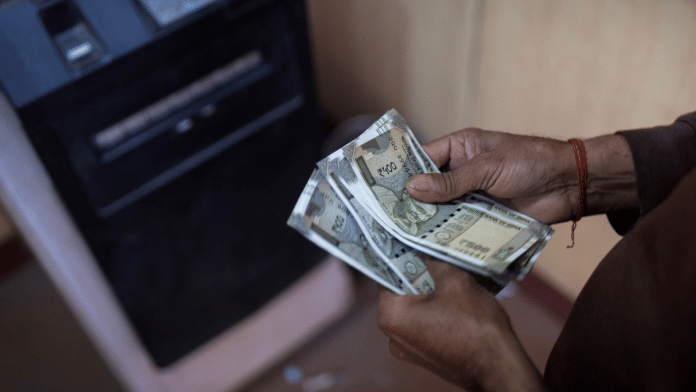



Mumbai: The Indian rupee hit a record low on Thursday, deepening its slide past the 90 per dollar mark, as foreign investors kept pulling out of local stocks and the depreciation bias firmed after a breach of the key psychological level.
The rupee weakened to 90.42, eclipsing its previous all-time low of 90.29 hit on Wednesday.
The rupee is one of Asia’s worst performers, down more than 5% against the dollar year-to-date, as U.S. tariffs of up to 50% on Indian goods have hurt exports to the country’s biggest market while diminishing the appeal of local equities.
The headwinds have coincided with weakness in dollar flows via foreign direct investments and offshore borrowings, keeping the rupee under pressure.
SPECULATIVE BETS RISE
The fall below the 90 handle on Wednesday has emboldened speculative interest in betting against the rupee, traders said, which is reflected in a surge in the cost of hedging against weakness in the currency across the non-deliverable and onshore forward markets.
Cutting of so-called received positions, arbitrage between onshore and NDF, alongside importer hedging contributed to the surge, bankers said.
The 1-month dollar-rupee forward premium jumped to 24 paisa while the 1-year forward implied yield soared 18 bps to 2.64%, the highest since January 2025.
“The way the rupee broke past the 90 mark yesterday signals that the pressure hasn’t eased. In fact, the move suggests that pressure will remain, with the pair potentially drifting toward the 90.70–91.00 zone in the near term,” said Amit Pabari, managing director at FX advisory firm CR Forex.
Elsewhere, Asian currencies were mostly on the defensive while the dollar index was steady at 98.98 after retreating on Tuesday as weakness in labour market data cemented hopes of a U.S. rate cut later this month.
(Reporting by Jaspreet Kalra; Editing by Janane Venkatraman and Mrigank Dhaniwala)
This report is auto-generated from Reuters news service. ThePrint holds no responsibility for its content.
Also read: Rupee hits record low at 90 per dollar, remains Asia’s worst performer