





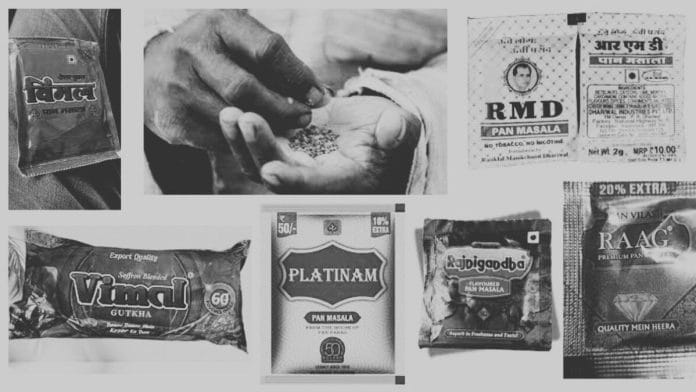



New Delhi: The Narendra Modi-led Centre, via the Health Security se National Security Cess Bill, 2025, has proposed to introduce a cess on machines and processes used for manufacturing “specified goods”, eyeing to fund national security programmes and public healthcare schemes. The bill now names only pan masala, but the Centre could, later, “specify” other goods via a notification.
The government’s stated objective is to ensure a stream of funds for security and health initiatives. The proposed cess would not apply to the final sale of goods but to the machines and processes used to manufacture them. Individual liability will arise from just owning, operating, controlling, or managing these manufacturing machines, even when actual production is low or irregular.
When production is split into multiple stages, the one who, at the final stage, makes the product marketable, will be taxable, the bill has stipulated.
On Monday, Finance Minister Nirmala Sitharaman introduced the bill in the Lok Sabha.
The bill has stated that cess will be levied “on the machines installed or processes undertaken by which the specified goods namely pan masala is manufactured, or produced whether manually or through hybrid processes.”
The bill’s reception
Soon after Sitharaman introduced the bill Monday, the Opposition was up in arms.
“While the bill may be technically sound, it imposes a new severe financial burden on the ordinary citizens of India,” said Dravida Munnetra Kazhagam MP D.M. Kathir Anand.
Another MP, Saugata Roy of All India Trinamool Congress, opposed the bill because no portion of the proposed cess would be shared with the states. Additionally, clubbing national security with health security sounded ambiguous, considering they served completely different purposes, TMC MP Roy noted.
However, according to Sivakumar Ramjee, the executive director (indirect tax) at business advisory firm Nangia Anderson Group, the government strategically recalibrated taxation on “sin goods” and integrated fiscal policy with public health and national security objectives in the bill.
“With the GST compensation cess set to expire once the pandemic-era borrowings are repaid, the new framework ensures high taxation on these [sin] goods continues,” Ramjee told ThePrint.
“By replacing the consumption-based GST compensation cess with a capacity-linked cess for pan masala and reinforcing excise duties for tobacco, the government is closing loopholes, strengthening oversight, and discouraging evasion,” he added.
How the cess will be levied
Section 5 of the bill has outlined three parameters for cess computations: the relevant process, the speed or capacity of the machine, and the weight of goods packed per pouch, tin, or container. Each taxable person is required to file a self-declaration, stating these parameters, which a proper officer will verify and calibrate in the next step.
Where machines do the work, the cess shall be levied on its maximum rated speed. This is measured by the number of pouches, tins, or containers the machine produces per minute. If a manufacturer operates multiple machines or factories, the cess will be calculated separately for each.
For machines with a production capacity of up to 500 products per minute (ppm), the taxes will range between Rs 101 lakh for 2.5 grams of weight per month per machine and Rs 849 lakh for 10 grams of weight per month per machine. With a production capacity between 501–1,000 ppm, the taxes will range from Rs 202 lakh to Rs 1,698 lakh per monthbased on weight.
For 1,001–1,500 ppm, the cess will be between Rs 303 lakh and Rs 2,547 lakh per month. Finally, for a production capacity of over 1,500 ppm, the cess will be calculated by multiplying Rs 101 lakh and S/450, where S stands for maximum rated capacity, Rs 364 lakh and S/450, or Rs 849 lakh and S/450, depending on the machine weight.
However, in cases where production is fully manual, and no machines are installed, a flat monthly cess of Rs 11 lakh will be applied. This is irrespective of the speed, capacity, or weight of goods manufactured.
The taxpayer has to pay the cess between the start of the month and no later than the seventh day.
The bill has allowed relaxations if a machine or manual unit has remained unused for at least fifteen consecutive days, subject to prescribed conditions.
Section 7 of the bill has provided for the cess proceeds to be added to the Consolidated Fund of India. After appropriation by Parliament, the funds can be used for activities, schemes, or programmes—either related to national security or public health, as the Centre prescribes.
The bill has stipulated a structure of strict enforcement as well. Any false declarations, failure to pay cess, and destruction of evidence or obstruction of officers would attract heavy penalties of up to Rs five crore, as well as imprisonment extending up to five years.
Types of cess
The Government of India levies different types of cess for specific purposes. The receipts from cess are credited to the Consolidated Fund of India and are then used to finance the Centre’s development or welfare measures. In India, these include the GST compensation cess, the health and education cess, and the road and infrastructure cess, among others.
In August 2025, Minister of State for Finance Pankaj Chaudhary, in a written response in the Lok Sabha, informed that the government had collected Rs 19.4 lakh crore in cess over the last five years starting from FY 2020-21—31 percent of the total cess in GST compensation cess, 30 percent in road and infrastructure cess, and 16 percent in health and education cess.
For FY 2025-26, the government has budgeted a cess collection of Rs 4.18 lakh crore— 8.19 percent more than the FY 2024-25 ‘revised estimate’.
(Edited by Madhurita Goswami)
Also Read: Modi govt’s PM internship scheme saw high attrition in Year 1. Just 30% joined, 41% quit midway