








Indian families face the prospect of an acute cooking gas shortage in the coming weeks, as war traps supplies of liquefied petroleum gas in the Persian Gulf, deepening an energy crisis already threatening to drive up inflation in the world’s most populous nation.
While a widening conflict has put the spotlight on crude oil and liquefied natural gas cargoes stuck behind the Strait of Hormuz, India’s most immediate crunch will be in LPG — a niche fuel, but one where a shortfall will hit tens of millions of homes. That can only be averted if cargoes that had been due in March start moving within days, according to people familiar with the matter. They asked not to be named as they are not authorized to speak to the media.
India is the world’s second-largest LPG buyer and buys more than 90% of its supply from the Middle East, according to data intelligence firm Kpler.
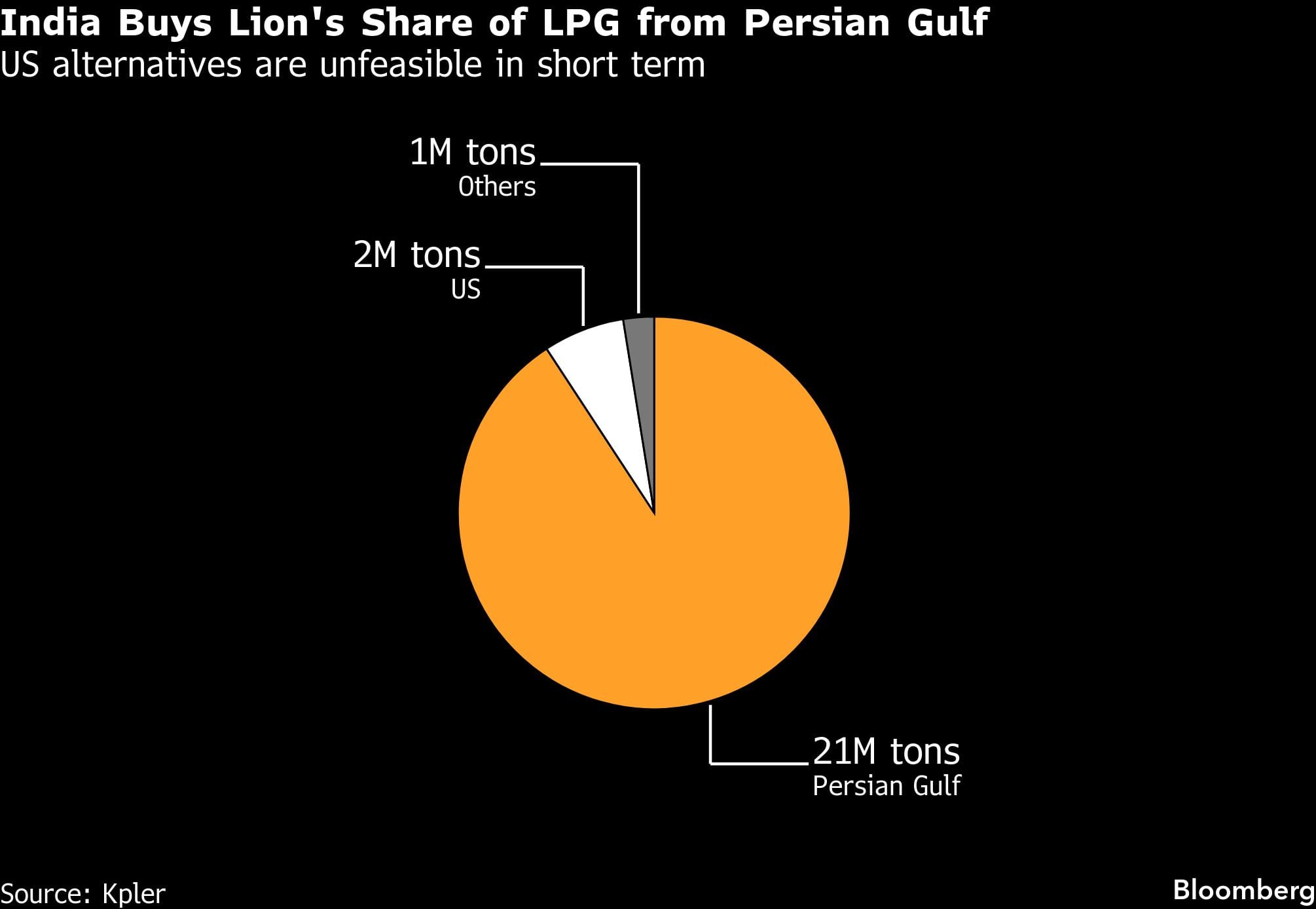
While India has moved to reduce its dependence on the Gulf with a long-term deal with the US, those volumes are still far smaller — availability is also more reduced and freight costs are higher. Moreover, even last-minute purchases from the US would not reach India before April, according to LPG traders.
“India has limited flexibility when it comes to sourcing LPG from alternate suppliers,” said Sumit Ritolia, an analyst at Kpler. “While some incremental volumes could potentially be secured from the US, Russia or Argentina, these would remain marginal and highly dependent on freight economics and global spot availability.”
A government official said on Tuesday that India’s LPG stocks can stretch nearly 30 days.
Indian refiners met government officials after the weekend attacks to discuss energy contingency plans as attacks continue in the Middle East, the source of nearly two-thirds of its liquefied natural gas and close to half of its crude.
In LNG, where storage is most limited and freight rates have soared, constraints are already hurting industrial consumers. Petronet LNG, the country’s largest importer of super-cooled fuel, has already declared force majeure on Qatari supplies, leading to nearly 50% cut in flows to clients.
With nearly eight weeks of commercial and strategic stockpiles of crude and products, India may not feel an immediate pinch in oil — but if the Persian Gulf remains blocked for weeks, it would be forced to ration supplies and begin to cut run rates. Backup options include tapping Russian cargoes currently loitering in Indian waters — even after the country cut back on purchases from Moscow — an option that has also been floated by US officials.
If crude supplies falter, refiners could also be forced to halt fuel exports.
India’s oil ministry said on Tuesday that it was “reasonably comfortable in terms of stocks” and optimistic that measures could be taken to mitigate a crisis.
Disclaimer: This report is auto generated from the Bloomberg news service. ThePrint holds no responsibility for its content.
Also read: India has ‘40–45 days’ of crude cover, but long-term Hormuz disruption could inflate import bill