



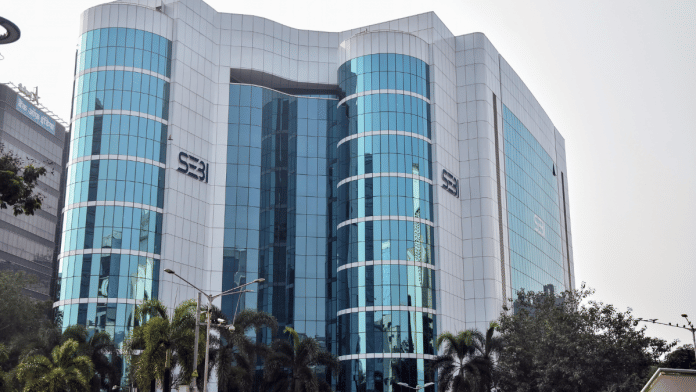
New Delhi: More than three years after the Hindenburg Research report triggered one of the biggest corporate governance controversies in India’s capital markets, the Securities and Exchange Board of India (SEBI) has settled one of its proceedings against five Adani Group companies over alleged disclosure and audit-compliance lapses.
In an order on Tuesday, the market regulator closed the adjudication proceedings after the companies agreed to pay a settlement amount of Rs 1.5 crore, without admitting or denying the allegations against them.
The order relates to Adani Enterprises Ltd., Adani Total Gas Ltd., AWL Agri Business Ltd. (formerly known as Adani Wilmar Ltd.), Adani Green Energy Ltd. and Adani Energy Solutions Ltd. (formerly known as Adani Transmission Ltd.)
While the settlement brings closure to this particular proceeding, it does not amount to a finding based on merit or if the companies either committed or did not commit the alleged violations.
The order notes SEBI’s examination of the allegations highlighted in the Hindenburg report but it is not a finding on Hindenburg allegations.
Also read: Market regulator SEBI clears Adani Group of impropriety alleged by Hindenburg Research
The origin
The proceedings have their origins in the controversy triggered by the Hindenburg Research report published in January 2023. The report accused the Adani Group of stock manipulation, accounting irregularities and inadequate disclosure of relationships between various entities linked to the conglomerate. The allegations resulted in intense market volatility across several Adani-listed companies.
In an order last year, the SEBI dismissed the allegations of stock manipulation, accounting irregularities and inadequate disclosure of relationships between various group entities.
However, the SEBI examined whether certain Adani companies had violated such disclosures and audit compliance.
The settlement amount recommended by SEBI’s Internal High Powered Advisory Committee (HPAC) and accepted by the regulatory body represents the culmination of one such examination.
According to the order, SEBI’s investigation focused on allegations concerning related-party transaction disclosures and compliance with financial reporting requirements under the erstwhile Listing Agreement and the SEBI (Listing Obligations and Disclosure Requirements) Regulations, 2015 (LODR Regulations).
The findings
Based on its findings, the regulator issued a show-cause notice to the companies in February 2024 proposing adjudication proceedings. Broadly, the allegations can be grouped into two categories: disclosure of related-party transactions, and audit reports signed by firms allegedly lacking valid Peer Review Certificates.
The first set of allegations concerned related-party transaction disclosures by Adani Enterprises Ltd. where the SEBI alleged that certain transactions between Adani Estates Private Limited, a subsidiary of Adani Enterprises and Vakoder Investment Ltd., considered a related party of Adani Enterprises, were not disclosed in the company’s annual report for the financial year 2012-13 as required under applicable accounting standards and listing requirements.
Related-party transactions are transactions between a company and entities connected to its promoters, directors, subsidiaries or affiliates. Securities regulations require such transactions to be disclosed so that investors can assess potential conflicts of interest.
The regulator, therefore, alleged a violation of Clause 32 of the Listing Agreement (disclosure of related party transaction) and initiated proceedings under Section 23A(a) of the Securities Contracts (Regulation) Act, 1956, which penalises failure to furnish information or disclosures required under securities laws.
The second and larger category of allegations related to audit and limited review reports signed by audit firms that allegedly did not possess valid Peer Review Certificates at the relevant time.
A Peer Review Certificate is a quality assurance certification issued under the peer review mechanism of the Institute of Chartered Accountants of India (ICAI). It is a professional quality check for audit firms’ compliance with auditing standards examined by another experienced Chartered Accountant (called a Peer Reviewer)
The SEBI’s audit-related allegations centred on two audit firms: Dharmesh Parikh & Co LLP and Shah Dhandharia & Co LLP. The regulator alleged that both firms signed audit or limited review reports of various Adani group companies during periods when they did not possess valid Peer Review Certificates.
The allegations covered reports filed by Adani Enterprises Ltd., Adani Green Energy Ltd., Adani Energy Solutions Ltd., Adani Total Gas Ltd. and AWL Agri Business Ltd., leading to proceedings under the SCRA (Securities Contracts (Regulation) Act, 1956) and the SEBI Act for alleged violations of listing and financial reporting requirements.
This triggered penalties under Section 23H of the SCRA and Section 15HB of the SEBI Act.
While adjudication proceedings were pending, the companies opted for settlement under the SEBI (Settlement Proceedings) Regulations, 2018. The matter was considered by SEBI’s Internal Committee HPAC which recommended settlement terms.
Under the settlement, Adani Enterprises Ltd. paid Rs 76.05 lakh, Adani Green Energy Ltd. paid Rs 45.50 lakh, while Adani Total Gas Ltd., AWL Agri Business Ltd. and Adani Energy Solutions Ltd. each paid Rs 9.75 lakh, amounting to a total of Rs 1.508 crore.
The order, nevertheless, preserves the SEBI’s power to revive proceedings if representations made during settlement are later found to be untrue or if any conditions of the settlement are breached.
(Edited by Ajeet Tiwari)
Also read: SC replaced ex-judge in Adani-Rajasthan power arbitration. Why decision was rooted in 2019 dispute