





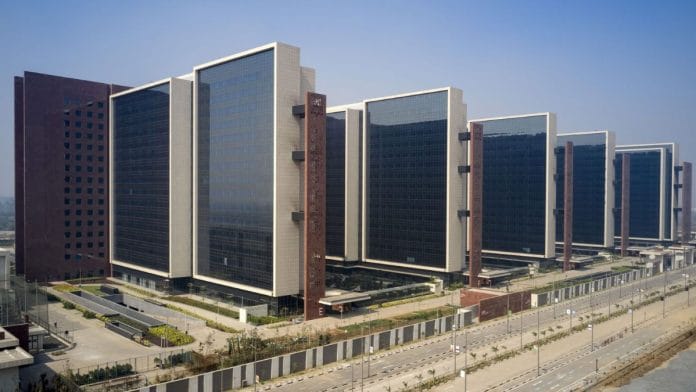



Surat: Two Dubai-based diamond trading firms are in discussions with India’s gems industry body to shift rough diamond auctions to Surat, as the Israel-US and Iran war shuts down Gulf trade routes and brings shipments to and from UAE to a near-standstill.
Koin International and Stargems Group have approached the Gem and Jewellery Export Promotion Council (GJEPC) in Surat to explore organising regular competitive bidding events for uncut stones in the city, sources familiar with the development said.
The move is a direct consequence of the regional conflict. Airspace closures, flight cancellations and the suspension of rough diamond bidding events in the Gulf have halted the flow of stones between India and the UAE.
Surat traders, who have traditionally flown to Dubai to bid for rough stone parcels and bring them back for cutting and polishing, have largely stopped making those trips—a combination of disrupted trade routes and shaken confidence in Gulf-bound air travel.
“The companies want to conduct auctions here regularly—not just exhibitions—possibly every two weeks or once a month,” Ashish Borda, a GJEPC member, said.
The stakes for Surat are considerable. India processes over 90 percent of the world’s rough diamonds—nine in every ten diamonds sold globally are cut and polished in the Gujarat city, according to GJEPC data.
Yet India produces little of its own rough material: most diamonds are mined in Russia, Botswana and Canada before being routed through UAE trading hubs to buyers.
Surat’s industry depends directly on the UAE-based trading companies for a bulk of its rough stone supply.
In rough diamond auctions, mining firms and trading companies from across the world sell parcels of uncut stones of varying sizes to buyers through competitive bidding. This mechanism gives smaller firms a marketplace to showcase and sell their material at competitive prices, while giving Indian manufacturers direct access to raw material from the Gulf.
If the proposal advances, the auctions would be held at Surat’s Diamond Bourse, India’s largest diamond trading centre, which was established to localise the trade and give small manufacturers direct access to rough material. Industry experts expect the events to draw at least 150 to 200 traders.
Industry insiders a shift to regular auctions to India would be rare, as the global trading hub is concentrated in the UAE. It would mark a key change in how rough diamonds are traded and bought.
Also Read: A war in the Gulf, a crisis in Gujarat’s Morbi: India’s ceramics capital counts the cost
Regulatory hurdles remain
Shifting the auctions to India won’t be straightforward. Firms getting rough diamonds face strict customs checks and a 0.25 percent Goods and Services Tax (GST). This levy applies more than once, covering the initial import for viewing and again on re-import after the auction.
Industry leaders told ThePrint this multi-stage customs process is the single biggest deterrent. Few traders would willingly absorb the cost and administrative burden of repeated levies unless the disruption to existing routes left them with no alternative.
Jayantibhai N Savalia, Gujarat chairperson GJEPC, urged the government to simplify regulatory and trade procedures to facilitate diamond trading in India.
“It’s high time the government makes things easier for traders. Surat is already a manufacturing hub and has the potential to become a major trading hub as well,” he said
Jayantibhai added, “Dubai is a tax-free zone and the customs aren’t strict. That is why it is preferred by traders. India should also streamline its process.”
ThePrint has reached out to Gujarat Industry Minister Harsh Sanghavi for comment. The report will be updated if and when he responds.
(Edited by Prerna Madan)
Also Read: How Iran war threatens India’s ‘Goldilocks’ economy & puts a dragon in the room