





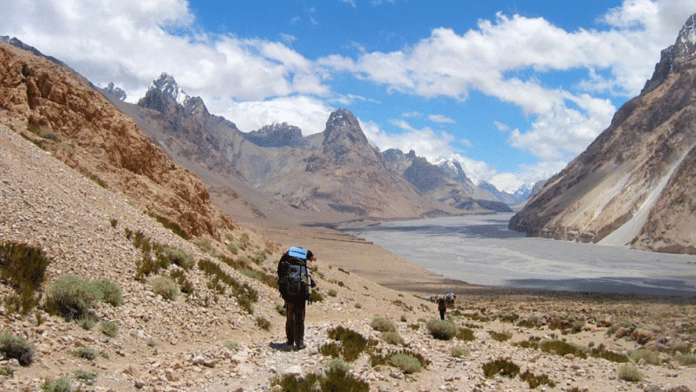



New Delhi: India Friday asserted that it reserves the right to take “necessary measures to safeguard” its interest with regard to Shaksgam Valley in Pakistan-occupied Jammu and Kashmir, days after Islamabad and Beijing announced their intention to launch the second version of the China-Pakistan Economic Corridor (CPEC).
“Shaksgam Valley is Indian territory. We have never recognised the so-called China-Pakistan ‘Boundary Agreement’ signed in 1963. We have consistently maintained that the agreement is illegal and invalid. We also do not recognise the so-called China-Pakistan Economic Corridor (CPEC), which passes through Indian territory that is under forcible and illegal occupation of Pakistan,” Ministry of External Affairs (MEA) spokesperson Randhir Jaiswal said at a regular press briefing.
He added: “We have consistently protested with the Chinese side against attempts to alter the ground reality in Shaksgam Valley. We further reserve the right to take necessary measures to safeguard our interests.”
China has begun construction of an all-weather road through Shaksgam, located close to Siachen, as reported by ThePrint. New Delhi has consistently objected to Chinese construction activity in Shaksgam, which picked up pace after the 2017 standoff in Bhutan’s Doklam.
The new road is reported to be less than 49 km from Siachen Glacier, which remains the world’s highest battlefield. Islamabad has sought to build overland border crossings with China to aid in its military interoperability, with focus on Ladakh and the rest of Kashmir, according to reports.
Pakistan had ceded the region to China in 1963, a deal India has rejected, as the area falls under regions illegally occupied by Islamabad.
“The entire Union Territories of Jammu and Kashmir and Ladakh are an integral and inalienable part of India. This has been clearly conveyed to Pakistani and Chinese authorities several times,” Jaiswal said Friday.
Beijing has been constructing civilian, military and dual-use infrastructure in the provinces of Xinjiang and Tibet over the years. These projects run close to the Indian border.
Furthermore, China since the launch of CPEC has poured billions into infrastructure projects across Pakistan to link the port of Gwadar to Xinjiang. India has consistently protested such activities as the projects are built in Pakistan-occupied areas, a major reason for New Delhi refusing to join Beijing’s Belt and Road Initiative (BRI).
Ties between India and China picked up pace last year with a number of confidence building measures instituted, including the resumption of direct air services, the restarting of the Kailash Mansarovar Yatra and the issuance of visas. Beijing has granted export licences to Indian firms for trade in rare earth elements, while New Delhi is exploring measures to ease Chinese investments in Indian projects.
The thaw comes after almost four years of tensions related to the Galwan clash in the summer months of 2020. Last year, Prime Minister Narendra Modi travelled to China to attend the Heads of States summit of the Shanghai Cooperation Organisation.
(Edited by Tony Rai)
Also Read: Pakistan now says China mediated end to conflict with India, months after thanking US & Trump for it