





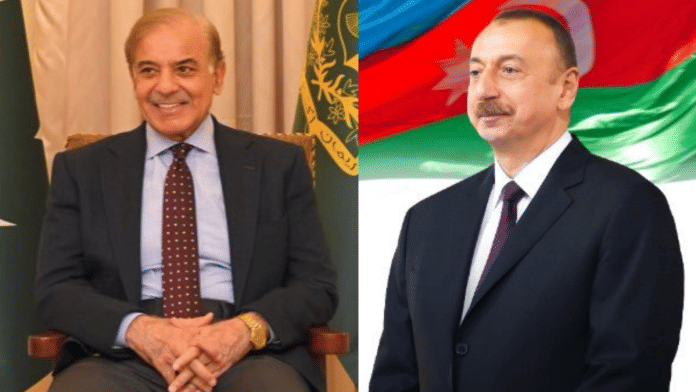



New Delhi: Pakistan seems to be increasingly shifting away from Iran and moving towards a separate axis in the Gulf amid its broadening ties with Azerbaijan and a mutual defence pact with the Saudis.
In a post on X, PM Shehbaz Sharif wrote, “Spoke with my dear brother President Ilham Aliyev to exchange warm Eid-ul-Fitr greetings and best wishes for the people of Azerbaijan. Grateful for his equally warm Eid greetings and good wishes for the people of Pakistan.”
He then reiterated his “strong condemnation of the attacks against Azerbaijan”, and reaffirmed Pakistan’s unwavering solidarity with “our Azerbaijani brothers and sisters”.
“We agreed on the urgent need for de-escalation and resolution of tensions through dialogue and diplomacy, while reaffirming our shared commitment to further strengthening Pakistan-Azerbaijan brotherly ties.”
This comes against the backdrop of Pakistan joining the Arab-Islamic states Thursday in condemning Iran’s retaliatory military strikes across the Gulf, and calling on Tehran to “halt its attacks” and warning that the “future of bilateral relations would depend on respect for sovereignty and non-interference”.
Spoke with my dear brother President Ilham Aliyev to exchange warm Eid-ul-Fitr greetings and best wishes for the people of Azerbaijan. Grateful for his equally warm Eid greetings and good wishes for the people of Pakistan.
I reiterated my strong condemnation of the attacks…
— Shehbaz Sharif (@CMShehbaz) March 20, 2026
The condemnation spotlights the growing closeness between Azerbaijan, Turkey and Pakistan against the backdrop of Islamabad’s Strategic Mutual Defence Agreement with Saudi Arabia, signed last September. The three countries have increasingly strengthened cooperation around shared diplomatic and security concerns.
Their partnership took shape following the 2020 Karabakh war, after which the three nations launched a trilateral cooperation framework. Then, in June 2021, Turkey and Azerbaijan signed the Shusha Declaration. Pakistan was the first nation to join this strategic alliance.
The latest statement, endorsed by foreign ministers from Saudi Arabia, Qatar, the United Arab Emirates, Egypt, Turkey and Azerbaijan, denounced Iran’s actions as “unjustifiable” and called for an immediate cessation of hostilities.
It also warned of the threat Tehran’s actions posed to key maritime routes, particularly the Strait of Hormuz which is critical to global energy supplies.
Amid shifting alignments, Pakistan is walking a diplomatic tightrope. Even as it joined the Riyadh statement condemning Iran’s actions, Deputy PM and Foreign Minister Ishaq Dar had earlier separately denounced attacks on Iran as “unwarranted”, calling for an immediate return to negotiations.
(Edited by Ajeet Tiwari)
Also Read: ‘Exercise caution’ when discussing country’s foreign policy on TV, Pakistan govt tells its media