





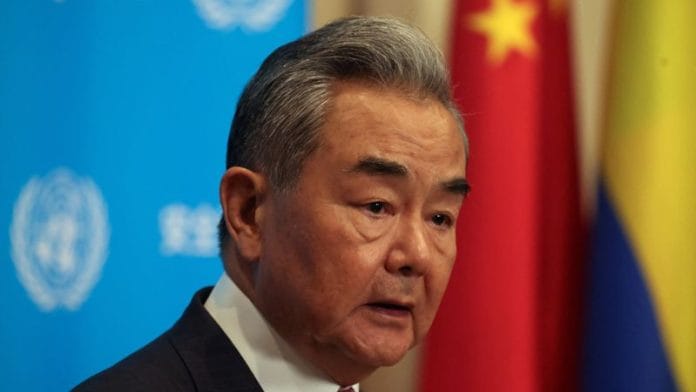


BEIJING: Nepalese Foreign Minister Shisir Khanal met China’s top diplomat Wang Yi on Monday, his first trip to the neighbouring superpower since his party swept to election victory in March, and days after visiting Beijing’s regional rival India.
The ousting of a Communist Party-led coalition government in Beijing’s backyard presents a conundrum to Chinese diplomats, who have been working to shore up vital ties in the near abroad while reasserting claims in the East and South China Seas, analysts say.
“China has always placed Nepal at the forefront of its ‘neighbourhood diplomacy’,” said Wang, according to a foreign ministry readout released late on Monday, and “will support Nepal in safeguarding its national sovereignty and territorial integrity.”
Analysts said Nepal’s ties to South Asian power India gave the country of some 30 million people a degree of leverage over China, putting Beijing in the unfamiliar position of having to prove its worth.
While Kathmandu and Delhi have feuded over their 1,751 km (1,088 miles) border for around 80 years, Khanal told his hosts in Delhi earlier this month that the new government in Nepal was “free from the political baggage from the past,” and ready to improve relations with India.
Nepal’s ties with China have been bogged down due to inaction over project delivery for infrastructure earmarked as part of Chinese leader Xi Jinping’s flagship “Belt and Road” infrastructure initiative, which Nepal joined in 2017, mostly due to financing disagreements.
Wang reiterated China’s commitment to building up Nepal’s infrastructure, highlighting cooperation in power generation, highways, ports and aviation.
Eric Olander, co-founder of the China-Global South Project, a media and research organisation, said Beijing may have been unpleasantly surprised by the Nepalese election outcome.
“Beijing doesn’t like change that directly impacts them,” he said. “Change that is potentially hostile or challenges their interest is what gets their attention.
“My guess is they didn’t see this coming in Nepal and they don’t like it when popular movements overthrow incumbent governments.”
(Reporting by Joe Cash; Editing by Stephen Coates)
Disclaimer: This report is auto generated from the Reuters news service. ThePrint holds no responsibility for its content.