





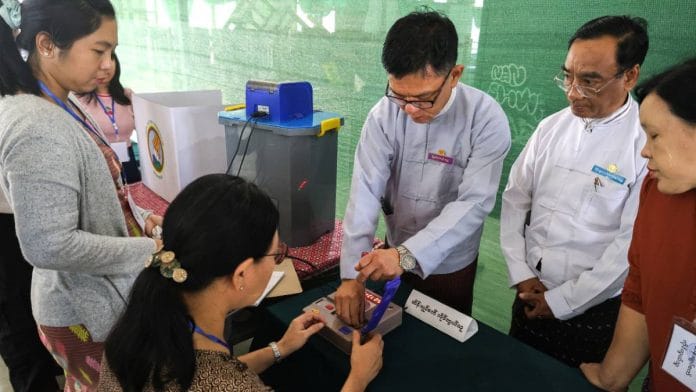



New Delhi: Myanmar is heading to the polls Sunday, for the first time in half a decade and years after a coup returned the military to power under Senior General Min Aung Hlaing in February 2021.
The much-delayed polls come at a time when the South East Asian nation is grappling with hunger, inflation and a stuttering economy.
The polls, first promised in 2023, will now be held in three phases through the month of January, as the junta looks to stamp its authority on the country and gain international legitimacy.
The country has been in a civil war with the military on the backfoot for most of the last four years against a number of ethnic armed organisations (EAOs) and People’s Defence Force (PDF) led by the civilian National Unity Government (NUG). The PDF was formed after the 2021 coup.
However, in the last year, the military has been able to recoup a number of its lost territories, especially in the border areas with China, as it seeks to enforce its writ across the country.
The junta, aided by China, has upgraded its military capabilities, especially its air power, allowing the armed forces, also known as the Tatmadaw, to regain control over a number of townships across the country.
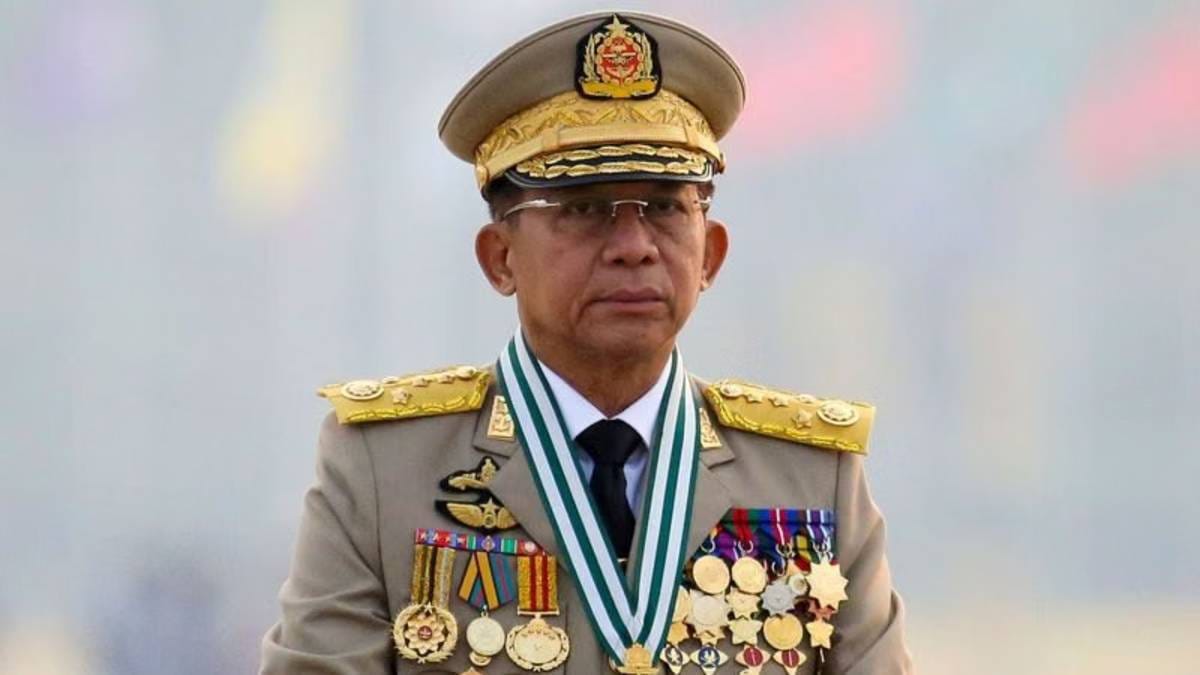
While China has played a noticeable role in the situation in Naypyidaw, India has maintained strong support for a “Myanmar-led” solution to the current crisis.
Randhir Jaiswal, spokesperson for the Ministry of External Affairs, Friday outlined India’s support for a “democratic transition in the country” as well the holding of “fair and inclusive development elections” allowing full political participation.
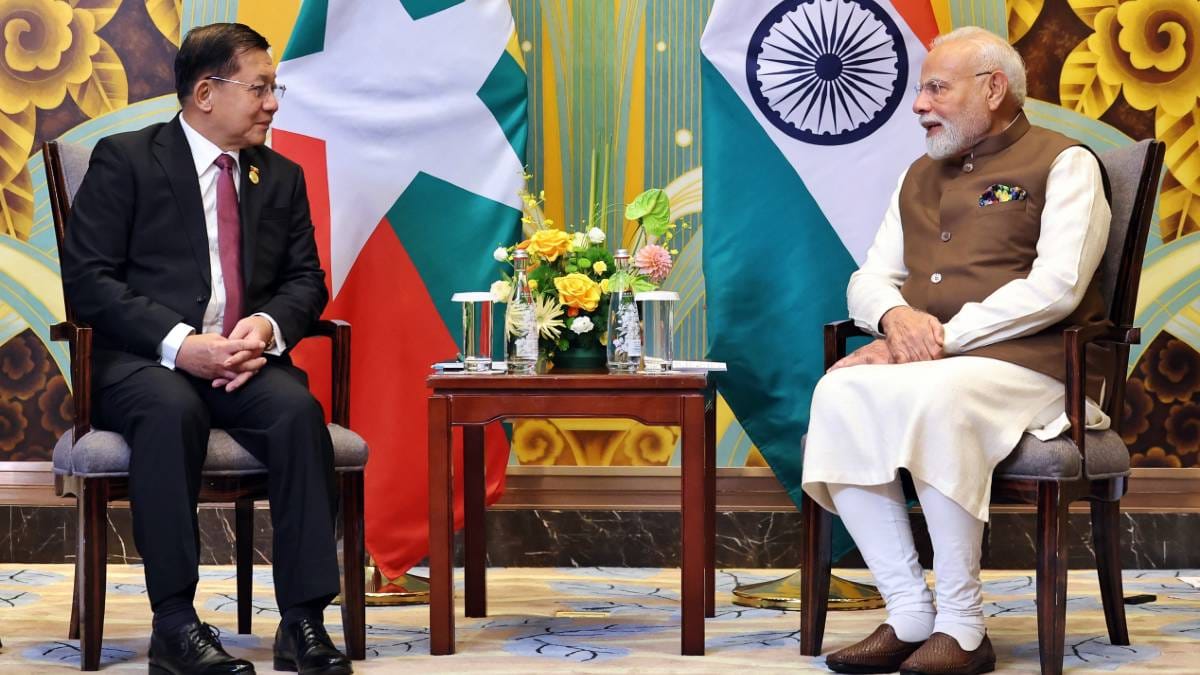
India’s cautious engagement with the junta has led to at least bilateral meetings between Prime Minister Narendra Modi and Hlaing on the margins of the BIMSTEC (Bay of Bengal Initiative for Multi-Sectoral Technical and Economic Cooperation) and SCO (Shanghai Cooperation Organisation) summits this year.
A number of global powers apart from China are seemingly uninterested in the current situation across Myanmar, leaving India and Thailand as the only other nations apart from China seriously engaging with Naypyidaw, Harsh V. Pant, Vice President of Strategic Studies at the Observer Research Foundation, told ThePrint.
“For New Delhi, certainly there’s a lot of balancing here. It cannot be that with China’s help the military junta achieves its objectives and then Delhi gets marginalised. Elections may not be perfect, but in theory put some constraints on the power of the military government which at the moment there is none,” Pant said.
“From New Delhi’s perspective, this (support for the polls) is an option worth exploring, particularly in light of how China has been gaining ground in Myanmar and the larger problem that other states are not interested in the situation.”
The apparent India-China competition in Myanmar faces the added influence of Thailand that has maintained deep engagement with the junta.
Hlaing was invited to attend the BIMSTEC Summit held in the Thai capital of Bangkok in April. The military leadership has not been invited to attend summits of the regional organisation, Association of Southeast Asian Nations (ASEAN), which has pushed for a “five-point consensus” promoting dialogue between Myanmar’s junta and EAOs.
The 2026 ASEAN Summit was to be held by Myanmar, however, the organisation voted to shift the responsibility to the Philippines instead.
Nevertheless, the junta, which looked brittle for large parts of the last four years, has increasingly solidified its control and is confident enough to call for elections in Myanmar, even if it could lead to further violence, as warned by some officials from the United Nations (UN).
3 phase polls amid boycott
The three phase elections begin Sunday, with the second phase to be held on 11 January and the final expected on 25 January. The elections will be held for the bicameral legislature of Myanmar: National Assembly and People’s Assembly.
A number of townships in Myanmar are still outside the control of the junta and it is to be seen how the current administration will deal with holding elections in these towns. A number of opposition parties, including the National League for Democracy (NLD)—led by Nobel laureate Aung San Suu Kyi—are boycotting the elections, believing that they are a sham.
The military-backed Union Solidarity and Development Party (USDP) and a number of smaller regional parties have been registered for the elections, allowing for the junta to potentially legitimise its rule through a civilian administration.
“Ever since the 2021 coup, there have been changes to the political party registration laws. Even when the junta called for parties to register, the majority of parties which genuinely wanted to stand did not get the registration,” Ophelia Yumlembam, research associate at the Organisation for Research on China and Asia (ORCA), explained to ThePrint.
“The major push to the military government to find a solution to the ongoing civil war comes from the neighbouring countries, especially China and India. Following the 2021 coup, international communities and multilateral organisations have increasingly distanced themselves from the military junta.”
The solution the military hopes that would work is a return to a civilian administration albeit under its tight control.
“It seems that the military junta is riding on the fact that these elections will give them a sense of legitimacy. Given that China is backing it, eventually everyone will fall in line and give them the legitimacy they are seeking for a while,” said Pant.
The polls come as Myanmar continues to grapple with a worsening humanitarian crisis that was severely worsened by an earthquake in the Saigang region in March this year.
Before the earthquake, a third of the country was in need of humanitarian assistance and protection, according to the UN. Further, the US under President Donald Trump has instituted deep cuts to its foreign aid programmes, further impacting the situation in Myanmar.
An estimated 3.6 million people have been displaced since the civil war began in 2021, with more than 16 million people requiring life-saving assistance in the next year, states the UN.
The displacement of people in Myanmar has had an impact on India as well. There are an estimated 80,000 refugees living in India, especially in the state of Mizoram. Any further violence, especially due to the election, can exacerbate the refugee situation and further strain India’s resources in the Northeast.
“As far as the election is concerned, the implication is not ideal in terms of more violence from the resistance… Mizoram is hosting around 30,000 refugees… the junta has included certain townships in the election across the Indian border. These townships are being contested by the resistance groups, there will be a lot of defence from the military side. It could lead to new displacement from the Myanmar side,” said Yumlembam.
Also Read: Delays, security challenges — how turmoil in Myanmar is holding back India’s ‘Act East Policy’
China & India’s Act East Policy
For India, Myanmar is the gateway to Southeast Asia. A number of its connectivity projects, especially the India-Myanmar-Thailand Trilateral Highway, connecting Manipur’s Moreh with Thailand’s Mae Sot through Myanmar, rely on a peaceful Myanmar.
India has also invested heavily in the Kaladan Multimodal Transit Transport Project. It is envisioned as giving greater access to India’s Northeast, apart from the current Siliguri corridor, also known as the Chicken’s Neck.
As part of efforts to remain engaged with Myanmar, the Indian government launched Operation Brahma in March to provide humanitarian assistance and disaster relief to the country in the wake of the earthquake.
China, on the other hand, has a large interest in Myanmar’s stability too.
The South East Asian nation offers Beijing access to the Bay of Bengal, giving it an alternative to the Strait of Malacca. Furthermore, Myanmar is rich in natural resources, with China investing at least $8 billion in mining and infrastructure projects in the country between 1999 and 2023, according to AidData, a research lab at College of William & Mary in the US.
Over the 24-year period, China has invested roughly $14.7 billion across 533 projects in Myanmar, AidData notes.
For both India and China thus, Myanmar is an important strategic partner.
“It’s very true that China has tremendous influence and leverage on the junta. A lot of the ethnic armed organisations have all shown a certain vulnerability to sign on to a ceasefire or break it based on Chinese pressures,” Bashir Ali Abbas, Senior Research Associate at the Council for Strategic and Defense Research (CSDR), New Delhi, told ThePrint.
“China has always had a deeper web of influence. When it comes to the primary EAO for us—the Arakan Army (AA)—we have had a troubled relationship in the past. Of course, they have changed now and India is engaging with them, but of course it does not compare with China’s influence,” he added.
India’s troubles with the AA are well documented. In 1998, the top leadership of the AA was killed by India, and a number of senior officials were held in Indian prisons for over a decade. In 1988, India had thrown its weight behind the democratic movement led by Suu Kyi in Myanmar, only to backtrack four years later. But the damage had been done to an extent. The disruption in the twin track diplomacy in Myanmar in the late 1980s and early 1990s, saw the Tatmadaw drift towards China.
Apart from India and China, a number of countries have made headway in their ties with the military administration in Myanmar, including Russia, Belarus and Thailand.
Despite the most populous party—the NLD—left out of the elections, the military government believes it ascendancy on the battlefield along with the elections would allow it greater legitimacy to stamp its authority on the future of Myanmar.
(Edited by Nida Fatima Siddiqui)
Also Read: India plans ‘twin-track’ approach to engage with Myanmar junta as China makes inroads