








New Delhi: Prime Minister Narendra Modi’s upcoming visit to Muscat is a “very important and very strategic” trip for both nations, Oman’s ambassador to India Issa Al Shibani has told ThePrint.
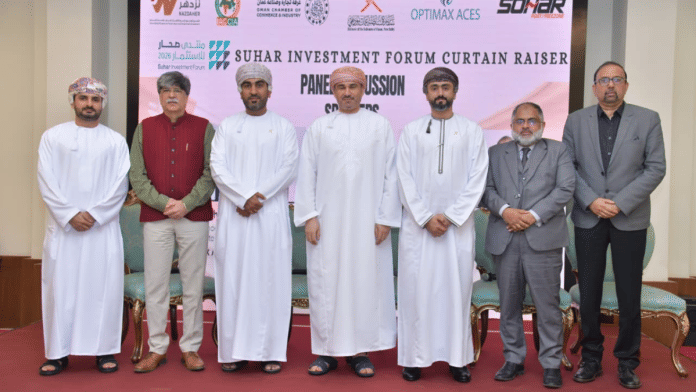
Speaking to ThePrint on the sidelines of the Suhar Investment Forum 2026 curtain-raiser here, the ambassador said the visit reflects the “closeness” and “friendship” between the two countries. It has already strengthened business confidence, he said.
PM Modi and Minister of Commerce and Industry Piyush Goyal are expected to visit Oman next week for the signing of a free trade agreement.
The two countries have already concluded negotiations around the Comprehensive Economic Partnership Agreement (CEPA)—formal CEPA talks began in November 2023—and the legislative and administrative processes are now underway. CEPA is a wider framework for cooperation between two trade partners, and FTA comes under this larger structure.
The ambassador noted that the CEPA has been “in the vision documents” since Modi’s 2023 Oman visit, and the “latest negotiation terms have been concluded.”
The signing of CEPA, he said, is “moving on a positive track”, though he declined to predict when it would be finalised. “That is for the governments to decide.”
Asked whether Modi’s trip might lead to a confirmation of the CEPA, he replied, “Usually, during a head of State visit, a number of MOUs and agreements are signed. Hopefully, there will be MOUs and agreements that boost the business and investment relationship.”
Agreements like CEPA typically involve trading partners significantly reducing or eliminating customs duties on the maximum possible number of goods, while also easing regulations to boost services trade and attract investment.
India’s major imports from Oman include petroleum products and urea, making up more than 70 percent of inbound shipments. Other key imports are propylene and ethylene polymers, pet coke, gypsum, chemicals, and iron and steel.
Oman is India’s third-largest export destination among Gulf Cooperation Council (GCC) nations, and India has already (in 2022) implemented a similar pact with another GCC member, the UAE.
In 2024–25, bilateral trade between India and Oman totalled $10.61 billion. More than 6,000 India–Oman joint ventures operate in the Sultanate, with investments estimated at over $776 million.
Indian companies are among the leading investors in Oman, particularly in the Sohar and Salalah Free Zones. Cumulative FDI equity inflows from Oman to India between April 2000 and March 2025 stand at $605.57 million.
Also Read: India, Oman hold 5th annual high-level meeting to boost maritime security
‘Right time for diversification’
Ambassador Al Shibani said India should look beyond oil and petrochemicals, which still make up the bulk of bilateral trade. “If you look back, a big chunk of it is really oil and gas.”
“India has a vision for a diversified economy. We have our 2040 Vision… the main element is to look into a diversified economy away from oil and gas,” he said.
The Vision 2040 for Oman focuses on economic diversification, transparency and a private-sector-led growth model. The government’s role is shifting toward regulatory reform and infrastructure, with the private sector driving long-term investment, an aspect that was discussed in the event as well.
Oman’s Sohar region, ambassador Al Shibani added, is therefore emerging as a key test case. “Suhar comes as a very strategically located place” he said, noting that both upstream and downstream industrial projects offer “plenty of investment opportunities”.
Sohar began as a strategic port in 2002 within the GCC, hosting large-scale heavy industries such as refineries, steel mills and major logistics terminals.
The Port of Sohar and the adjacent Sohar Freezone (called the P-Zone) are connected through a six-kilometre bonded corridor, a secured, customs-controlled route that allows goods to move duty-free between the Port and the Freezone without repeated customs checks.
The Sohar port & free zone
Experts at the curtain-raiser noted that the port hosts heavy industries, including two refineries and major steel operations that produce about 200,000 barrels of crude-related products. They said the P-Zone is designed for downstream and mid-sized industries (which come later in the value chain), which benefit from incentives and proximity to upstream raw materials at the port.
One of Sohar’s unique features is that both the Port and the Free Zone are managed by the same authority, unlike most regional models where each is overseen separately. This unified structure allows faster decision-making and smoother cargo movement via the bonded corridor.
Tourism & people-to-people ties
The ambassador also talked about tourism, and said the two countries should think more boldly about tourism. “People-to-people link is very important. A tourist might come for only tourism purposes, but also to bring business and a positive picture of the country.”
He then added, “I’ve seen Omanis visit India as tourists and return home praising the places they experienced. We hope that, in time, we can attract similar flows in the other direction, so people can see the opportunities for themselves.”
The PM’s upcoming visit also coincides with new discussions between New Delhi and Muscat about India purchasing spare parts for its ageing fleet of Jaguar deep-penetration strike aircraft. Oman, which has about 20–24 Jaguars that have been phased out, is the only country still holding significant stocks of usable spares.
Oman’s strategic location near the Persian Gulf, longstanding cultural and historical ties, strong trade and energy links and shared security interests in the Indian Ocean make it a vital partner for India and its West Asia policy including future connectivity projects like the India–Middle East–Europe Economic Corridor (IMEEC).
Diplomatic ties were formally established between both countries in 1955 and elevated to a strategic partnership in 2008. Today, Oman is India’s closest defense partner in the Gulf and an important voice within the GCC, the Arab League, and the Indian Ocean Rim Association.
Al Shibani said the relationship has “been elevated in the last few years”, and expects Modi’s visit to push it further.
(Edited by Ajeet Tiwari)