





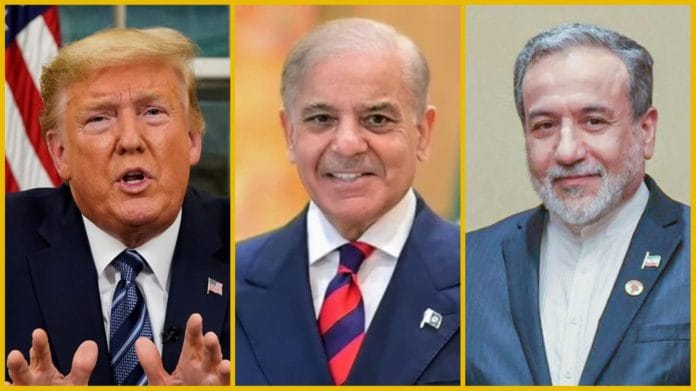


New Delhi: Diplomatic efforts to broker a US-Iran peace deal appear to have stalled amid deep mistrust, mixed signals and a sudden reversal from Washington, a setback to Pakistan’s efforts to position itself as a key mediator in the West Asia war.
US President Donald Trump Saturday said he had cancelled a planned trip by US’ special envoy to the Middle East Steve Witkoff and his son-in-law Jared Kushner to Pakistan, where they were expected to negotiate possible peace talks.
The White House had announced the visit just a day earlier, but Trump struck a sharply different tone in a post on Truth Social, declaring that the US held the upper hand and would not pursue negotiations unless approached first.
“I just cancelled the trip of my representatives going (to) Islamabad, Pakistan, to meet with the Iranians. Too much time wasted on traveling, too much work! Besides which, there is tremendous infighting and confusion within their ‘leadership’. Nobody knows who is in charge, including them. Also, we have all the cards, they have none! If they want to talk, all they have to do is call!!!” he wrote Saturday evening.
The reversal came as Iran’s Foreign Minister, Abbas Araghchi, concluded meetings in Islamabad with Pakistani officials Saturday. He described the discussions as “very fruitful”, but expressed doubt about Washington’s intentions, saying he had yet to see evidence that the US was “truly serious about diplomacy”.
Pakistan has positioned itself as a potential peacebroker in the West Asia conflict, with Prime Minister Shehbaz Sharif reiterating the country’s commitment to facilitating dialogue.
After Trump’s trip cancellation announcement, Sharif said he had a “warm and constructive” phone call with “my brother” Iranian President Masoud Pezeshkian on the “evolving regional situation” after meeting Araghchi in Islamabad earlier.
Pakistan “remains committed to serve as an honest and sincere facilitator – working tirelessly to advance durable peace and lasting stability in the region”, he wrote on X.
Iranian state media IRNA reported that Araghchi is expected to return to Islamabad after a brief stop in Oman, suggesting that diplomatic channels remain active, if uncertain.
Confusion over the talks was compounded by an apparent miscommunication.
According to reports in Pakistani media, a message circulated by Pakistan armed forces’ public relations wing ISPR indicated that another round of US-Iran discussions in Islamabad was imminent and that an American logistical team had already arrived there.
The ISPR message, as posted by journalists on social media, read: “Iranian Foreign Minister Abbas Araghchi is expected to arrive in Islamabad tonight with a small delegation, according to government sources. Following important discussions with the Pakistani mediation team, a second round of Islamabad peace talks between the United States and Iran is expected, government sources say. A US logistics and security team is already present in Islamabad to facilitate the negotiation process.”
As it turned out, no US team was present in Islamabad and no negotiations were held.
Iran’s foreign ministry spokesperson Esmaeil Baqaei said on X Saturday that “no meeting is planned to take place between Iran and the US” and that “the Iranian delegation arrived in Islamabad for an official visit”.
Also Read: Who is winning and losing in the US-Israel war on Iran? Here’s a perception rating
How negotiations have fared so far
Earlier this month, Pakistan did host the first direct engagement between Washington and Tehran since the 1979 Islamic Revolution.
The talks aimed to secure a peace accord to end the fresh bout of hostilities between the two nations since 28 February this year, when joint US-Israeli strikes killed Iranian Supreme Leader Ayatollah Ali Khamenei and triggered a wave of retaliatory attacks from Tehran against Israel and US military installations across the Gulf.
Since last week, however, particularly after Pakistan Army Chief Asim Munir visited Tehran to convey American demands, the chances of negotiations leading to a peace deal appear to have dimmed.
Munir’s push to bring the opposing sides back to the table stalled Tuesday, with Iran resisting pressure to return for talks with the Americans.
Trump told reporters in Washington Saturday that the US is willing to talk to “whoever’s running the show” in Iran, adding that “they can call us any time they want”.
“I’ll deal with whoever we have to, but there’s no reason to wait two days, have people travelling for 16, 17 hours and we’re not doing it that way. Too much travelling, takes too long, too expensive. I’m a very cost-conscious person,” he said.
A two-week ceasefire that was due to end Wednesday was extended, with Trump citing a request from Munir and Sharif. However, little progress has been made on key thorny issues, including Iran’s enrichment programme and its stockpile of highly enriched uranium.
In Tehran, there is a growing sense that the negotiation process is less a genuine effort at resolution and more a strategic manoeuvre directed against them, according to a report in Financial Times last week.
“In Tehran, there have been growing fears that the US is using the talks as a ruse to resume the war, as Trump maintained the naval blockade and boasted this week that Iran had agreed to most of his demands,” stated the report on how Pakistan became the mediator between the two nations.
According to Farzana Shaikh, associate fellow at Chatham House in London who is quoted in the report: “Pakistan is not truly a neutral party in this. It has a patron-client relationship with the US and Gulf states, and a vested interest in foreclosing Iran’s path to a nuclear weapon.”
(Edited by Nida Fatima Siddiqui)