





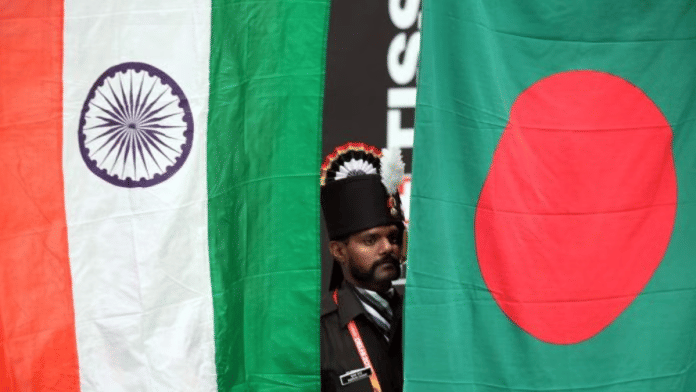



New Delhi: India has halved its development assistance to Bangladesh by half in the 2026-27 Union Budget, reducing the allocation to Rs 60 crore amid strained diplomatic ties.
It is the sharpest cut in the neighbourhood, reflecting the year-long diplomatic freeze between both countries after the fall of Sheikh Hasina in August 2024. Afghanistan, Sri Lanka and Nepal, meanwhile, saw a marginal increase in allocation.
Although India had kept Rs 120 crore for Bangladesh in the 2025–26 Union Budget, revised estimates show that only Rs 34 crore was likely to be spent. In the 2024-25 Budget, India maintained sustained budget allocation of around Rs 120 crore, signaling a more cautious approach to government-to-government assistance.
In contrast, India has raised aid to Afghanistan by Rs 50 crore, as New Delhi recalibrates its engagement with the Taliban-led administration in Kabul. After severing ties in 2021, India has gradually reopened diplomatic channels.
In October, Taliban Foreign Minister Amir Khan Muttaqi visited New Delhi for talks with External Affairs Minister S. Jaishankar. India has since reopened its embassy in Kabul and hosted Afghanistan’s commerce minister, signaling a policy of cautious engagement.
Aid to Sri Lanka and Nepal was increased by Rs 100 crore each. Sri Lanka’s allocation also went up by Rs 100 crore. Assistance has focused on infrastructure, capacity building and economic stabilisation, reinforcing India’s role as a key regional partner.
Nepal will receive Rs 800 crore, remaining one of the largest recipients of Indian aid. India’s largest aid recipient, Bhutan has seen an increase of Rs 138 crore from Rs 2,150 crore in 2025 to Rs 2,288 crore in the latest budget.
India recently commissioned a Rs 4,000-crore Line of Credit, Bhutan’s first, aimed at expanding investment in the energy sector. In 2025, the Punatsangchhu-II hydroelectric project, jointly developed and funded through a mix of Indian grants and loans, was fully commissioned, boosting Bhutan’s power generation capacity by an estimated 40 percent. India has also confirmed plans to resume work on the long-delayed Punatsangchhu-I project.
New Delhi has also announced plans to build two railway links to Bhutan, at an estimated cost of over Rs 4,000 crore, connecting Banarhat in West Bengal to Samtse, and Kokrajhar in Assam to Gelephu, projects aimed at deepening economic integration.
The aid to the Maldives was reduced by Rs 50 crore to Rs 500 crore, while it went up by 10 percent in the case of Mauritius.
Myanmar’s allocation was cut by about 14 percent to Rs 300 crore amid political instability and implementation challenges. Assistance to African countries was steady at Rs 225 crore, Latin America’s allocation doubled to Rs. 120 crore, and funding for Eurasian countries dipped slightly to Rs 38 crore.
The government has earmarked Rs 5,686 crore for ‘Aid to Countries,’ a modest increase over last year’s estimate but still about Rs 100 crore less than the revised allocation for 2025–26.
(Edited by Tony Rai)
Also Read: Bangladesh considers ending duty-free Indian yarn imports, impose tariffs amid textile sector unrest
What d’you mean halved?
We are still giving money, when every week 2-3 Hindus are being killed there?
I demand nothing but an invasion.