





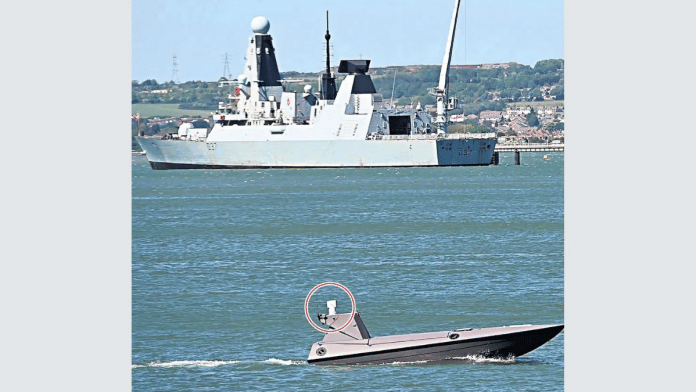


New Delhi: Chinese spy cameras were found in British military drones that were to be deployed as part of a defense package to the Strait of Hormuz, according to a Telegraph report.
The K3 surveillance drones used by the elite special forces, Royal Marines, contained Chinese-made components that transmitted data to an internet address in China, the report said.
It was also part of a British defense package intended to help secure freedom of navigation in the Strait of Hormuz. Preparations for Britain’s plans in the Gulf had already been conducted using the drones, the report said.
The Ministry of Defence (MoD), however, said that there was no evidence that sensitive data or military systems had been transmitted abroad.
“A routine cyber vulnerability assessment identified an issue affecting a Kraken Unmanned Surface Vessel sub-system used by the Royal Navy. A thorough investigation found no evidence of MoD data or systems being accessed, compromised or transmitted externally,” an MoD spokesperson said.
The Marines have been using the £12 million fleet since March. After discovering the security issue, the MoD removed all internet connectivity from the cameras. Beijing may have sought to gather information about Britain’s military, amid years of warnings from British security officials about the threat posed by China.
The drones were supplied by Kraken Technology Group, a major British defense contractor, which had obtained the cameras from a third-party supplier that provided assurances about their security.
An investigation found that the cameras were transmitting “heartbeat communications”—data intended to confirm that the devices were online and operating normally—to an IP address in China. The cameras remained active even when the drones themselves were switched off.
The K3 Scout model has also been purchased by the US Special Operations Command and has participated in NATO trials in the Baltic.
Following the revelation, the Conservative Party called on the government to “urgently audit” its equipment for hidden Chinese components and other vulnerabilities.
In 2020, the Conservative government banned the Chinese telecom giant Huawei from Britain’s 5G network because of national security concerns. The government reversed its earlier decision to permit Huawei’s participation after security officials in Washington warned that the company’s access presented a potential espionage risk, citing China’s stringent national security laws.
Last year, MI5 issued a security alert to members of Parliament warning that Chinese intelligence services were “relentless” in their attempts to “interfere” with and “influence” Parliament. The British intelligence agency warned that employment platforms such as LinkedIn were being used to gather sensitive information.
Last month, it was reported that the Special Boat Service had banned Chinese-made electric vehicles from its headquarters because of concerns that they could be used for espionage.
Alicia Kearns, the shadow security minister, criticised the government over the discovery. “If we cannot say with confidence what is inside our own military equipment, we cannot say it is ours, or that we are sovereign,” she said.
“When cameras built on Chinese parts are found recording our special forces—their faces, training and operations—we should not be surprised, we should be furious that we still haven’t woken up to the realities of the threat we face.”
(Edited by Tony Rai)