








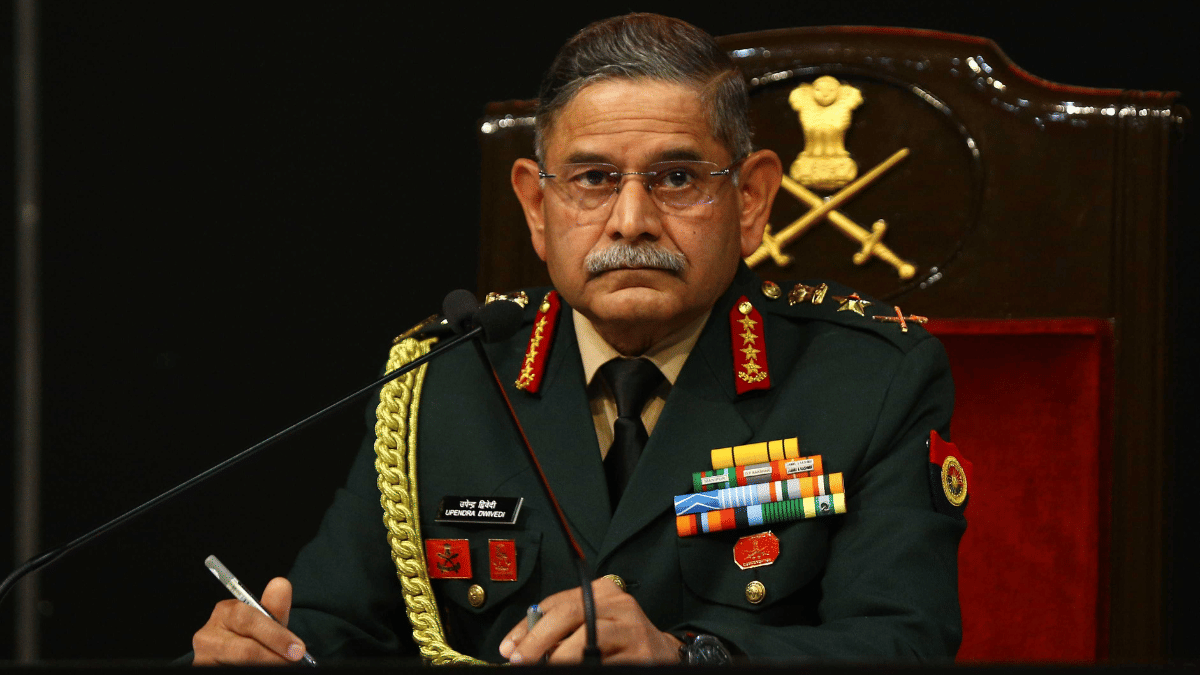
New Delhi: Indian Army chief General Upendra Dwivedi Tuesday reiterated India’s long-standing rejection of the so-called 1963 Sino-Pakistan border agreement which forms the basis of Beijing’s claim to Shaksgam Valley. The remarks came against China’s defence of infrastructure projects part of the China-Pakistan Economic Corridor (CPEC) in the region.
Speaking at his annual press conference in New Delhi, Gen. Dwivedi said New Delhi does not recognize any activity carried out under the 1963 agreement, which China has cited to justify its claims over the territory.
“As far as the Shaksgam Valley is concerned, India considers the 1963 agreement between Pakistan and China as illegal,” he said. “Therefore, we don’t approve of any activity in the valley. The Ministry of External Affairs has already stated this clearly. Therefore, the joint statement which has been issued in China, what I understand about the CPEC 2.0, we do not accept it, and we consider it an illegal action being carried out by the two nations.”
The Army chief’s remarks came hours after China publicly defended its infrastructure projects in the region, amid India’s assertion that the region falls under its territory, in the backdrop of the announcement of the second phase of CPEC.
“China and Pakistan in the 1960s signed a boundary agreement and delimited the boundary between the two countries, which is the right of China and Pakistan as sovereign countries,” Beijing said Monday.
New Delhi has never recognised the so-called 1963 Sino-Pakistan Boundary Agreement, under which Islamabad illegally ceded territorial control of the strategically located valley to Beijing.
“It’s fully justified for China to conduct infrastructure construction on its own territory,” Chinese Foreign Ministry spokesperson Mao Ning said Monday, reacting to comments from New Delhi. “The CPEC, as an economic cooperation initiative, aims at promoting local socioeconomic development and improving people’s livelihood,” she said.
The Chinese Foreign Ministry spokesperson also said, “The China-Pakistan boundary agreement and CPEC do not affect China’s position on the Kashmir issue and the position remains unchanged.”
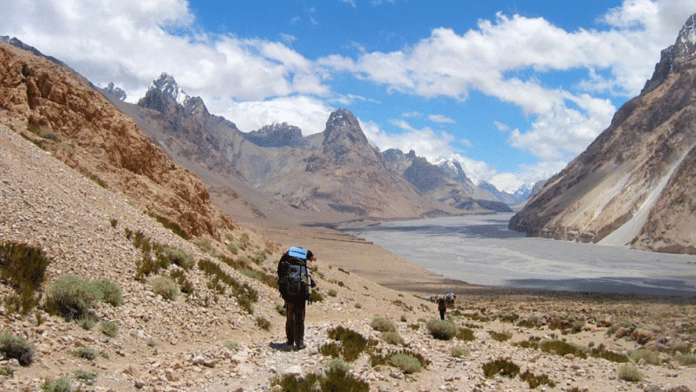
The Shaksgam Valley, a high-altitude tract spanning roughly 5,180 square kilometres north of the Karakoram range, lies adjacent to the Pakistan-occupied Gilgit-Baltistan region and close to the Siachen Glacier, the world’s highest battlefield.
The area is currently administered by China as part of its Xinjiang region.
Roots of the dispute trace back to 2 March 1963, when China and Pakistan signed what they called a boundary agreement in Beijing (then Peking). The treaty sought to delimit the border between China’s Xinjiang and territory Pakistan claimed after the first India-Pakistan war of 1947–48.
India’s Ministry of External Affairs has maintained that the region has been part of Jammu and Kashmir since 1947 and Pakistan occupied the region during the war in 1947-48 and then illegally ceded it to China. That position was reiterated last week by MEA’s spokesperson Randhir Jaiswal. “Shaksgam Valley is Indian territory. We have never recognised the so-called China-Pakistan ‘Boundary Agreement’ signed in 1963. We have consistently maintained that the agreement is illegal and invalid.”
India also objected to infrastructure development under CPEC 2.0 in the Shaksgam Valley, saying it violates its territorial sovereignty and underlines why New Delhi has consistently opposed both the Belt and Road Initiative and CPEC, which passes through Pakistan-occupied Kashmir.
(Edited by Amrtansh Arora)
Also Read: What are China’s intentions in building Shaksgam Valley road? Not security, look to politics