




Your appointment is over. The clinic lighting is behind you, the front-camera inspection has happened, and now your skin feels warm, tight or suspiciously glossy. This is the part that rarely makes the before-and-after reel: the quiet stretch when the result depends less on adding another serum and more on knowing when to leave your face alone.
Good post procedure skincare is not a complicated new personality for your bathroom shelf. It is a temporary reset built around three jobs: keep healing skin clean, support its barrier and protect it from avoidable irritation. The exact plan changes with the procedure, its depth, your skin history and the instructions you were given. That last detail matters. A gentle laser session is not the same event as ablative resurfacing; a superficial peel does not recover like a medium or deep peel; classic microneedling and radiofrequency microneedling are not interchangeable.
So, yes, this is your guide to post-procedure. But the first rule is refreshingly unglamorous: your treating dermatologist’s instructions outrank anything you read online, including this article.
All About the Skin Treatments
Lasers, chemical peels and microneedling work differently, yet they share a useful idea. Each creates a controlled change in the skin, then relies on the body’s repair process to do the next part. During that window, the surface may be more reactive and, depending on the treatment, temporarily less effective at keeping irritants out and moisture in.
That is why skin healing after treatment can look unimpressive before it looks good. Redness, darker-looking redness on deeper skin tones, mild swelling, tightness, flaking or a sunburn-like feeling may all appear within the expected recovery pattern for certain procedures. None of this is a cue to exfoliate the evidence away. The internet has trained us to respond to every skin moment with a product. Recovery asks for the opposite instinct. Think less “What active am I missing?” and more “What can I remove?”
What’s Your Skincare Routine?
If your usual lineup includes a cleanser, exfoliating toner, vitamin C, acne treatment, retinoid, moisturiser, face oil and sunscreen, post-treatment week is not the time to prove your commitment. Your 10-step routine can take annual leave.
A sensible post treatment skincare routine is deliberately short. Use only the cleanser, ointment, moisturiser and sun protection that your clinician has approved, and introduce them at the times specified. Some resurfacing treatments require prescribed soaks, dressings or petrolatum-based ointments. Some laser protocols ask patients to keep the area dry or avoid products for the first two days. Microneedling instructions may allow only a prescribed cooling product during the first 24 hours. These are not contradictions; they reflect different treatments.
That is also why borrowing a friend’s aftercare plan is a bad trade. Even if you booked at the same clinic, the device, settings, treatment depth, body area and your tendency to pigment or scar can change the advice.
Post-Procedure Skincare: The first 24 to 48 hours
This is the no-freestyling zone. The skin may feel hot, puffy, dry or tender, and the urge to fix it quickly can lead to exactly the friction and irritation it does not need.
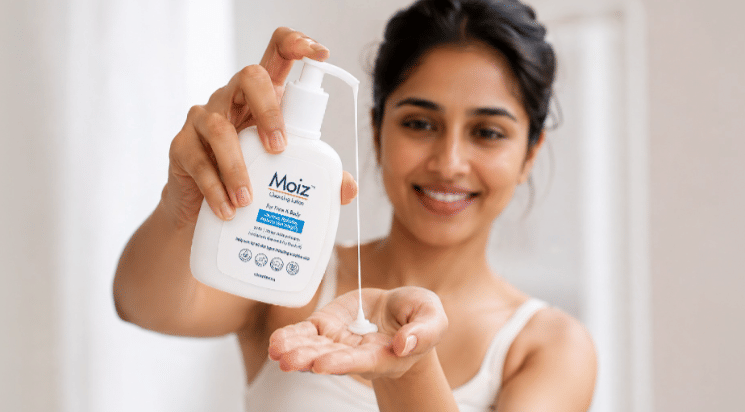
- Follow the clock you were given. Do not cleanse, wet the area, apply makeup or add skincare before your clinician’s stated time.
- Keep hands and tools away. When cleansing is permitted, use clean hands, lukewarm water and the approved gentle cleanser. Skip washcloths, cleansing brushes and facial devices.
- Cool carefully. If your clinic allows it, use a clean, wrapped cool pack for short intervals. Never press ice directly onto treated skin.
- Reduce heat and friction. Hot showers, saunas, steam rooms, swimming, sweaty workouts, tight clothing and repeated touching may need to pause. The length of that pause depends on the procedure.
- Do not pick the plot. Flakes, crusts and scabs are not loose ends. Peeling or scratching them can delay recovery and raise the risk of infection, scarring or uneven pigment.
This is where dermatologist aftercare becomes less like a product list and more like choreography: what to apply, how often, what not to touch and when to check back in.
The Smart Guide to Skin Recovery After Lasers, Peels and Microneedling
Laser recovery does not follow one universal timeline because vascular lasers, pigment lasers, hair-reduction treatments, non-ablative devices and ablative resurfacing affect the skin differently. While lighter procedures may cause temporary redness, swelling or mild stinging, deeper treatments can involve oozing, crusting, prescribed cleansing and a longer recovery period. The safest approach to skincare after laser treatment is to follow your dermatologist’s instructions closely: avoid rubbing, use only recommended topicals, leave blisters or crusts intact, and delay makeup and workouts for the advised period. Sunscreen timing can also vary when the skin is raw, so rely on shade, a wide-brimmed hat and non-irritating physical coverage until your dermatologist confirms that sunscreen can be applied.
Chemical peels require the same patience, especially when shedding begins. Good after chemical peel care means allowing the skin to peel naturally, moisturising as directed and avoiding scrubs, cleansing brushes and exfoliating acids. Recovery time depends on the depth of the peel, with deeper treatments generally requiring more intensive wound care, longer downtime and closer follow-up. For Indian skin tones and anyone prone to post-inflammatory hyperpigmentation, avoiding picking, new irritation and unprotected sun exposure is particularly important. Follow your dermatologist’s guidance on cleansing, ointments, makeup and sun protection throughout the healing period.
Microneedling may look deceptively simple online, but it creates controlled micro-injuries that need time to recover. Effective microneedling aftercare involves keeping the area clean, applying only the recommended recovery product and temporarily avoiding makeup, swimming, saunas and sweaty exercise. Retinoids, exfoliating acids, benzoyl peroxide, scrubs, astringent toners and strong acidic vitamin C should remain offstage until the skin is calm and no longer peeling, crusting or unusually sensitive. Once your dermatologist approves, reintroduce familiar products one at a time. This measured approach turns post procedure skincare into a safe bridge back to your regular routine rather than a race to restart every active.
Sun protection is the non-negotiable
- Freshly treated skin and casual UV exposure are a chaotic pairing. Sun can prolong visible redness and contribute to unwanted pigment changes, while tanning can interfere with future treatment plans. And in India, UV is not a summer-only guest; incidental exposure arrives through commutes, balconies, windows and the five-minute errand that becomes forty.
- Once your clinician says sunscreen can be applied, choose a broad-spectrum formula with at least SPF 30. It is preferred to use broad-spectrum, water-resistant SPF 30 or higher for everyday exposed skin. After a procedure, your dermatologist may prefer SPF 50, fragrance-free or a specific texture that is less likely to sting. Follow that recommendation What normal healing can look like
- The hardest part of skin healing after treatment is that normal recovery can be visually dramatic. Colour also reads differently across skin tones: inflammation may appear pink or red on lighter skin and red-brown, purple, grey or simply darker on deeper skin.
- Mild warmth, tenderness, tightness, swelling, flaking and temporary colour change can be expected after some treatments. The key question is not whether the skin looks exactly like an online day-three photo. It is whether your symptoms fit the timeline your clinician described and are gradually improving.
- Take one photo a day in the same light if you need a reality check. Hourly mirror audits tend to create panic, not useful data. A consistent camera-roll record, however, can help your clinic assess a change if something begins moving in the wrong direction.
When Should You Call Your Clinic
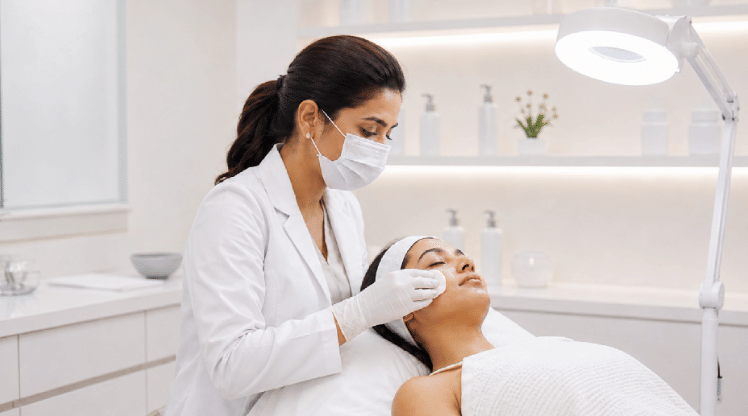
- Recovery content online can make enduring discomfort sound virtuous. It is not. Contact your treating clinic promptly if you develop worsening rather than improving pain, spreading redness or colour change, increasing heat or swelling, pus or foul-smelling drainage, unexpected open areas, fever, or a new cluster of blisters.
- You should also call if a prescribed product triggers intense burning, itching or swelling, or if the recovery looks meaningfully different from what you were told to expect. Send clear photos if the clinic requests them.
- Do not diagnose the reaction in a group chat, cover it with makeup or apply leftover antibiotics or steroid cream without medical advice.
- That is the real value of dermatologist aftercare: not just a sheet of rules, but access to someone who knows what was done, at what setting and how your skin looked before you left.
The Post Treatment Routine That Actually works
The best post treatment skincare routine is almost aggressively simple: follow the clinic’s timing, cleanse gently when permitted, keep the skin comfortably moisturised with approved products, protect it from sun and friction, pause irritating actives, and ask for help early when recovery veers off-script.
There is no medal for returning to retinol first. No algorithm rewards the person who peels a flake before it is ready. Faster healing is rarely about forcing speed; it is about removing the small obstacles that make repair harder.
That is the paradox of post procedure skincare. The treatment may be high-tech, but the recovery is built on low-drama habits: clean hands, a short shelf, serious sun protection and enough patience to let the skin finish what the procedure started.
ThePrint BrandIt content is a paid-for, sponsored article. Journalists of ThePrint are not involved in reporting or writing it.