





Thank you dear subscribers, we are overwhelmed with your response.
Your Turn is a unique section from ThePrint featuring points of view from its subscribers. If you are a subscriber, have a point of view, please send it to us. If not, do subscribe here: https://theprint.in/subscribe/
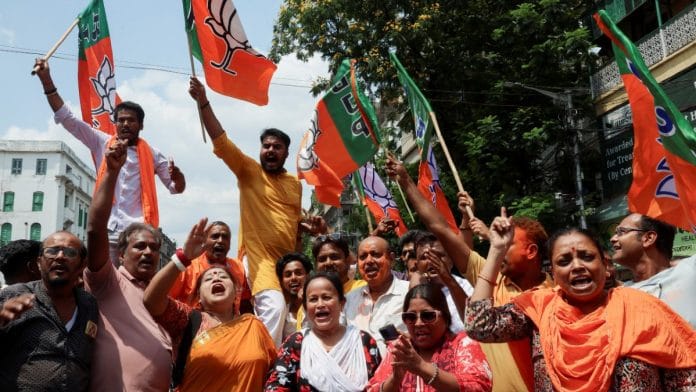
BJP’s West Bengal breakthrough is not a template to be mechanically imposed on Punjab. It is a warning that no state, however proud of its history, can indefinitely substitute cultural self-regard for governance and a credible future.
Bengal’s result should unsettle Punjab politics, not because Punjab is Bengal, but because both states have long been protected by flattering myths about themselves. West Bengal was imagined as the citadel of Indian intellectual life, yet the 2026 assembly election showed that even a state long treated as resistant to BJP’s vocabulary could shift when anti-incumbency, organization and public impatience converged. Political cultures that consider themselves immune to BJP expansion often discover too late that immunity was complacency dressed up as sophistication.
Bengal’s old elites had perfected moral condescension. The TMC presented itself as the defender of pluralism, but critics pointed to corruption, coercive localism and misgovernance. In that vacuum, BJP occupied the opposition space the Left and Congress had vacated. The meltdown among sections of the commentary class is the collapse of a worldview that mistook its own circle for the electorate.
Punjab should pay attention because its own elite response already sounds familiar. “Eh Punjab hai, Punjab. Punjabi arhna te larhna jaande ne.” As cultural sentiment, it carries pride. As political argument, it is thin gruel. It confuses temperament with strategy and identity with governance. Punjab is difficult terrain for BJP because of Sikh identity, farmer politics, regional memory and suspicion of homogenization. But difficulty is not impossibility.
The question is not whether Bengal can be replicated in Punjab. It cannot. The question is whether the same political laws are beginning to operate. Welfare has diminishing returns, identity cannot compensate forever for weak governance, and regional parties lose monopoly when younger voters ask for jobs and order. Free electricity and publicity can buy time, but they cannot answer unemployment, drugs, gangsters and the flight of youth abroad.
BJP will not oppose welfare. It now competes on it, pairing benefits with fiscal discipline and governance. That makes it a direct threat to AAP, targeting its strengths while exposing its weaknesses. AAP’s outsider advantage has faded with incumbency. If Congress stays lazy and factional and Akali Dal remains trapped in nostalgia, the anti-AAP space can shift towards BJP, not because Punjab has become Hindutva territory, but because BJP may be the only party with momentum to look like a ruling alternative.
The mistake of Punjab’s elite is to treat BJP as if it were still a marginal urban-Hindu project frozen in the Akali-BJP alliance era. That reading is outdated. Sunil Jakhar gives it agrarian recognition. Ravneet Singh Bittu brings the Beant Singh legacy and a border-state security idiom. Taranjit Singh Sandhu lets BJP reach into the moral genealogy of Akali reformist politics.
H.S. Phoolka brings the struggle for justice after 1984, an issue Congress cannot credibly address and Akali Dal failed to sustain as moral capital. Satnam Singh Sandhu adds another aspirational Sikh face. Together, these figures speak to urban and semi-urban Sikh voters who are culturally rooted and skeptical of Akali decline.
BJP is also trying to speak to Punjab through civilizational symbolism. PM Modi, Amit Shah and Yogi Adityanath have invoked Guru Tegh Bahadur’s martyrdom and his status as “Hind di Chadar.” Veer Bal Diwas and tributes to Guru Gobind Singh’s Sahibzadas place Sikh sacrifice inside India’s larger civilizational story. This can build trust if it recognizes Sikh tradition on its own terms.
The party’s social strategy is equally important. BJP is trying to assemble aspirational but non-dominant blocs, including non-Jatt Sikhs, urban Hindus, OBCs, Dalits, border voters, traders and youth. Migrant labor from eastern Uttar Pradesh and Bihar sustains Punjab’s economy yet remains politically underrepresented. Its Dera and OBC outreach fit the same pattern, organizing aspirations old Punjab parties managed but rarely transformed.
The numbers make this more than symbolism. In 2024, BJP won no Lok Sabha seat in Punjab, but doubled its vote share to about 18.5 percent and led in more than twenty assembly segments. The Akali Dal slipped to nearly 13 percent. A party that loses seats but expands vote share and booth presence is not finished.
AAP’s vulnerabilities are accumulating. Its welfare delivery remains real, but welfare plus media management is not transformation. The Rajya Sabha exodus of Punjab-linked AAP faces toward BJP has added psychological damage. The anti-sacrilege law controversy showed how hurried handling of Sikh sentiment can look performative rather than reverent. Congress has space but not seriousness. Akali Dal has memory but not momentum.
That is why Punjab 2027 may become AAP versus BJP faster than the old political class expects. BJP has no guarantee of victory, but it has a theory of expansion. Punjab’s pride is real, but pride becomes self-sabotage when it refuses correction. The question is not whether Punjabis know how to fight. The question is whether Punjab knows how to rebuild.
These pieces are being published as they have been received – they have not been edited/fact-checked by ThePrint.