




Thank you dear subscribers, we are overwhelmed with your response.
Your Turn is a unique section from ThePrint featuring points of view from its subscribers. If you are a subscriber, have a point of view, please send it to us. If not, do subscribe here: https://theprint.in/subscribe/
If you are an educated Indian who cares about this country’s civilisational heritage, there is a reasonable chance you can name the Ellora caves, discuss Nalanda, describe the Chola bronzes, and have an opinion about Ayodhya. There is also a reasonable chance you know almost nothing about Kalinga – the civilisation that produced Konark, worships Lord Jagannath, Odissi, and one of the greatest maritime traditions in Asian history.
That gap is not an accident. It is a choice India made, slowly and without noticing.
Last month, Odisha announced something that should have attracted far greater national attention: the state’s first comprehensive survey and digital archiving of its heritage assets – monuments, living traditions, palm-leaf manuscripts, oral histories, and ritual practices.
It will be the first Indian state to attempt documentation on this scale. The fact that Odisha has had to undertake this effort largely on its own tells you something important about how unevenly India remembers its own past.
Every November, in the dark before dawn, ordinary Odia families walk to the nearest river and set tiny boats made of banana bark adrift on the water. No ceremony. No official audience.
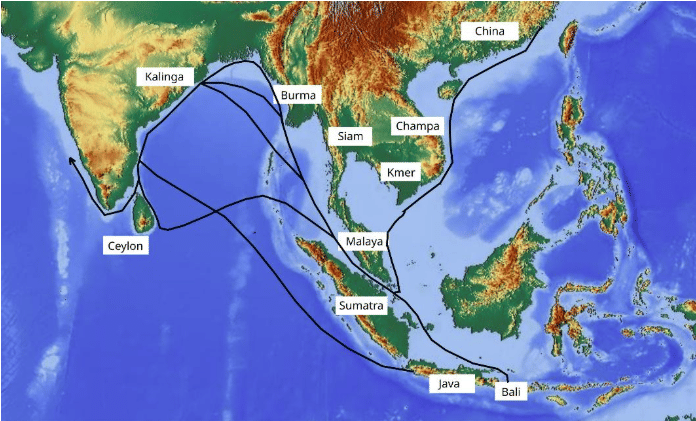
Just a quiet act of remembrance for the ancient Kalinga sailors who crossed the seas to Bali, Java, Sumatra, and Sri Lanka centuries before globalisation became a modern aspiration.
India has World Heritage Sites, civilisational summits, and cultural festivals sponsored by ministries. Odisha has this – a memory kept alive in the dark, at the water’s edge, by people who never forgot.
Modern India increasingly speaks about reclaiming its civilisational confidence. Much of that conversation, however, remains centred around the better-known political and historical narratives of northern India. Odisha – despite being one of the subcontinent’s oldest cultural regions – still occupies surprisingly little space in the national imagination.
Its case is unusual because the depth of its historical contribution is extraordinarily difficult to ignore once one begins to examine it closely. And yet, most of us never do.
A Civilisation That Altered History
The Kalinga War is remembered largely because it transformed Emperor Ashoka. Yet the deeper significance of that moment is often overlooked.
Ashoka’s remorse did not emerge from military defeat; it emerged from the scale of suffering inflicted upon a society sophisticated enough, organised enough, and culturally confident enough to leave a moral impact even on the victor himself.
The civilisation that changed Ashoka’s mind has almost no presence in India’s current conversation about its own greatness. Kalinga did not merely witness Indian history. In many ways, it redirected it.
Yet Odisha’s historical importance was never built on warfare alone. Long before India discovered the modern vocabulary of soft power, Kalinga’s merchants and sailors were already carrying Indian religious traditions, aesthetics, language, and philosophy across the Indian Ocean.
Excavations at Sisupalgarh, references in the Mahavamsa, maritime studies of Bay of Bengal trade routes, and cultural continuities visible across Southeast Asia all point toward Odisha’s deep historical engagement with the wider world.
The Hindu-Buddhist traditions of Bali, temple influences visible in parts of Java, and coastal trading networks across Southeast Asia did not emerge in isolation.
They were shaped partly by sustained cultural contact with eastern India, including Kalinga. India today speaks again of becoming a global civilisation. Odisha once experienced a version of that reality centuries ago.
The Jagannath Cult
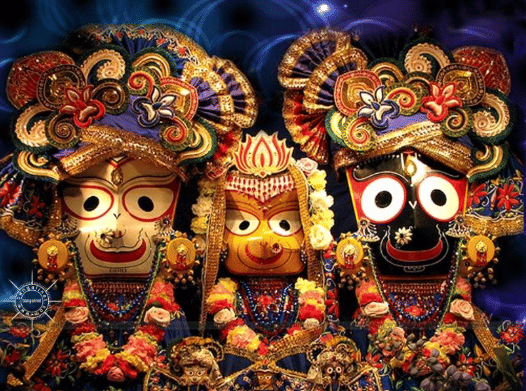
Perhaps no symbol captures Odisha’s philosophical distinctiveness better than Lord Jagannath.
In many traditions, divinity is imagined as physically perfect and complete. Jagannath appears unfinished – large circular eyes, incomplete limbs, an almost startlingly human form.
That symbolism matters. The deity evolved through centuries of interaction between tribal traditions, Vaishnavism, Shaivism, Buddhism, and Bhakti practices without entirely erasing any of them.
He belongs to everyone: the tribal devotee, the Brahmin philosopher, the labourer, the poet, the pilgrim. In a country that has always struggled to hold its contradictions together, Jagannath is a god who was designed for exactly that purpose.
The Jagannath Temple kitchen in Puri remains one of the largest functioning temple kitchens in the world, feeding tens of thousands daily and far more during major festivals. What makes it remarkable is not only scale, but philosophy.
Jagannath is not merely a regional deity. He represents a philosophical idea of sacred inclusiveness that India still struggles to articulate coherently in modern language.
Why Odisha Was Quietly Marginalised
Odisha rarely projected itself aggressively, and perhaps that became part of the problem.
Colonial extraction weakened the region economically for generations. Post-independence political and media structures increasingly revolved around Hindi-speaking power centres, pushing several non-Hindi cultures toward the margins of national visibility.
At the same time, Odisha spent decades focused on poverty alleviation, disaster recovery, and industrial underdevelopment. States struggling for roads, electricity, and hospitals rarely dominate cultural discourse.
And strangely, much of India still knows Odisha more through cyclone headlines than through its intellectual and artistic traditions.
Yet the cultural inheritance endured – in temple rituals, palm-leaf manuscripts, pattachitra paintings, Odissi dance, and the stubborn loyalty of ordinary Odia households to their language and customs.
Now Odisha has begun digitally archiving its own historical memory because no major national effort prioritised doing so earlier.
That reality should raise uncomfortable questions for India’s cultural institutions – and for the rest of us who did not notice the absence sooner.
Then there is Konark.
The Sun Temple is not merely an architectural achievement; it reflects the scale of imagination a civilisation possessed in the thirteenth century.
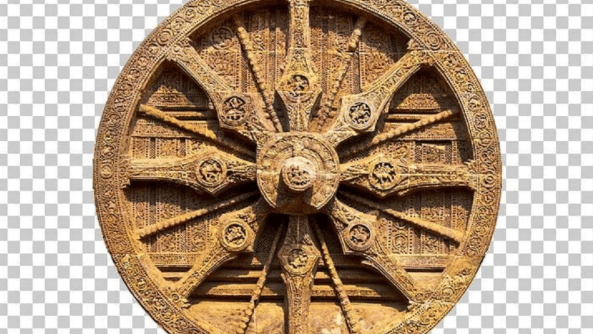
Conceived as a colossal chariot of Surya Devata with twenty-four intricately carved wheels and seven horses, the structure combines astronomy, devotion, geometry, and artistic mastery in astonishing detail.
The wheels themselves function as sundials, their spokes casting shadows accurate to the minute. The sculptural programme moves deliberately from earthly life toward cosmic order.
Standing before Konark, one gets the impression that its builders were attempting something larger than ornamentation – translating the universe itself into stone.
It currently receives only a fraction of the international attention and promotional investment directed toward several other major Indian monuments. A civilisation that could build Konark deserves better than a footnote in a tourism brochure.
What India Gains by Remembering Odisha
As India searches for cultural confidence in the twenty-first century, Odisha offers something unusually valuable: a model of historical depth that is spiritually rooted, artistically sophisticated, and remarkably open in the way its traditions have coexisted.
That inheritance is not simply nostalgic. It remains relevant.
A country seeking genuine civilisational confidence cannot build its identity only around the loudest or most politically visible historical narratives. It must also learn to value traditions preserved quietly – through ritual, architecture, language, food, and everyday continuity.
Go back to that image of the banana bark boats, drifting in the dark before dawn on a river. No ministry sanctioned that ritual. No cultural policy preserved it. Ordinary people kept it alive because they understood, instinctively, that forgetting has a cost.
The question is whether the rest of India is ready to understand that too.
These pieces are being published as they have been received – they have not been edited/fact-checked by ThePrint.