





Thank you dear subscribers, we are overwhelmed with your response.
Your Turn is a unique section from ThePrint featuring points of view from its subscribers. If you are a subscriber, have a point of view, please send it to us. If not, do subscribe here: https://theprint.in/subscribe/
India’s ambition to become a global artificial intelligence (AI) powerhouse is reshaping its digital economy and its physical environment. Massive data centers are being built around Mumbai, Chennai, Hyderabad, and Noida to fuel cloud computing, AI applications, and digital services. The India AI Mission and growing demand for digital infrastructure have helped India become one of Asia’s fastest-growing data center markets. For policymakers this is a new story of investment and innovation-led growth. But a different story unfolds with recent opposition to proposed data center projects in Maharashtra and Andhra Pradesh. Data centers are turning into local businesses with local impacts, similar to highways, industrial corridors, and renewable energy parks. India cannot just lure investment to become an AI leader. It also has to earn what is called a “social license to operate.”
Social license is the trust and consent of communities that host infrastructure projects, as opposed to legislative approval. It cannot be legislated or certified. It is earned through transparency, meaningful consultation, and fair sharing of benefits and costs. Industries ranging from mining to renewable energy have found that projects that don’t have community buy-in often suffer delays, litigation, and reputational damage. India’s digital infrastructure should not make the same mistakes.
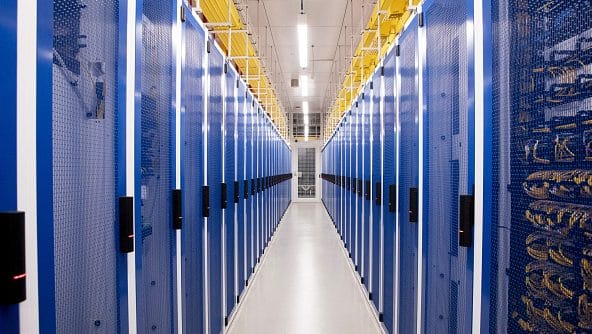
The common perception of AI is that of algorithms in the cloud. The truth is far more physical. All AI applications depend on computers in facilities that consume vast amounts of electricity, require cooling, cover large areas of land, and depend on reliable water and transmission. Global data center electricity consumption is expected to soar by the end of the decade as the use of AI expands, the International Energy Agency has forecast. India will likely experience similar pressures. Industrialization, electric mobility, and several heat waves are already driving up electricity demand. Adding data centers will add another major demand source to an already overburdened electrical system.
Data centers are cleaner than heavy industries but still have a significant local impact. They need a constant supply of power, a great deal of land and, depending on the cooling system, a great deal of water. Roadways and related infrastructure are also stressed by construction activity. As projects move to urban and peri-urban areas, residents are raising legitimate concerns. Will the need for industrial electricity impact the local supply?
What about water management in water-stressed areas? Will jobs and infrastructure benefit local communities? These are not anti-development arguments. They are a call for more transparency and accountability. India is not alone by any means. Communities in the Netherlands, Australia, Malaysia, and parts of the US have challenged major data center developments over concerns about energy use, water consumption, and land planning. Their experience is a lesson in how digital infrastructure is no longer immune from the same public scrutiny as previous mega-development projects.
India has rightly concentrated on seeking investment in digital infrastructure. But cash alone can’t ensure the success of a project if environmental and social concerns are ignored. Encourage developers to provide information on power use, renewable energy sources, water use, and recycling practices. Increased transparency will build public confidence and reinforce India’s climate commitments. Governments must also change their policy framework. Public consultation should be an integral part of project planning and not a post-decisional process.
More assurance for both investors and local communities would be provided by national rules for community engagement and sustainability criteria. India’s AI goals are achievable and critical. Data centers will power scientific research, digital public services, manufacturing, and the next generation of innovation. But technological leadership cannot be measured solely by the number of facilities constructed or billions of dollars spent. The real challenge is whether communities view these initiatives as opportunities rather than burdens. Regulatory approvals can get construction going, but they can’t build trust with the public. As India moves toward its digital future, securing a social license to operate may prove just as critical as winning the next billion-dollar investment.
These pieces are being published as they have been received – they have not been edited/fact-checked by ThePrint.