





Thank you dear subscribers, we are overwhelmed with your response.
Your Turn is a unique section from ThePrint featuring points of view from its subscribers. If you are a subscriber, have a point of view, please send it to us. If not, do subscribe here: https://theprint.in/subscribe/
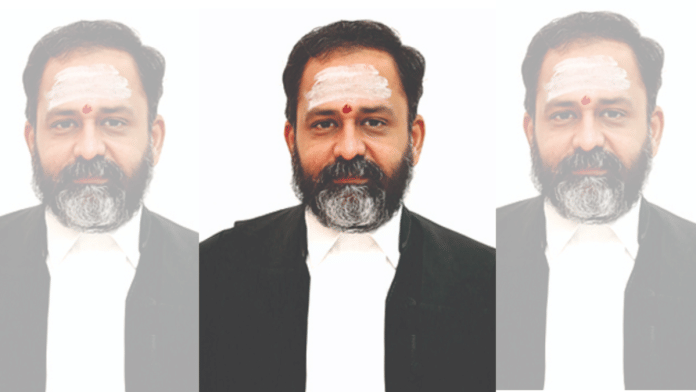
Justice G.R. Swaminathan’s long career on the Bench, marked by more than 70,000 judgments in under eight years has earned both admiration and critique. But his name resurfacing this week in connection with an impeachment notice should worry anyone who cares about judicial independence. Having briefly interacted with him earlier this year, what stood out was not agreement on every conclusion, but clarity of thought and an unmistakable commitment to the institution he serves. The present controversy tests not the correctness of one judgment, but the resilience of the constitutional architecture that protects judges from political retaliation.
It is important to state upfront what the law actually says. A notice of impeachment does not trigger the removal process. Under the Judges (Inquiry) Act, 1968, the Speaker of the Lok Sabha has the authority to admit or reject such a motion after examining its grounds. This discretion is not ornamental. It was placed deliberately to prevent the use of impeachment as a political or populist pressure tactic whenever a judgment displeases one constituency or another.
The framers of the Constitution recognised the vulnerability of judges in a democratic system where courts routinely confront the executive, correct legislatures, and decide disputes that polarise society. For that reason, Articles 124(4) and 217 make removal intentionally onerous, requiring proved misbehaviour or incapacity and a special majority in both Houses of Parliament. The design is clear: judges should not be removable for their reasoning, interpretations, or conclusions even when those conclusions are contentious.
The distinction between judicial error and judicial misconduct lies at the heart of a constitutional democracy. Judicial misbehaviour is not the same as judicial disagreement. The present motion against Justice Swaminathan stems entirely from disagreement with his reasoning in the Tirupparankundram Deepam case. Whether one reads the judgment as well-grounded or over-extended, it remains within the legitimate domain of judicial interpretation. Courts routinely confront cases where precedent permits more than one plausible reading; judgment-writing is seldom a mechanical exercise. To treat such interpretive choices as “misconduct” is to collapse the difference between error and abuse, between interpretation and corruption.
As a student of law, this episode is especially disquieting for another reason: the deafening silence of much of the country’s self-described intelligentsia. On issues of far lesser constitutional significance, voices across academia, the commentariat, and civil society erupt with analysis and moral urgency. Yet on the question of whether judicial reasoning can be punished through the threat of removal, the kind of constitutional overreach that should concern any serious scholar of democracy; the response has been noticeably muted. It is difficult not to feel a sense of disappointment that those who routinely position themselves as guardians of constitutional values choose silence at a moment that demands principle. A silence on matters of such gravity does not merely weaken public discourse; it normalises a troubling shift in the boundaries of judicial independence. No judge in India, or in any comparable constitutional democracy, has faced removal proceedings on the basis of a disputed judgment. To attempt such a move now would signal a shift from questioning a decision to disciplining the decision-maker.
This is where the danger lies. When political actors discover that the mere act of filing an impeachment notice generates public pressure and institutional anxiety, impeachment risks becoming a tool of intimidation rather than accountability. The threat becomes the punishment. Even if a motion is unlikely to be admitted, let alone succeed, the signal it sends is loud enough: controversial judgments may provoke political consequences.The long-term effect of such signalling is not difficult to imagine. Judges may begin to self-censor. A judiciary that hesitates to decide questions of religion, identity, federalism, or rights for fear of backlash will gradually retreat from its constitutional responsibilities.
The Constitution does not leave impeachment to the vagaries of political anger. The Speaker’s discretion is one of the most important safeguards in the process. Admission requires more than signatures; it requires a prima facie case of misbehaviour as understood in the constitutional tradition. Judicial reasoning even if flawed is not misbehaviour. The appellate system exists precisely because judges can err. Parliament is not an appellate court, and impeachment is not a substitute for review or appeal.
The motion against Justice Swaminathan forces us to confront a larger question: Do we want a judiciary that is independent, or one that is popular? A judge who fears that every controversial judgment could invite a removal notice will naturally err on the side of caution. But constitutional courts are not designed to avoid controversy. They are designed to interpret law even when those interpretations cut against public sentiment, political convenience, or majoritarian demands.
None of this means judges are beyond scrutiny. The judiciary’s credibility rests on integrity and accountability. But the process for removal exists for serious breaches not for interpretive disagreement presented as grievance. Diluting this threshold will not strengthen trust; it will corrode it.
A democracy cannot function if its judges fear consequences for thinking. The independence of the judiciary is not a privilege of the Bench; it is a safeguard for citizens. If courts lose the freedom to interpret the Constitution honestly, it is not the judges who will be the first casualties, it is the Republic itself.
These pieces are being published as they have been received – they have not been edited/fact-checked by ThePrint.