


Thank you dear subscribers, we are overwhelmed with your response.
Your Turn is a unique section from ThePrint featuring points of view from its subscribers. If you are a subscriber, have a point of view, please send it to us. If not, do subscribe here: https://theprint.in/subscribe/
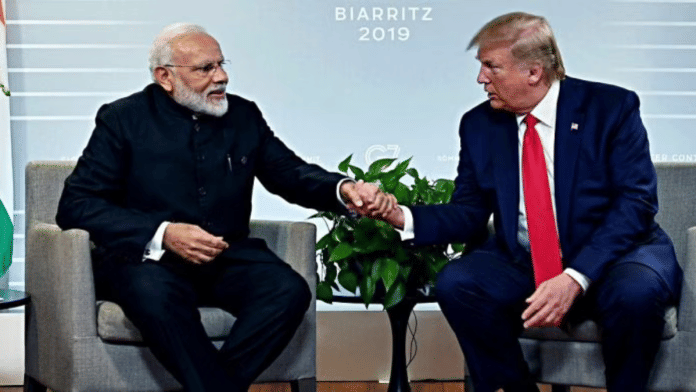
Is Donald Trump really “against India”? Or is India simply becoming a difficult piece on a much larger American chessboard?
The recent friction between Washington and New Delhi-over tariffs, Russian oil, market access, and trade—may appear at first to be a conventional commercial dispute. But beneath the headlines lies a much deeper contest involving energy, China, American exports, technology, geopolitics and who gets to influence India’s strategic choices.
It would be wrong to describe every American action as an anti-India policy. In fact, the United States and India reached a framework for an interim trade agreement in February 2026, under which India agreed to reduce tariffs on a wide range of American goods, while the US agreed to an 18% reciprocal tariff rate on Indian goods. India also indicated its intention to purchase $500 billion of US energy, technology, aircraft, precious metals, and other products over five years.
So why does Washington continue to pressure New Delhi?
The first answer is money.
America runs a substantial goods trade deficit with India. The Trump administration’s philosophy is simple: if the American market is open to Indian products, India must provide greater access to American products in return. Washington therefore wants India not merely as a strategic partner, but as a much larger customer for American agriculture, energy, technology, aircraft and manufactured goods.
The February agreement itself reveals the scale of that ambition. India agreed to open portions of its market to American industrial and agricultural products and to address several non-tariff barriers. The United States, meanwhile, sought greater access for its exporters and technology companies. But trade may only be the visible layer.
The second and more prominent issue is Russia.
India’s purchase of Russian crude has become a major irritant in Washington. The US has sought to use economic pressure to reduce the revenues flowing to Moscow. The US Senate recently approved legislation that could give President Trump authority to impose tariffs of up to 100% on countries continuing to buy Russian energy. India and China are among the world’s largest buyers of Russian crude.
Here lies the contradiction. China purchases substantial quantities of Russian oil too, yet India increasingly finds itself under the American microscope. Why?
One explanation is not that Washington wants to weaken India, but that India is considered more persuadable than China.
America cannot easily force China to change its energy policy. India, however, is simultaneously seeking closer economic, technological and defence relations with Washington. That makes India a more practical target for pressure.
This leads to the third strategic objective: bringing India closer to the American economic orbit without formally asking India to abandon strategic autonomy.
India has traditionally maintained relationships with Russia, the United States, Europe, Iran, the Gulf, and others simultaneously. Washington may increasingly want India to make choices that are more compatible with American strategic interests.
The Quad is an important part of this picture. India, the United States, Japan, and Australia have increasingly used the grouping to coordinate in the Indo-Pacific, particularly against the backdrop of China’s growing power.
America therefore needs India.
But needing India does not mean Washington will stop pressuring India.
In fact, the opposite may be true.
The fourth hidden calculation could be China.
The United States wants India to become a stronger alternative manufacturing and technology centre as companies diversify supply chains away from China. But Washington also wants this diversification to benefit American companies and technology providers.
The February agreement specifically envisaged greater bilateral trade in technology products, including GPUs and equipment used in data centres, together with cooperation on supply-chain resilience, investment screening, and export controls.
This is significant.
The future contest is no longer merely about who sells more cars or agricultural products. It is about semiconductors, artificial intelligence, data centres, defence technology, critical minerals, digital infrastructure, and supply chains.
India is too large to be ignored and too strategically important to be left completely independent of the emerging American technology ecosystem.
The fifth issue is energy.
If India purchases more American energy instead of Russian crude, Washington gains twice: American energy producers gain a major customer, while Russia loses a significant market.
The February framework’s proposed $500-billion Indian purchase commitment therefore deserves to be viewed not merely as a trade figure, but as part of a larger economic realignment.
There is, however, another possibility.
Trump may not actually be pursuing a grand secret plan against India at all. His negotiating style itself may explain much of the apparent hostility.
Trump has repeatedly treated tariffs as a bargaining instrument. Pressure is applied first; negotiation follows. The objective is often to create enough economic pain that the other side returns to the negotiating table.
Recent developments reinforce this interpretation. Despite the tariff dispute over Russian oil, White House adviser Peter Navarro recently said Trump and Prime Minister Narendra Modi have a “very good working relationship” and would work out the issue themselves.
That tells us something important.
The relationship may be transactional rather than hostile.
And that distinction matters.
India should therefore avoid both extremes: assuming that America is an unconditional friend or believing that Trump is fundamentally anti-India.
The reality is more uncomfortable.
America wants India, but on terms increasingly favourable to America.
India’s challenge is to determine where cooperation serves Indian interests and where cooperation begins to compromise strategic autonomy.
The real hidden agenda may therefore not be a secret American plan to weaken India.
It may be something more sophisticated: to make India economically, technologically, and strategically closer to America while allowing India to retain the appearance and much of the substance of independent decision-making.
Whether that becomes a win-win partnership or an unequal dependency will depend not on Trump’s intentions alone, but on India’s ability to negotiate from strength.
The question India should therefore ask is not, “Why is Trump against India?”
It is: “What does America want from India and what should India demand in return?”
That is the negotiation that will shape the next decade of India-US relations.
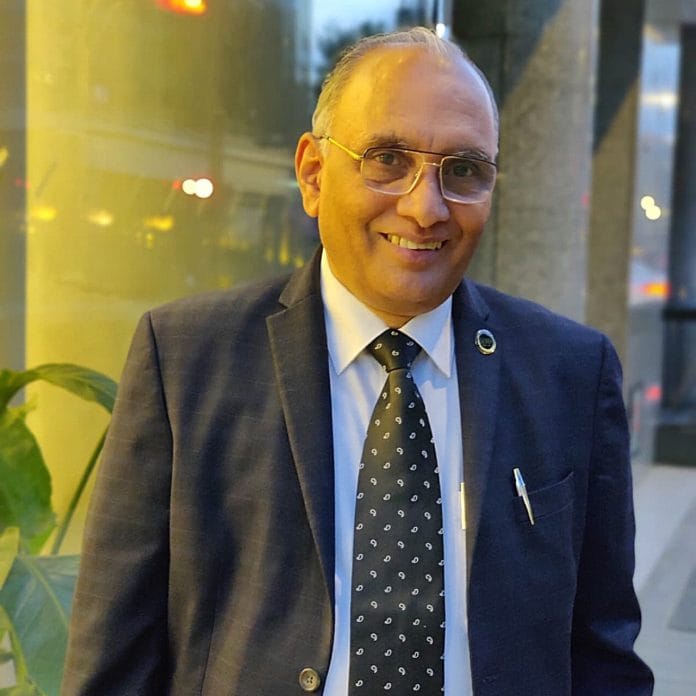
S. Parameswaran
Entrepreneur | Corporate Director | Freelance Writer
Bengaluru.
These pieces are being published as they have been received – they have not been edited/fact-checked by ThePrint.