


Thank you dear subscribers, we are overwhelmed with your response.
Your Turn is a unique section from ThePrint featuring points of view from its subscribers. If you are a subscriber, have a point of view, please send it to us. If not, do subscribe here: https://theprint.in/subscribe/
The 2026 West Asia conflict demonstrated how quickly a distant geopolitical shock can become a domestic economic crisis. Fighting around Iran and the Strait of Hormuz pushed up oil prices, increased shipping risks and complicated fertiliser supplies. For India, the disruption exposed the vulnerability of an economy that is overly dependent on external sources for critical resources.
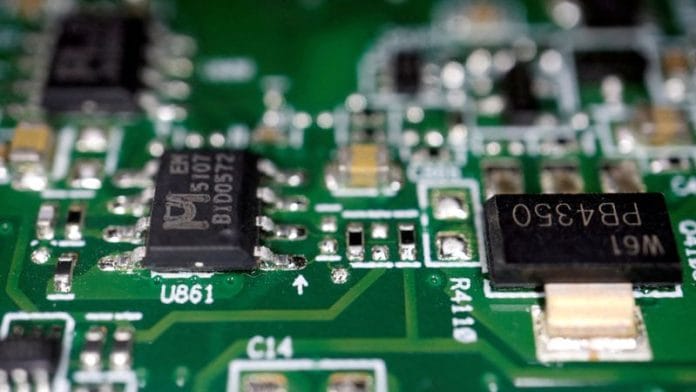
A quieter but potentially more consequential vulnerability now lies in semiconductors. As India builds its next growth model around artificial intelligence, data centres, industrial automation, electric mobility and advanced manufacturing – semiconductors are becoming a foundational infrastructure. AI systems run on advanced processors and high-GPU chips; automobiles, telecommunications networks, industrial machinery, defence platforms and energy systems all rely on these components. A semiconductor disruption would therefore ripple across manufacturing, transport, energy and the wider digital economy.
Yet India remains dangerously exposed. The recently published NITI Aayog roadmap, Future of India’s Semiconductor Industry, 2026, puts the degree of exposure in sharp focus. The report stated that nearly 90–95% of India’s semiconductor demand is currently met through imports, primarily from China, Hong Kong, Taiwan, and South Korea. Further, between FY2017 and FY2025, India cumulatively spent approximately $150 billion on semiconductor-related imports. Imports grew at roughly 23% annually during this period and, if that trajectory continues, the annual import bill could approach $240 billion by 2035. At the same time, India’s domestic semiconductor demand is projected to exceed $200 billion by 2035, driven by rapid adoption of 5G and 6G networks, AI infrastructure and automated devices.
This creates a widening gap: India’s demand is growing rapidly while supply remains concentrated abroad. Dependence on a few overseas hubs leaves critical sectors dangerously exposed to conflict, export controls, blockades or disruption at a single chokepoint.
Through the India Semiconductor Mission and Semicon 2.0, New Delhi is seeking to build domestic manufacturing capacity, attract global investment and develop a wider semiconductor ecosystem. The modified semiconductor scheme provides fiscal support of up to 50% of project costs for semiconductor fabrication plants, with similar support for OSAT facilities.
This policy direction is necessary. But capacity-building alone does not automatically produce resilience. That raises a more fundamental question: should India measure semiconductor success by how quickly it can replicate the trajectories of Taiwan, South Korea or the United States, or by how effectively it can identify and reduce the vulnerabilities that matter most to its economy?
India should pursue the latter.
Replicating the semiconductor trajectories of established leaders would require enormous capital, technological depth and decades of accumulated expertise. India should certainly continue building advanced manufacturing capabilities, but its strategy cannot rest solely on the ambition of catching up with existing leaders. It requires a shift from counting fabrication plants and investment announcements to a more systematic approach to mapping vulnerabilities and identifying strategic opportunities.
India should first identify which semiconductor components are most critical to defence, telecommunications, energy, transport, healthcare and digital infrastructure. It should then map where these components are sourced, how concentrated those suppliers are, what alternative sources exist and which capabilities need to be developed domestically. This would allow India to distinguish between dependence that is manageable and dependence that could become a strategic liability during a crisis.
More importantly, India need not follow the conventional path of building capabilities across every segment of the semiconductor industry. It can leapfrog established pathways by identifying areas where it has the potential to develop specialised strengths and assume global leadership. Indigenous chip design and open architectures such as RISC-V, compound semiconductors based on materials such as Gallium Nitride and Silicon Carbide, power electronics and advanced packaging offer important opportunities. Rather than competing immediately with established players in the most capital-intensive advanced fabrication segments, India can build expertise in these strategically significant areas while gradually strengthening its manufacturing base. This would allow it to develop capabilities that serve both domestic requirements and global supply chains.
India must also consider establishing strategic reserves of critical semiconductor components, particularly those essential to defence, telecommunications, energy and other vital industries. Identifying components with concentrated supply chains, limited substitutes and significant economic or security implications would help determine what needs to be stockpiled. Such reserves could provide a buffer against sudden disruptions, allowing critical industries to maintain operations while alternative supplies are secured.
India’s semiconductor ambitions must therefore extend beyond manufacturing capacity. By mapping vulnerabilities, securing critical components and leapfrogging in specialised technological segments, India can build an ecosystem that is both globally competitive and resilient. The objective should not simply be to manufacture more chips but to ensure that the technologies and supply chains underpinning India’s economy remain secure when disruption strikes.
Mahesh Ganguly, teaching assistant and research fellow, IIT-Bombay.
These pieces are being published as they have been received – they have not been edited/fact-checked by ThePrint.