





Your Turn is a unique section from ThePrint featuring points of view from its subscribers. If you are a subscriber, have a point of view, please send it to us. If not, do subscribe here: https://theprint.in/subscribe/
There are moments in politics when timing reveals more truth than any manifesto ever will.
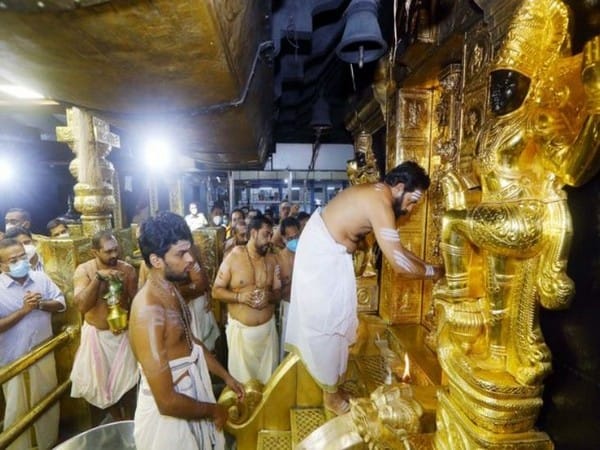
Kerala’s ruling establishment has just rediscovered Sabarimala.
Not in 2018, when millions of devotees watched in disbelief as the State chose confrontation over conciliation.
Not in the years that followed, when the wound lingered quietly in the public mind.
But now—precisely when elections arrive, and memory begins to matter.
This is not governance.
This is nervous, shoddy choreography.
Let us recall the sequence.
In 2018, the State did not merely implement a Supreme Court verdict—it embraced it with ideological zeal. The police were not neutral enforcers; they became visible instruments of a political position. Devotees were not engaged; they were ruthlessly, mercilessly managed. Tradition was not respected; it was dismissed.
The result was not reform. It was rupture.
Sabarimala ceased to be just a legal issue. It became a question of respect—of whether faith could be negotiated with or simply overridden.
That memory has not faded. It has brewed, fermented.
And now, in 2026, we are told a different story.
The same State that once projected moral certainty now speaks the language of “consultation,” “sensitivity,” and “wider engagement.” Affidavits are drafted with careful ambiguity. Words are chosen not for clarity, but for electoral resonance.
This is not evolution.
It is recalibration to suit campaign narratives.
When a government changes its tone without acknowledging its past, it does not build trust—it advertises its fear and anxiety.
The affidavit that has recently triggered debate is a case in point. It stretches the frame of the issue to include multiple stakeholders, invokes procedural language about “necessary parties,” and signals a softer posture.
Legally, this is permissible. Governments are entitled to change litigation strategy.
Politically, however, the message is unmistakable:
We hear you now.
The obvious question is:
Why only now?
Because elections are unforgiving auditors.
They do not read affidavits.
They remember behaviour.
And Sabarimala, for a significant section of Kerala’s electorate, is not about doctrine or constitutional theory. It is about something far simpler and far more powerful:
Dignity.
The sense that their belief was not merely challenged, but trivialised.
The ruling coalition today finds itself in a classic incumbency trap.
After years in power, governance fatigue sets in. Administrative successes blur into routine. Economic anxieties persist. Local grievances accumulate. What once looked like stability begins to feel like stagnation.
At such moments, governments do what they always do:
they reach for issues that evoke emotion rather than evaluation.
Sabarimala is one such issue.
But this is a dangerous instrument.
Because faith is not a policy lever.
It is a memory archive.
And memories do not respond kindly to selective amnesia.
The Opposition, unsurprisingly, has seized the moment.
The BJP continues to position itself as the custodian of devotional sentiment, seeking to consolidate what it began mobilising in 2018. The Congress-led UDF, more cautious but equally alert, frames the ruling government’s shift as opportunism—an attempt to have it both ways.
Between them, the ruling coalition is squeezed:
- If it reasserts its earlier ideological position, it risks reopening old wounds.
- If it softens its stance, it appears inconsistent, even insincere.
When governments treat deeply held beliefs as variables in an electoral equation, they reduce society to a series of negotiable blocs. Faith becomes a campaign theme. Tradition becomes a talking point. Constitutional language becomes a shield for political manoeuvre.
In that process, something more serious is eroded:
Credibility.
Kerala’s electorate is among the most politically aware in India. It has a long history of rewarding performance and punishing arrogance. It understands nuance. It distinguishes between conviction and convenience.
The ruling government’s current posture on Sabarimala will therefore not be judged in isolation. It will be assessed against a simple, unspoken metric:
Was this always your position, or is this your election position?
That is the question that matters.
Incumbency, in Kerala, is rarely defeated by a single issue. It is eroded by accumulation—of perception, fatigue, and doubt.
Sabarimala does not create that erosion.
But it sharpens it.
It reminds voters of a moment when the State appeared distant from their sentiment. It highlights a present where the same State appears eager to reconnect. And in that contrast lies the political risk.
My assessment is straightforward.
Sabarimala, reintroduced at this moment, may not decide the election. But it will influence how the electorate reads intent.
And intent, in politics, is often more decisive than action.
In the end, governments are judged not by how they speak in election season, but by how they behaved when they did not need votes.
And that, more than any affidavit, will decide the outcome.
These pieces are being published as they have been received – they have not been edited/fact-checked by ThePrint.