




Thank you dear subscribers, we are overwhelmed with your response.
Your Turn is a unique section from ThePrint featuring points of view from its subscribers. If you are a subscriber, have a point of view, please send it to us. If not, do subscribe here: https://theprint.in/subscribe/
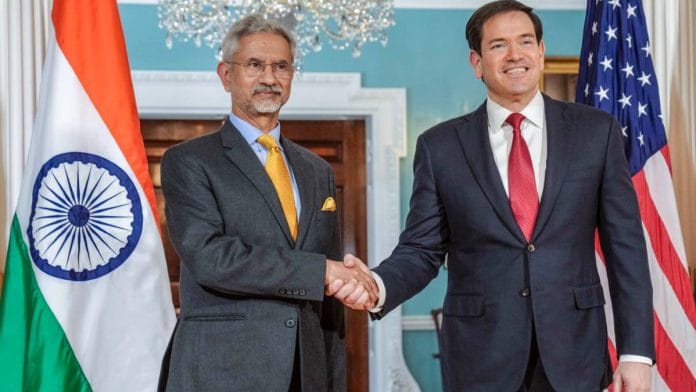
Marco Rubio arrives in New Delhi this week bearing the usual Washington gift hamper: strategic smiles, solemn handshakes, vague assurances, and PowerPoint promises about “shared democratic values.”
India should offer tea.
And keep one hand firmly on its wallet.
Because beneath the diplomatic cologne lies an old American habit: treating allies as disposable paper napkins and partners as door mats.
Donald Trump’s recent vulgar remarks about India — describing it in language better suited to a drunken barroom than the office of the President of the United States — were not merely offensive. They were revealing.
Civilised nations occasionally make mistakes.
Empires reveal instincts.
And Trump, as always, has the emotional discipline of a hand grenade with a wig.
But here is the more important question: why is Rubio suddenly in Delhi, all earnest eyebrows and strategic concern, immediately after Trump’s China pirouette?
Simple.
Because Washington has once again remembered geography.
China is not going away.
Russia is not collapsing.
Europe is distracted, ageing, and economically breathless.
And in the Indo-Pacific chessboard, India is not a decorative bishop.
It is the board.
For years, America has behaved like that wealthy, unreliable relative who remembers family only when he needs a loan.
One year India is “the world’s largest democracy,” indispensable to the rules-based order.
The next, India is lectured on human rights, trade deficits, tariffs, minority politics, Russian oil, climate virtue, and whatever fashionable sanctimony is trending in Washington cocktail circuits.
Then China sneezes — and suddenly New Delhi becomes strategically irresistible again.
How touching.
Marco Rubio’s visit is not an act of affection.
It is an act of arithmetic.
America knows a blunt truth it hates admitting aloud: it cannot contain China without India.
Japan cannot do it.
Australia cannot do it.
Europe certainly cannot do it between its regulatory conferences and moral seminars.
And America, despite all its aircraft carriers and cinematic self-confidence, knows that Indo-Pacific strategy without India is a brochure, not a doctrine.
But India must resist the oldest temptation in diplomacy: confusing attention with respect.
The United States respects strength.
It tolerates utility.
It sentimentalises neither.
Look at history.
Pakistan was America’s “major non-NATO ally” — until it wasn’t.
The Kurds were useful — until abandoned.
Afghanistan was vital — until the helicopters lifted off.
Ukraine was heroic — until budget fatigue set in.
American foreign policy does not marry.
It dates.
India must remember this before the cameras begin flashing.
And let us dispense with this absurd television question: “Can Rubio rebuild trust?”
Trust?
Between nations?
This is geopolitics, not marriage counselling.
Nations do not operate on trust.
They operate on leverage.
India’s great diplomatic achievement over the past decade has been its refusal to become anyone’s obedient geopolitical intern.
It buys Russian oil.
Works with America.
Trades with Europe.
Engages the Gulf.
Manages China.
Partners with Japan.
Courts Africa.
Speaks to the Global South.
That is not indecision.
That is adulthood.
The old doctrine of “non-alignment” was often moral theatre wrapped in Nehruvian incense.
What India practices today is far sharper: multi-alignment with hard realism.
And that must remain non-negotiable.
If Rubio comes bearing serious offers — defence technology transfer, intelligence cooperation, semiconductor partnerships, supply-chain relocation, strategic minerals collaboration — India should engage enthusiastically.
If he comes merely with sermons and strategic small talk, Delhi should smile politely and check the time.
Because India is no longer a supplicant nation seeking Western validation.
It is a civilisation-state with memory, markets, military heft, and geopolitical relevance.
Trump may insult.
Washington may oscillate.
Rubio may reassure.
None of that changes the core equation.
India must engage America deeply — but emotionally detach completely.
In diplomacy, sentiment is expensive.
Memory is profitable.
And the first rule of dealing with empires is simple:
Never mistake Yankee urgency for friendship.
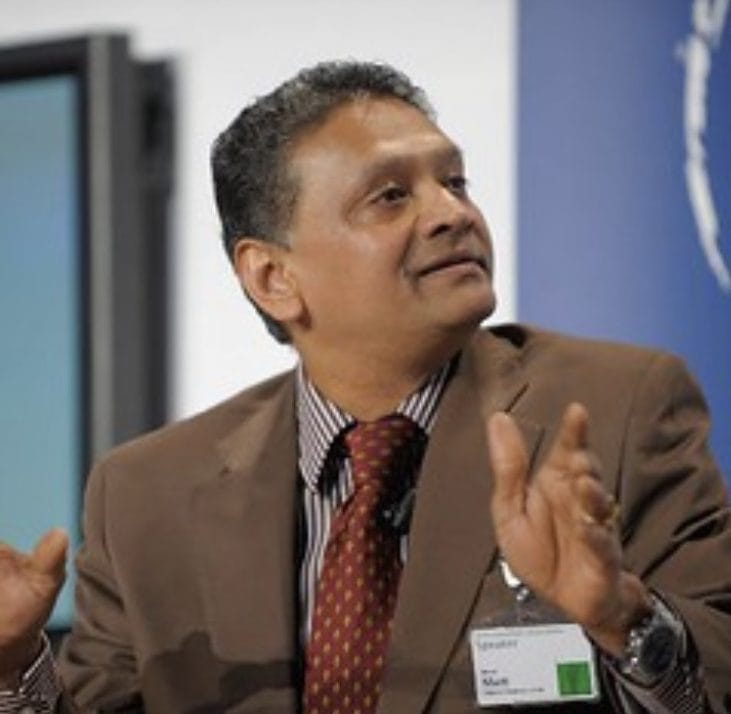
Mohan Murti, FICA
Advocate & International Industry Arbitrator
Former Managing Director- Europe
Reliance Industries Ltd, Germany
These pieces are being published as they have been received – they have not been edited/fact-checked by ThePrint.