




Thank you dear subscribers, we are overwhelmed with your response.Your Turn is a unique section from ThePrint featuring points of view from its subscribers. If you are a subscriber, have a point of view, please send it to us. If not, do subscribe here: https://theprint.in/subscribe/
Travel enlarges us in ways we don’t expect when we pack. I came back from Phuket with the usual baggage – photographs, a few souvenirs, the smell of salt on my shirt. I also came back with a voice I can’t stop hearing. Ban Thoon’s voice. She was 22, ran a small restaurant, and had taken to calling me “Mama”. Phuket is beautiful in the easy way – green hills sliding into the Andaman Sea, sea stretching till the sky forgets where to end. You think you’ll remember the view. You don’t. You remember people.
For years I too carried a single image of Thailand, the one the world repeats without shame. Every society has its fragments mistaken for the whole. What Phuket gave me instead were different fragments. I saw women running shops at 6 am, balancing accounts in notebooks with frayed edges, negotiating with suppliers, closing cash drawers with authority. And I saw men. Men with toddlers asleep on their shoulders, men rocking prams outside shops, men waiting, without restlessness, till wives counted the day’s earnings and pulled the shutter down.
One evening the shutter was slow. A father stood cradling a child who had fallen asleep mid-yawn. The child’s head rested on his chest, his hand made small circles on the child’s back. The mother was inside, calling out orders, her voice brisk, sure, authoritative. Ban Thoon was chatting with me, asking me questions about my neon khadi outfit and Delhi’s sweltering heat. Maybe I wasn’t attentive enough or I stared at the struggling father too much. I must have looked surprised for here in India, we seldom come across fathers waiting outside while mothers finish work.
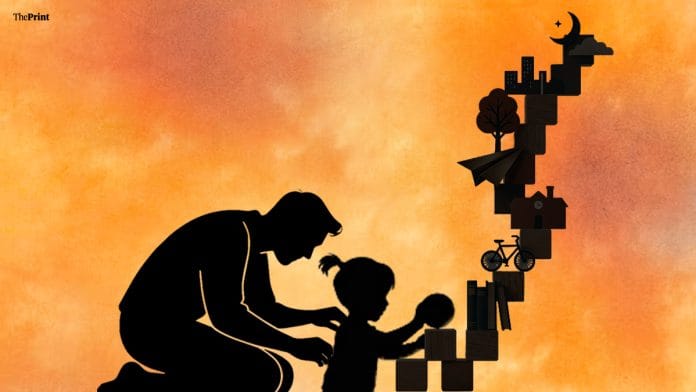
Probably, she followed my gaze, read my mind and smiled. “Parents take turns,” she said matter-of-factly. Three words. Not a slogan. A simple schedule. The sentence stayed with me on the flight home, through immigration, through Delhi traffic. It stayed because it was ordinary. Because it should be ordinary everywhere. It made me ask questions I had avoided asking at home. When did we decide that caregiving was “women’s work” instead of family work? At what point did we start clapping when a man changed a diaper, as if he had done us a favour? My son turned thirty-nine in Phuket. We cut cake at a small beach café while Ban Thoon’s words kept time in my head. I thought about inheritance. Not land or name, but the quiet lessons children learn without being taught.
They learn who gets tired and who is allowed to rest. Who earns and who is praised for earning. Who waits. Soon I will unpack my suitcase. The keepsake most likely to remain is not the image the world carries of Thailand, but the one I carried home – fathers who cradled their babies to sleep while mothers closed shop. All societies leave impressions, coaxing us to think. Maybe the answer begins where Ban Thoon said it begins: in the small, ordinary, unglamorous act of parents taking turns.
Submitted by: Sangeeta Kampani
These pieces are being published as they have been received – they have not been edited/fact-checked by ThePrint.