





Thank you dear subscribers, we are overwhelmed with response.
Your Turn is a unique section from ThePrint featuring points of view from its subscribers. If you are a subscriber, have a point of view, please send it to us. If not, do subscribe here: https://theprint.in/subscribe/
What does a naval blockade, an otherwise simple enough term to comprehend, entail? Apparently, this is in reference to the latest announcement today,13 April, by POTUS, that effective 7:30pm, IST, America has imposed a complete naval blockade of the Strait of Hormuz, following the failure of talks in Islamabad. More importantly, what does it mean for India and much of Asia? Things had already hit rock bottom in the six-week war and one thought the only way they could move from there was up. Wrong, as it turns out. As an Army man, I am no expert in the maritime or naval domain…hence, for many of you like me, l will try to break it down in simple terms, rather than getting into the technical domain.
Well, a naval blockade is a military strategy used to restrict an enemy’s access to or from the sea.
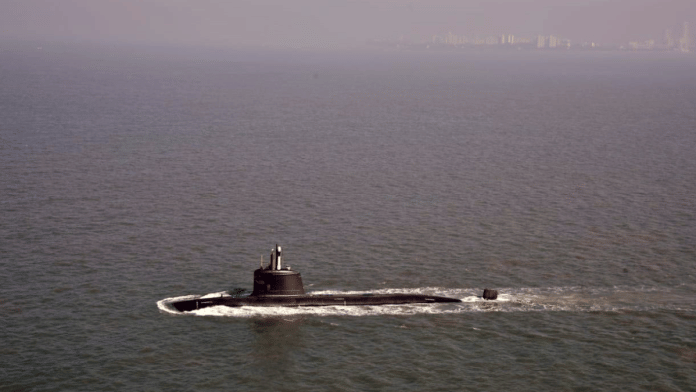
Traditionally it entails deployment of naval forces including warships, submarines and smaller craft like missile boats etc to stop all ingress and egress from targeted ports/harbors. Positioning of aircraft to keep a watch on, and if required, attack enemy’s coastline, ports, or key sea routes is also kosher.
Ships, particularly those of the blockaded nation’s navy and merchant shipping attempting to enter or leave the area are stopped, inspected, or turned away. Also a blockade can entail control, monitoring and interception of key chokepoints, straits, harbors, or shipping lanes. Non-compliant ships can be seized, damaged, or sunk depending on the rules of engagement. A blockade aims at cutting off imports/exports, to weaken the enemy’s economy and military. It has to be publicly declared and impartially enforced and could last for extended periods, requiring constant naval presence and resources. A naval blockade thus strategically isolates the enemy and puts it under severe, sustained stress. Essential shipping, related to medical and humanitarian aid, is to be allowed to continue.
This is however as per convention. There have been numerous successful naval blockades from biblical times to the American Civil War and in the twentieth century. Today, given precision weapons, guided missiles, satellite technology, cyber warfare, drones etc, a naval blockade may not necessarily involve close deployment of naval assets or intimate engagements at sea. It can well be managed from stand off distances and remote engagement or control. Besides, given the belligerence and hostility we have witnessed between USA and Iran lately, it’s an ‘all bets are off’ kind of scenario. One doesn’t expect the ‘niceties’, so to say, of the convention outlined above to be fully observed. It’s going to be a ‘shoot first and ask questions later’ situation, particularly by the US, for which it seems like the last gambit to bring Iran to its knees.
One may well ask how this changes things, since the Strait of Hormuz was already shut to almost all maritime traffic. No ships, except Iranian, were passing. (Yes, a few here and there, based on negotiation and other considerations, but a miniscule percentage of the pre-28 Feb traffic). Well, what this blockade is going to do is this – any ship, of any nationality, leaving or entering an Iranian or Irani controlled port will not be allowed to transit. So, it is aimed at crippling Iranian sea borne trade, essentially oil, and hence their already battered economy.
What does this mean? For Asian nations, it will be a huge blow. 90% of Chinese oil, eg, comes from Iran. India too (after lifting of the sanctions recently) has been getting a substantial amount of oil from Iran. So do a number of other nations, notably Japan, Singapore, Indonesia etc. With the energy crisis already taking an economic and political toll, this is going to be a double whammy for such countries. While China, with its vast stored reserves, may be able to weather the storm for a relatively long period, others will be hard put to meet their energy needs. We in India have been fortunate that oil and gas prices have not gone through the roof (perhaps thanks to the elections in several states?), we are likely to be hit hard – not only in shortage of oil/energy, but for fertilizer, with the Kharif season almost there. We have to gird our loins and brace ourselves for a harsh summer ahead.
In addition, there is the escalation factor. Iran, as we have seen, is not going to roll over and die. If even one of its shore or ship based missile hits a US Navy ship (which Iran would be very much within its right to do), the American retaliation will be swift and extremely violent. The spiral of uncontrolled escalation will continue and get worse before it gets any better.
There have been unconfirmed reports of another round of talks. Let’s hope they turn out better than the last one and the world is saved from falling into an abyss, from which it may take years to get out, if it ever does.
These pieces are being published as they have been received – they have not been edited/fact-checked by ThePrint.