

Thank you dear subscribers, we are overwhelmed with your response.
Your Turn is a unique section from ThePrint featuring points of view from its subscribers. If you are a subscriber, have a point of view, please send it to us. If not, do subscribe here: https://theprint.in/subscribe/
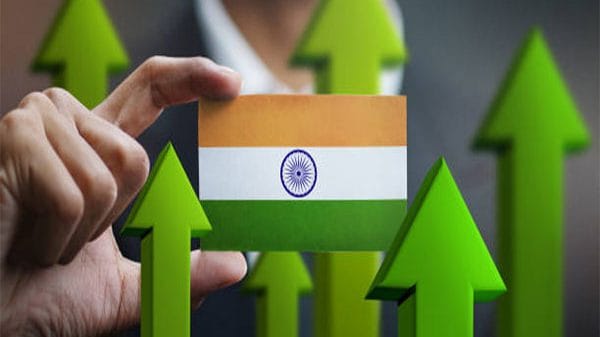
The PM’s Viksit Bharat vision or Mission Viksit Bharat @2047 is to make India a “developed country” by 2047, the centenary year of our independence. It includes, inter alia, higher incomes and productivity, a strong economy, making India a major manufacturing and technology hub, improved infrastructure and public services. It also aims at skilling India’s large young population, higher agricultural productivity, better rural infrastructure and greater access to markets. Improvement of education, health and general living standards are also core objectives. There is a thrust towards a stronger global role too – greater economic and technological capability and strategic resilience.
The goal is noble and nationalist – no right thinking Indian can have a quarrel with that. What one needs to look at are the likely smaller impediments which may prevent our march to this exalted goal. These can broadly be categorised under human, social, political, economic, and education factors or indices.
Let us consider the human or ‘people’ index first. The blatant disregard for regulations, laws, rules, leading to a pathetic lack of civic sense even amongst the educated, is abysmal. Our conduct in public places, public transport, roads, protected spaces, workplaces, neighborhoods etc is despicable. From spitting, urinating, garbage disposal to use of mobile phones without headphones everywhere, loud music beyond permitted hours and observance of loud religious rituals in public…the list of our transgressions runs a mile long. A nation is what its people are, as Japan has shown. No legislation or education can change behaviour…it needs to come from within, driven by an abiding concern for the fellow citizen. To make India great, our people have to be great.
We take the politico-economic factors together. The culture of freebies has lately been lapped up with great elan by all parties, with each trying to outdo the other. This is a huge drain on national and state finances. The money thus spent or wasted, can be so much better utilised for education, health, infra and a host of other nation-building pursuits. Besides the economic fallout, it makes people lethargic and serves to further erode our stature and standing.
Next, briefly, is the issue of reservation or affirmative action. Broadly, central educational institutions/services cater for 15% SC, 7.5% ST and 27% OBC quotas; EWS provides 10% separately where applicable. It has its pluses along with the downside. Some political parties are now talking of reservation beyond 50% and also extending it to the private sector. Even as the ends of social mobility and access to education/jobs are served, the system creates a sense of unfairness, where much more deserving candidates from the general quota are left out. Besides,it does not really address the problem of poverty or fix unequal schooling. Reservation is a complex issue, which has been oft debated. Suffice it to say that for a progressive India, this problem needs to be addressed logically and expediously. It is however unlikely that any political party will touch it with a barge pole.
On the economic front, the present govt started off well. Yet, its stated ideal of “govt has no business to be in business” hasn’t quite lived up to its promise. Except for Air India, there has been no significant disinvestment. In some ways the “inspector raj” again seems to be making inroads. Manufacturing has not been incentivised. Foreign companies are loth to invest in India, given the large number of clearances required. This needs to be fixed soonest. To thrive economically and achieve the goal of a 5 trillion dollar economy soon, manufacturing must get a boost.
One can go on and on. Infrastructure and development have been rapid and praiseworthy. However, questions about quality remain. A Newslaundry tally of media reports counted 170 bridge collapses and 202 deaths across India between 2021 and mid 2025. Besides poorly designed roads and flyovers fail without falling… engineering design is often faulty. “A state that keeps no full record of its failures will not know how to correct them” (Source : ToI ,11 Oct 26. Rutul Joshi, professor, Faculty of Planning CEPT Univ, Ahmedabad). The social, human and economic sides to infrastructural development have to go hand in hand.
To conclude, besides India’s perennial and ‘standing’ problems of religious and caste divide, unemployment, poverty, corruption, often lethargic bureaucracy, broken education system, rural-urban divide etc….which have never been addressed with the seriousness they merit, and which by themselves are enough to pull us down as a nation, we need immediate course correction on the issues flagged above. Merit has to be rewarded and mediocrity shunned…and even penalised. Accountability and answerability of office bearers at all levels needs to go up several notches.
Viksit Bharat cannot only be wished…it has to be assiduously worked on, not by the government alone, but by each one of us. As stakeholders we have to invest heavily into this. We are moving towards that goal – but progress has been tardy and slow-paced. Let’s not trot, when we have the potential to gallop.
These pieces are being published as they have been received – they have not been edited/fact-checked by ThePrint.