




Thank you dear subscribers, we are overwhelmed with your response.
Your Turn is a unique section from ThePrint featuring points of view from its subscribers. If you are a subscriber, have a point of view, please send it to us. If not, do subscribe here: https://theprint.in/subscribe/
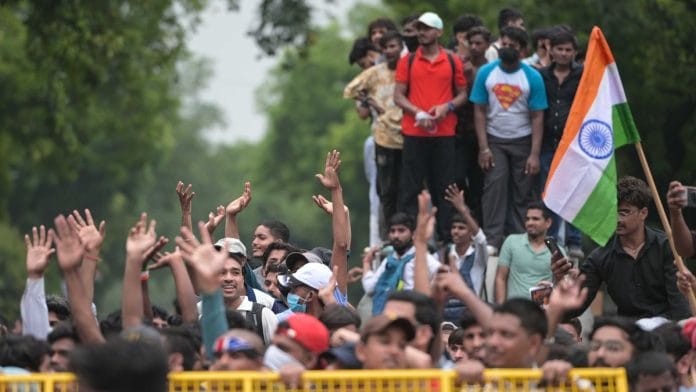
The recent protest at India’s capital, Delhi,over examination paper leaks, unemployment and presumed irregularities in public recruitment have once again revived a familiar debate about India. On 20th July protesters marched towards Parliament and clashes with the police followed, many political experts interpreted the episode as evidence that India’s democratic space is shrinking or in decline. The concern is understandable. A democracy must always be judged by how it accommodates dissent and protects citizens’ right to question authority. However, before concluding that Indian democracy is in decline, a more fundamental question deserves attention: can democracy be said to be shrinking if it has never been fully realized? India’s democratic achievements are remarkable. Universal adult franchise in 1950, constitutional government, regular elections, judicial review and representative institutions transformed one of the world’s most diverse society into one of the world’s most enduring electoral democracies.
Ambedkar’s speech to the Constituent Assembly on 25 November, 1949 highlighted a significant contradiction.He warned that India was entering a life of political equality while continuing to live amidst profound social and economic inequality. Political democracy, he argued, could survive only if it rested upon social democracy founded on liberty, equality and fraternity. Measures like the abolition of Untouchability, reservations, universal citizenship and constitutional guarantees of equality were implemented to ensure that constitutional morality would replace traditional hierarchies.It aimed not just to govern society but to change it, by elevating constitutional values over social values.
As democratic participation increased in India, however, culture itself evolved politically. Identities based on caste, religion, language and region increasingly became instruments of electoral mobilisation. The electoral democracy increased this participation, but it also encouraged political competition through cultural identities. Majority rule gradually acquired a cultural dimension that was expected to be the constitutional commitment to equal citizenship.This distinction is crucial. Constitutional democracy is not identical to majoritarian democracy. Electoral majorities derive authority from the Constitution; they do not stand above it. When political legitimacy increasingly rests upon cultural majorities rather than constitutional morality, democracy risks becoming electorally successful while remaining socially incomplete.
India’s history is evident; how democracy is for us unattainable goal. The Emergency (1975-1977) brought to light the possibilities of suspending the fundamental freedoms guaranteed by the Constitution when the executive branch of the government gained the upper hand over the institutions. When the recommendations of the Mandal Commission were put into practice in 1990, issues of representation and equality were raised again that had never been resolved. Citizens led the Right to Information movement, giving birth to the Right to Information Act of 2005. The anti-corruption movement in 2011, the nationwide protest against the government in 2012, and the farmers’ movement from 2020 to 2021 have demonstrated that democratic improvement often needs sustained public mobilization and not necessarily as a result of institutional responsiveness.
The recent protests at Jantar Mantar indicate that this pattern may be changing. Digital communication has transformed the ways of collective action. What emerges is not the disappearance of cultural identities but the creation of a broader digital public that transcends many of the boundaries that historically fragmented collective action.
This does not mean that digital society has eliminated social divisions. Instead, it has created new forms of political solidarity that do not rely on physical proximity and traditional organizational structures, unlike traditional ways of social action. This change was reflected in the recent protests in the capital city of India. The protesters came together from different States, castes, linguistic groups and educational backgrounds, united not by a common cultural identity but by a common sense of uncertainty, exclusion and perceived institutional failure. In this way, the digital society is starting to create a civic culture that goes beyond local identities and opens up new possibilities for democratic participation.
Whether democratic institutions evolve to accommodate this emerging civic consciousness remains the central question. Repeated public mobilization suggests that citizens continue to perceive a gap between constitutional promises and institutional responsiveness. The issue is therefore not merely whether democratic space is shrinking but whether democratic institutions are adapting to a society whose modes of participation are rapidly changing.
The constitutional project has always been evolutionary. Its success depends upon deepening social democracy, strengthening local participation, protecting peaceful dissent and ensuring that constitutional morality remains the ultimate foundation of public life. India’s democratic journey is unfinished, and its future will depend not only on preserving electoral institutions but also on ensuring that constitutional values continue to guide an increasingly connected, digitally mobilized and culturally diverse society.
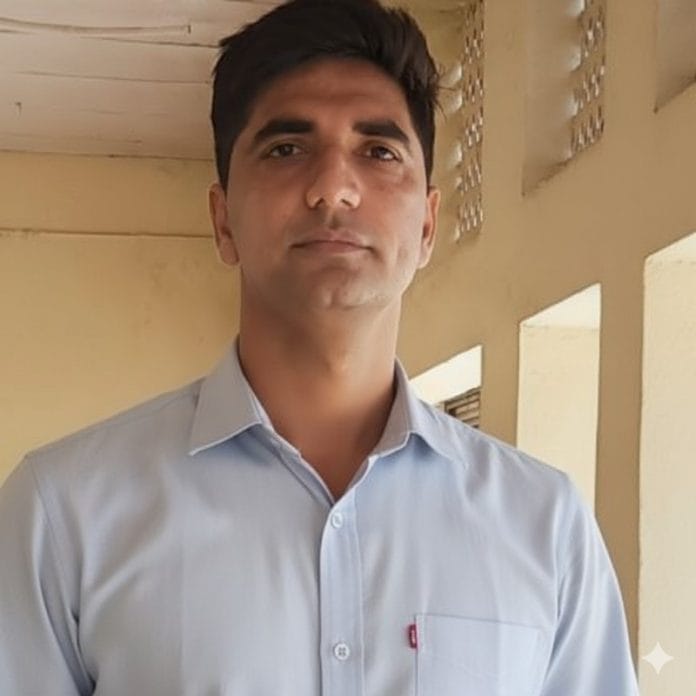
Ashwani Kumar is Teaching Political Sociology at UILS,Chandigarh University, Punjab, India
These pieces are being published as they have been received – they have not been edited/fact-checked by ThePrint.