





Thank you dear subscribers, we are overwhelmed with your response.
Your Turn is a unique section from ThePrint featuring points of view from its subscribers. If you are a subscriber, have a point of view, please send it to us. If not, do subscribe here: https://theprint.in/subscribe/
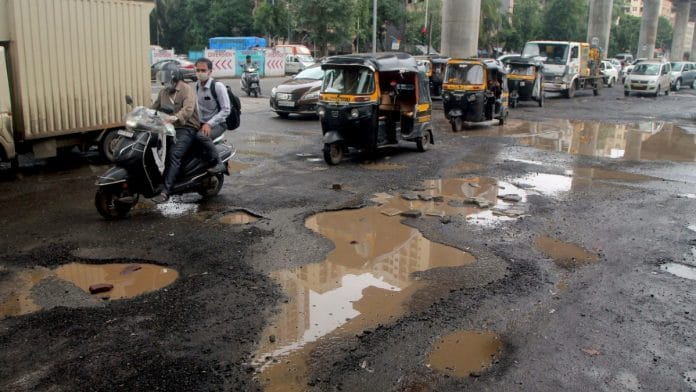
A Bengaluru software engineer pays his electricity bill in four seconds using UPI before leaving for work. His taxi glides onto a six-lane expressway, passes billboards celebrating India’s rise as the world’s fourth-largest economy, and then crawls for an hour through waterlogged streets after a brief spell of rain. That evening he watches another successful space mission on television before checking the air quality index to decide whether his asthmatic father should go for his evening walk.
There is nothing unusual about his day. Like millions of Indians, he lives in two countries at once.
One country is measured by its strategic influence, digital innovation, infrastructure and economic ambition. The other by the health, education, nutrition, environmental quality and everyday well-being of its citizens.
One India impresses the world. It launches satellites, builds digital public infrastructure that other nations seek to emulate, expands expressways and airports, and speaks confidently of becoming a developed nation by 2047. The other India is encountered every day—in overcrowded hospitals, classrooms struggling to deliver quality education, congested roads and neighbourhoods where clean air remains an aspiration rather than a guarantee.
These are not competing political narratives. They are two different report cards measuring the same nation. One records the country’s strengths. The other reflects the quality of life of its people.
On the score of national power and economic achievement, India has every reason to be proud. It ranks among the world’s leading military powers, is recognised as one of Asia’s most influential countries, has become a global hub for digital innovation, and has positioned itself as an important alternative manufacturing base. By most yardsticks of strategic influence and economic potential, India has entered the front ranks of major powers.
The picture changes equally dramatically when we look at the lives of ordinary people. India’s Human Development Index ranking remains around 130, far below what one might expect of the world’s fourth-largest economy. The Global Hunger Index continues to classify hunger as a serious challenge, driven by persistent child malnutrition and undernourishment. Environmental performance tells a similar story. India has earned international recognition for its ambitious renewable energy policies and rapid solar expansion, yet many of its cities remain among the world’s most polluted. The nation that demonstrates technological excellence in space still struggles to ensure that millions of its citizens can breathe clean air.
The contrast is not unique to India. Every rapidly developing country experiences periods when economic growth outpaces improvements in public services. The difference is that in India the gap has grown exceptionally wide and increasingly persistent. Our achievements increasingly resemble those of an advanced economy, while many indicators of everyday life continue to resemble those of a much poorer one.
The experience of South Korea illustrates the difference between economic growth and national development. Emerging from the devastation of the Korean War, it was once poorer than India. Its transformation did not rely on industrial growth alone. It rested on deliberate and sustained investment in schools, universities, healthcare and human capital, backed by a state that treated these not as welfare expenditures but as strategic priorities. South Korea understood that an educated and healthy population was not the reward for economic success; it was the engine of it.
India has demonstrated that it can build world-class digital platforms and infrastructure. The next phase of development is less glamorous but ultimately more important. It requires long-term investment in public education, healthcare, nutrition, environmental quality and urban governance. These may not produce spectacular headlines or dramatic launch photographs, but they determine whether economic growth translates into a better quality of life.
Most Indians understand this instinctively. They are proud that their country is increasingly respected abroad. Yet they also know that national prestige does not shorten the queue at a government hospital, improve the quality of the air their families breathe, or guarantee younger generations the educational opportunities they need to compete globally.
India’s challenge is no longer demonstrating its potential as a great power. In many respects, it already displays the characteristics of one. The harder task is ensuring that the strength celebrated in international rankings is reflected in the daily lives of its citizens.
Recent headlines—from extreme weather and infrastructure failures to cyber fraud and questions surrounding electoral administration—serve as reminders that the second report card cannot be improved by economic growth alone. It demands competent, dependable institutions.
A developed nation is measured not only by its rockets or its economy, but by the quality of life it offers an ordinary family. The true test of Viksit Bharat will not be whether India climbs another place in the rankings of power, but whether the next generation has access to cleaner air, better schools, reliable healthcare and greater opportunities than the one before it. Only then will India’s two report cards begin to tell the same story.
Author Bio: Aloka Sengupta is an independent healthcare professional and commentator on health, international affairs and geopolitics.
These pieces are being published as they have been received – they have not been edited/fact-checked by ThePrint.