



Thank you dear subscribers, we are overwhelmed with your response.
Your Turn is a unique section from ThePrint featuring points of view from its subscribers. If you are a subscriber, have a point of view, please send it to us. If not, do subscribe here: https://theprint.in/subscribe/
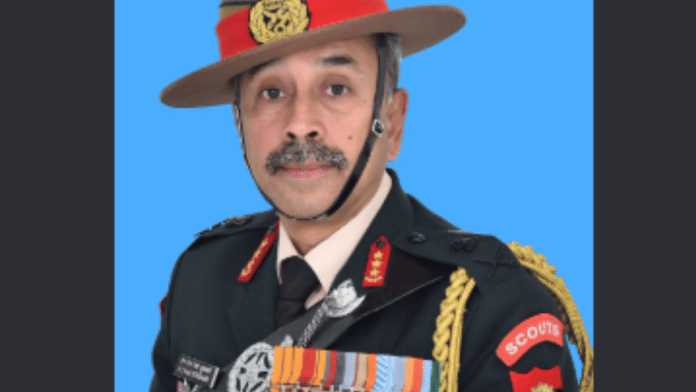
India’s debate over theatre commands has entered a consequential phase. General N.S. Raja Subramani assumed charge as Chief of Defence Staff (CDS) and Secretary, Department of Military Affairs, on May 31, 2026. His appointment has renewed attention on a reform intended to make the Army, Navy and Air Force operate more jointly. But theatreisation is not simply an exercise in redrawing the organisational map. A new chain of command can establish authority; it cannot by itself create the interoperability, infrastructure, logistics and institutional culture required for genuinely joint operations.
The case for greater integration is compelling. Modern warfare rarely remains confined to a single service or domain. Land operations increasingly depend on air power, maritime security on persistent surveillance, while cyber, space, electronic warfare and unmanned systems cut across traditional boundaries. The government has said studies are under way for theatre commands covering land borders, maritime operations and joint or integrated air defence. The objective is to bring capabilities together by geography and function. Yet integration will matter only if information, resources and decisions can move seamlessly across service boundaries.
The first challenge is interoperability. A theatre commander may have operational authority over forces from different services, but authority does not automatically make their systems compatible. Secure communications, common data standards, interoperable sensors and a shared operational picture are essential. If one service cannot exchange information with another, an integrated headquarters could remain functionally fragmented. The real test of theatreisation, therefore, will be whether information can travel as quickly as decisions.
Logistics presents an important challenge. Joint operations require coordinated systems for ammunition, fuel, spares, transportation, maintenance and engineering support. Separate inventories and procedures can dilute the efficiencies that integrated commands are expected to produce. India has already established Joint Logistics Nodes at Mumbai, Guwahati and Port Blair to provide integrated logistics support to the three services. Theatreisation should build upon such arrangements, while standardising procedures and testing whether supplies can be moved rapidly across operational boundaries during contingencies.
Training is another critical element. Officers who spend most of their careers within service-specific cultures cannot become effective joint commanders merely because an organisational restructuring has taken place. Joint exercises need to replicate contested communications, degraded infrastructure and multi-domain operations. Professional military education should expose officers to the capabilities, limitations and operational doctrines of the other services. Jointness must become a habit developed in peacetime, rather than an aspiration invoked during a crisis.
Infrastructure deserves similar attention. Airfields, roads, bridges, ammunition depots, fuel installations, communications networks and repair facilities must support rapid movement and redundancy. From a civil-engineering perspective, resilience is not achieved by making a single component stronger; it comes from designing a system with alternative routes, sufficient capacity and the ability to absorb disruption. Theatre commands should therefore be accompanied by an infrastructure audit identifying bottlenecks that could impede mobilisation or sustainment.
The reform also requires institutional clarity. The CDS is tasked with promoting jointness in operations, logistics, transport, training, communications, repairs and maintenance, while the Department of Military Affairs is responsible for facilitating restructuring of military commands. The Inter-Services Organisations (Command, Control and Discipline) Act, 2023, which came into force in 2024, provides commanders of inter-service organisations with authority over personnel from the three services. These are important foundations, but responsibilities among the CDS, service chiefs and theatre commanders must remain clearly defined to prevent new forms of duplication.
India should therefore judge theatreisation by operational outcomes rather than organisational charts. Can forces communicate securely and rapidly? Can intelligence be shared without institutional friction? Can logistics support multiple theatres simultaneously? Can commanders redirect capabilities when circumstances change? Can critical infrastructure withstand disruption? Can procurement and training reflect joint requirements? These questions provide more meaningful measures of reform than the number or nomenclature of commands.
Theatre commands can become an important step in adapting India’s military to multi-domain warfare. But the transformation will depend on much more than appointing commanders and changing reporting relationships. Interoperable technology, joint training, resilient infrastructure, integrated logistics and institutional clarity must develop alongside the new command structure. The chain of command tells soldiers, sailors and airmen who is responsible. The harder task is ensuring that they can operate as one force when it matters most.
Submitted by:
Siddharth Roy
Civil engineer, Consultant to Rashtriya Raksha University under the Ministry of Home Affairs and Columnist.