


Thank you dear subscribers, we are overwhelmed with your response.
Your Turn is a unique section from ThePrint featuring points of view from its subscribers. If you are a subscriber, have a point of view, please send it to us. If not, do subscribe here: https://theprint.in/subscribe/
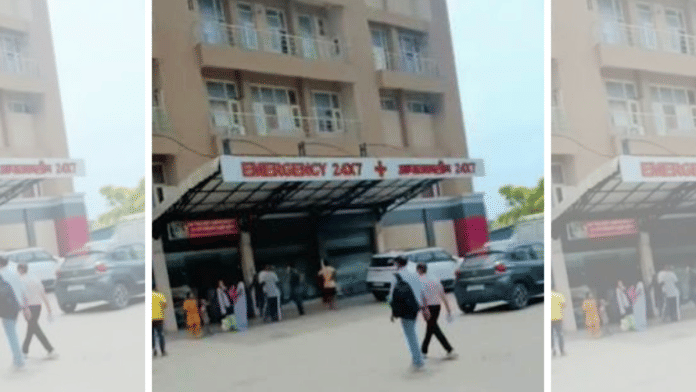
India’s healthcare sector presents a striking paradox. On one hand, the country has witnessed a remarkable expansion of hospitals, medical technology, insurance coverage, and corporate healthcare. On the other, millions of Indians continue to struggle to obtain timely, affordable, and quality medical treatment. The question, therefore, is not merely whether India has enough hospitals. It is whether the healthcare system can reach the entire population when and where medical care is needed.
The scale of India’s hospital infrastructure is substantial. The private sector accounts for around 43,486 hospitals, while the public and government sector has about 25,778 hospitals, including facilities under the Central, State, and local governments. The network also includes specialised institutions such as AIIMS. Under Ayushman Bharat–Pradhan Mantri Jan Arogya Yojana (AB-PMJAY), more than 36,000 hospitals, including both public and private institutions, have been empanelled to provide cashless treatment to eligible beneficiaries.
Yet these impressive numbers conceal considerable differences in geographical distribution, capacity, and quality.
Uttar Pradesh, for example, has an estimated combined hospital infrastructure of around 17,100 facilities, while Karnataka has approximately 10,700. Rajasthan has around 5,640, Telangana 4,100, Kerala 3,340, Maharashtra 3,200, Bihar 3,030, and Tamil Nadu about 2,440. But the mere presence of hospitals does not indicate the availability of specialised doctors, intensive-care beds, diagnostic facilities, trained nurses, or affordable treatment.
The problem becomes particularly visible when we move away from metropolitan centres. Corporate and specialised hospitals tend to concentrate in large cities because these locations offer greater purchasing power, better infrastructure, skilled manpower and a larger pool of insured patients. Cities such as Bengaluru, Mumbai, Delhi-NCR, Hyderabad, Chennai, and Pune have developed sophisticated healthcare ecosystems, while many smaller towns and rural areas continue to depend heavily on government hospitals and primary health centres.
India’s private healthcare sector has nevertheless transformed the country’s medical landscape. Large hospital networks such as Apollo Hospitals, Max Healthcare, Fortis Healthcare and Manipal Hospitals have developed extensive multi-speciality and tertiary-care capabilities. They provide advanced cardiac, cancer, transplant, neurological and other specialised treatments that were once available only in a handful of institutions.
The public sector, meanwhile, continues to play a critical role. The AIIMS network represents the highest level of government-supported medical infrastructure, while state government hospitals remain indispensable to millions of citizens who cannot afford treatment in private institutions.
The organised hospital industry is also becoming an important part of India’s corporate economy. Around thirty-nine hospital companies are listed on Indian stock exchanges, of which roughly 34 to 36 are currently profitable. Their financial performance demonstrates the growing commercial strength of organised healthcare.
But this raises an important question: If the hospital industry is expanding and many healthcare companies are profitable, why does universal access to quality healthcare remain elusive?
The first reason is affordability. Hospitalisation, particularly for cancer, cardiac disease, organ transplantation and other complex conditions, can impose a substantial financial burden on families. Insurance and government schemes provide an important safety net, but coverage does not necessarily eliminate every expense. Medicines, diagnostics, travel, follow-up treatment and procedures outside the applicable insurance package can still create significant costs.
The second problem is the uneven distribution of medical professionals. A hospital building without adequate doctors, nurses, technicians, and other healthcare workers cannot provide meaningful medical care. India has expanded medical education, but shortages and uneven distribution of specialists remain important challenges, particularly outside major cities.
Third, healthcare is not synonymous with hospitalisation. A healthy healthcare system must begin with prevention, primary care, maternal and child health, vaccination, nutrition, early diagnosis, and management of chronic diseases. If primary healthcare is weak, patients often reach hospitals only when their illnesses have become more complicated and expensive to treat.
There is also a rural-urban divide. A patient living in a remote district may technically have access to a government hospital, but the nearest facility capable of performing advanced surgery or treating a complicated cardiac or neurological condition may be hundreds of kilometres away. The cost and inconvenience of travelling can itself become a barrier to treatment.
Another challenge is the growing burden of non-communicable diseases. Diabetes, hypertension, cardiovascular disease, cancer, and kidney-related illnesses require long-term monitoring rather than one-time hospitalisation. India’s healthcare system therefore needs to move increasingly towards continuous and preventive care.
Technology may offer part of the solution. Telemedicine, digital health records, artificial intelligence-assisted diagnostics, and remote consultations can help connect specialists with patients in smaller towns. But technology cannot substitute for physical infrastructure, trained personnel and reliable primary healthcare.
The government, private hospitals and insurance companies therefore need to look at healthcare as an ecosystem rather than as separate businesses or programmes. Public hospitals provide affordability and reach; private hospitals bring investment, technology and specialised expertise; insurance schemes can improve financial protection; and primary healthcare can reduce the pressure on expensive tertiary hospitals.
India does not necessarily have a simple shortage-of-hospitals problem. It has an access, affordability, distribution, and capacity problem.
The real measure of India’s healthcare progress should therefore not be how many hospitals have been built, how many hospital companies are profitable or how many people possess an insurance card. The more meaningful question is whether an ordinary citizen, irrespective of income or location—can obtain the right medical treatment at the right time without being pushed into financial distress.
India has built an impressive healthcare industry. The next challenge is to build an equally impressive healthcare system for all.
P S Parameswaran
Entrepreneur | Qualified Corporate Director | Freelance Writer
These pieces are being published as they have been received – they have not been edited/fact-checked by ThePrint.