




Thank you dear subscribers, we are overwhelmed with your response.
Your Turn is a unique section from ThePrint featuring points of view from its subscribers. If you are a subscriber, have a point of view, please send it to us. If not, do subscribe here: https://theprint.in/subscribe/
Every few months we discover another exam leak, another coaching mafia, another miracle percentile, another “brilliant” child who has scored 99.8%, and another bridge, flyover, road, hospital, drain, or public institution that collapses under the weight of Indian incompetence. The contradiction is brutal: if we are producing so many geniuses, why does the country so often look as if it was built by people who never passed basic arithmetic?
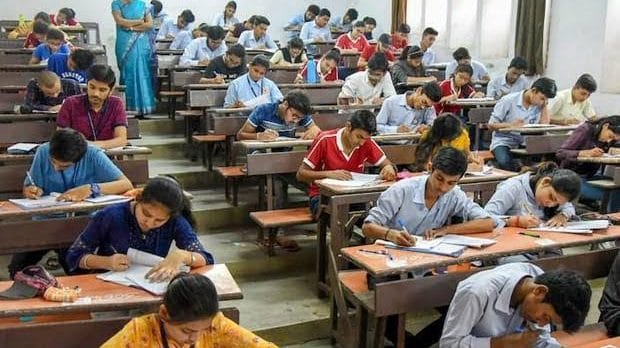
The NEET mess is only the latest symptom. Over 22 lakh candidates are sitting for a re-exam under extraordinary security, with CCTV cameras, jammers, frisking and police
arrangements—as if India is not conducting a medical entrance test but guarding a nuclear
installation.
This is not meritocracy. This is distrust institutionalised.
Private medical education in India has long carried the stench of capitation fees, political
patronage and cash-for-seats. Even the internationally respected British Medical Journal
(BMJ) has, over the years, reported on allegations of capitation fees, bribery and the
commercialisation of sections of India’s private medical education system, underscoring
that these concerns are not merely domestic criticisms but have attracted global
professional scrutiny. When medical seats become purchasable commodities, the future
doctor is not selected by aptitude but by liquidity.
And then comes the other fraud: inflated marks. The Indian Express reported years ago how 90% and 95% scores had become increasingly common, with academics warning that grade inflation had rendered such marks increasingly meaningless as indicators of genuine ability. We manufacture toppers on paper and mediocrity in practice.
The tragedy begins much earlier. ASER 2024 showed improvement after Covid, yes, but still
only about 44.8% of Class V children in government schools could read a Class II-level text.
That is the real national shame: children are promoted, parents celebrate, schools advertise,
politicians inaugurate—but learning limps behind like an unwanted orphan.
The parents are not innocent either. Too many Indian parents do not want education. They
want rank, certificate, admission, job and status. If the question paper can be bought, they
buy it. If marks can be manipulated, they bless it. If coaching factories turn children into
exhausted machines, they call it sacrifice. This is not ambition. It is moral bankruptcy
disguised as parental duty.
The consequences are visible everywhere: unsafe roads, collapsing bridges, corrupt
municipalities, dysfunctional bureaucracy, public health failures, filthy streets, incessant
honking, civic indiscipline and officials who draft impeccable English notes while displaying
astonishingly poor judgement. A genuinely educated society reveals itself through civic
behaviour. India, too often, reveals the opposite.
The problem is so serious that even countries desperately short of skilled professionals
refuse to accept Indian qualifications at face value.
Even Germany—one of the world’s most advanced engineering and manufacturing nations
and itself facing an acute shortage of engineers and doctors—does not automatically
recognise Indian professional degrees.
Indian students seeking admission to German universities must first obtain an APS
(Academic Evaluation Centre) certificate, which independently verifies the authenticity and
academic equivalence of their academic qualifications.
For employment, Germany scrutinises whether both the institution and the qualification
satisfy its own recognition standards. For regulated professions such as medicine, dentistry,
pharmacy, nursing, teaching, engineering in certain regulated fields, and law, an Indian
degree by itself is insufficient.
An Indian doctor cannot simply arrive in Germany and begin practising. Before treating a
single patient, the doctor must obtain a German medical licence (Approbation),
demonstrate advanced German language proficiency—typically B2 general German and C1
medical German—and often pass rigorous equivalence or knowledge examinations. In many
cases, additional supervised clinical training is also required.
The message is unmistakable. Germany trusts neither the quality nor the uniformity of
foreign professional qualifications without independent verification. Competence is
tested—not presumed.
If one of the world’s most advanced engineering and manufacturing nations insists on
independently verifying Indian qualifications before entrusting professionals with public
safety, why should India itself hesitate to demand equally rigorous standards from its own
institutions?
NEET must be cleaned up, yes. But one examination cannot cure a civilisation that has made shortcuts respectable. Admission should combine school performance, aptitude,
transparent testing, interviews where appropriate and uncompromising anti-corruption
enforcement. Medical colleges must be audited with the same rigour as financial
institutions. Capitation fees should be treated as organised crime. Examination leaks should
invite career-ending punishment for the adults responsible—not merely trauma for millions
of innocent students.
India’s problem is not that too few students score 95%.
India’s problem is that too many do—and too few know why.
Until that illusion ends, no examination reform will ever reform India.
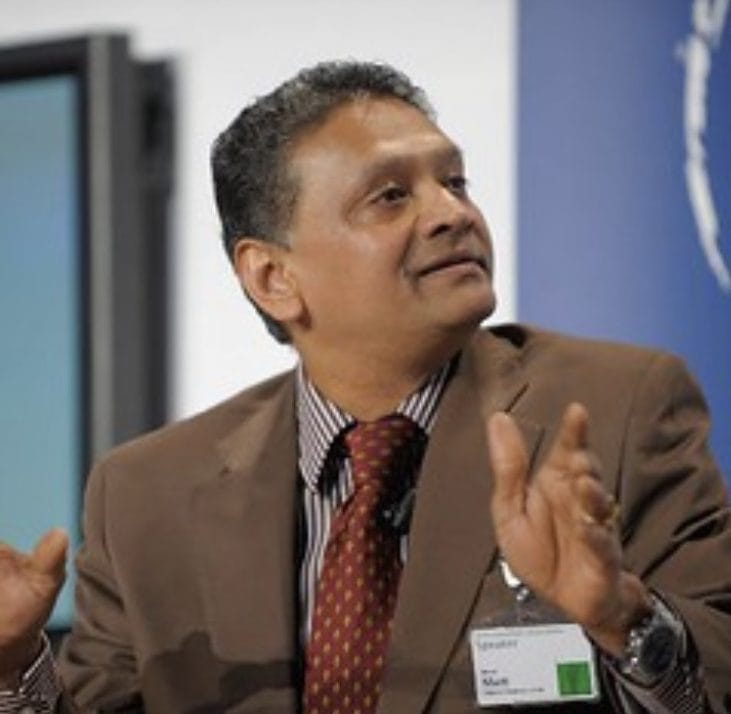
Mohan Murti Advocate & International Industry Arbitrator, Former Managing Director – Europe, Reliance Industries Ltd., Germany
These pieces are being published as they have been received – they have not been edited/fact-checked by ThePrint.